

KUALA LUMPUR – Early Autism Project Malaysia (EAP) has launched a free mobile application to equip parents, caregivers and educators with practical resources to support children with autism at home.
Available in English and Bahasa Malaysia, the Autism at Home app is designed to bridge the gap between professional intervention and home-based learning, particularly for families who struggle to access timely support services.
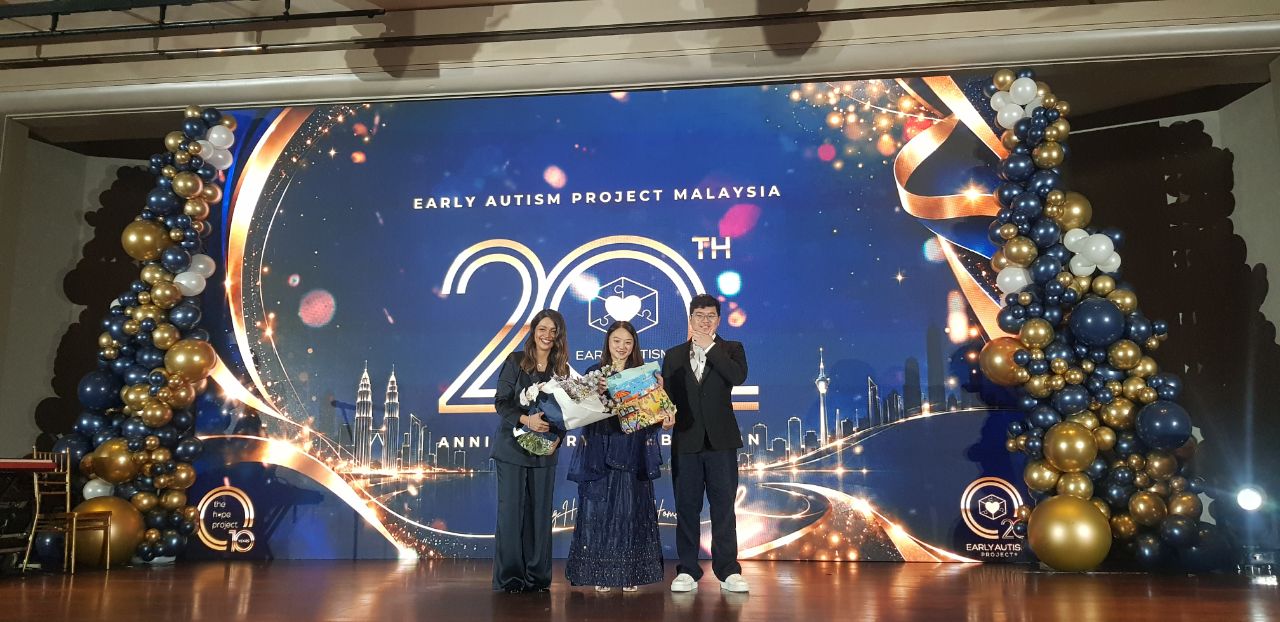
The application was officially launched by Minister in the Prime Minister’s Department (Federal Territories) Hannah Yeoh at EAP’s 20th Anniversary Fundraising Gala Dinner on Nov 5.
Its features include visual schedules to help children establish daily routines, communication tools for non-verbal learners, social stories and educational videos. A chatbot is also available to guide users towards relevant information and resources.
EAP director Dr Jochebed Isaacs said the organisation aims to reach 5,000 families within the next 12 months, with a longer-term target of 20,000 downloads over five years.
“Through the Autism at Home app, we aim to reach 5,000 families within the next 12 months, with a longer-term goal of 20,000 app downloads over five years,” she said in a statement.
“We recognise that parents often face challenges in supporting their child’s speech and communication, managing behaviours and building independence.
“The app provides practical resources to help them navigate these challenges and feel more confident supporting their child’s development at home.”
The launch builds on EAP’s existing Autism at Home digital platform, which has attracted more than 4,000 subscribers and approximately 2,000 active users.
Speaking at the event, Hannah said growing public awareness had encouraged more families to recognise autism and seek appropriate support for their children.
Citing figures from the Social Welfare Department (JKM), she said approximately 99,000 individuals with autism were registered nationwide and held OKU cards as of October 2026.
While the figures reflected improved awareness over the years, she said greater efforts were needed to ensure families could access the support and services they required.
Hannah also urged EAP to extend its expertise to public schools, particularly those in rural communities, to ensure access was not limited to families who could afford private intervention.
“Because the support and knowledge you have should not be limited to families who can afford private services. We need this expertise in our schools, in rural areas and in kampungs across Malaysia,” she explained.
She also announced plans to work with EAP to develop a dedicated playground for children with autism in Kuala Lumpur.
The proposed facility would provide a suitable environment for children to enjoy outdoor activities and interact with their peers, taking into account their individual needs.
Hannah said she would seek the organisation’s expertise in planning and designing the playground.
She added that Kuala Lumpur City Hall (DBKL) had introduced an autism-awareness initiative involving one of its GoKL buses, while its horse-riding facility at Taman Tasik Titiwangsa had also offered therapy services for children with autism.
Meanwhile, Jochebed said EAP intended to broaden its reach through closer collaboration with government agencies and other organisations.
Through partnerships with the Finance Ministry and Yayasan Sime Darby, EAP’s academy is set to complete the training of 450 teachers nationwide.
The organisation also plans to extend its training and support programmes to non-profit centres and national schools, with the goal of establishing a presence in every state within the next decade.
“Our dream at EAP is for every family in our nation with a child with autism to have access to immediate support.”
“For every parent to be empowered with the right tools to help their children right from their home immediately. No more waiting lists,” she said.
Established in 2006, EAP provides autism therapy, diagnostic evaluations, developmental assessments, professional training and advocacy services.
Over the past two decades, it has supported more than 1,500 individuals with autism and their families from over 40 countries.
Its non-profit arm, The Hope Project, has reached more than 1,600 children through its services and support programmes, while its awareness campaigns have reached more than one million people.
EAP is seeking to raise RM200,000 to fund the application’s continued development, technical maintenance and updates, as well as the introduction of additional features and languages.
The funds will help keep the application free of charge, without subscription fees, ensuring families can access its resources regardless of their financial circumstances. – November 6, 2026