

KUALA LUMPUR — Voters below the age of 40, who comprise about 47% of the electorate in Melaka’s state election tomorrow, could play a decisive role but there is no telling which party or coalition they will choose.
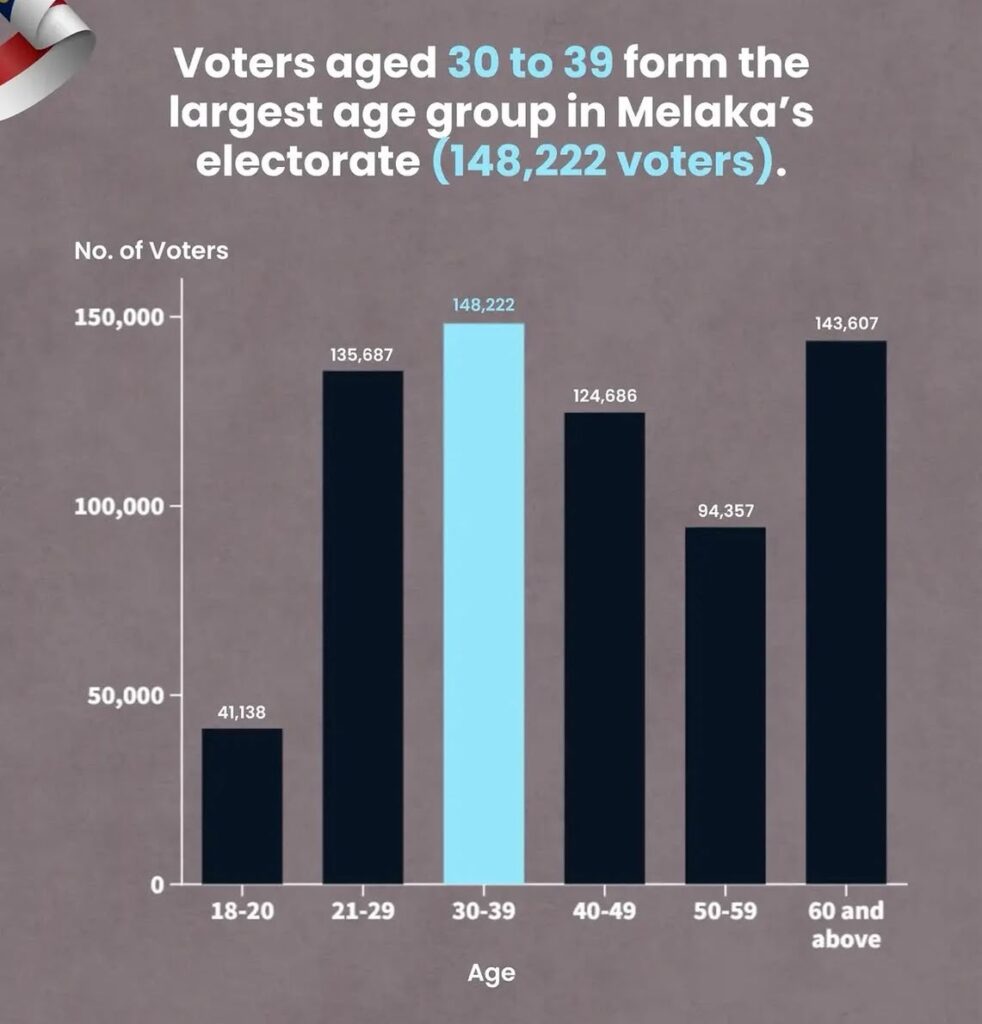
According to the Election Commission, voters aged 30-39 number 148,222 people and form the largest age group among Melaka’s electorate. Those aged 21-29 number 135, 687 voters, while the smallest age group is the 18-20 year-olds who total 41,138 voters
While taken together, young voters are a significant force, but they should not be viewed as a single voting block, said Universiti Teknologi Malaysia political analyst Dr Mazlan Ali.
Their political preferences can differ depending on whether they lived in Melaka or outside the state, he said.
He said younger voters who remained in Melaka were generally influenced by their families and immediate surroundings, while those working or studying outside the state tended to be more critical of political parties and government performance.
“Those living away from home tend to be more critical and show a strong preference for performance-based politics,” Mazlan told Scoop.
Social media is likely to play an important role in shaping their political views, particularly those who were more educated and regularly accessed information online, Mazlan added.
Young voters were also increasingly sensitive to issues involving integrity, government policies and service delivery, which could influence their choices at the ballot box.
Besides that, the cost of living, traffic congestion and employment opportunities were important the issues that could attract their attention, particularly among lower-income young voters working in blue-collar jobs.
Mazlan said although young voters might not necessarily record higher turnout rates than older voters, their numbers meant they could still have a significant impact on the election outcome.
Political analyst and geostrategist Professor Dr Azmi Hassan of Akademi Nusantara said it is difficult to predict turnout among young voters, as the time and cost to travel back to Melaka may discourage those working outside the state.
But if they registered a high turnout, they would become a significant voting block.
“Gen Z voters (18 to 29 years old) could ultimately determine the outcome in closely fought constituencies, particularly where candidates from different parties had similar levels of support,” Azmi told Scoop.
They would also likely vote differently from the older generation as they were less attached to political ideologies or party loyalties.
Instead, he said their decisions would largely depend on whether a candidate or party could offer policies and benefits that directly affected their lives.
“Employment opportunities and affordable housing will be among the main concerns, particularly for young people who had just entered the workforce.
“I think the key issues will be the bread-and-butter issues, but more specifically the creation of jobs, whether a particular party, when forming the state government, can create more jobs” said Azmi.
Housing affordability in Melaka is also an important issue for young voters, who struggle to buy their first home on starting salaries.
According to Electiondata.my, ten out of Melaka’s 28 seats had more than 20% Gen Z voters in the 15th general election. – November 14, 2026