

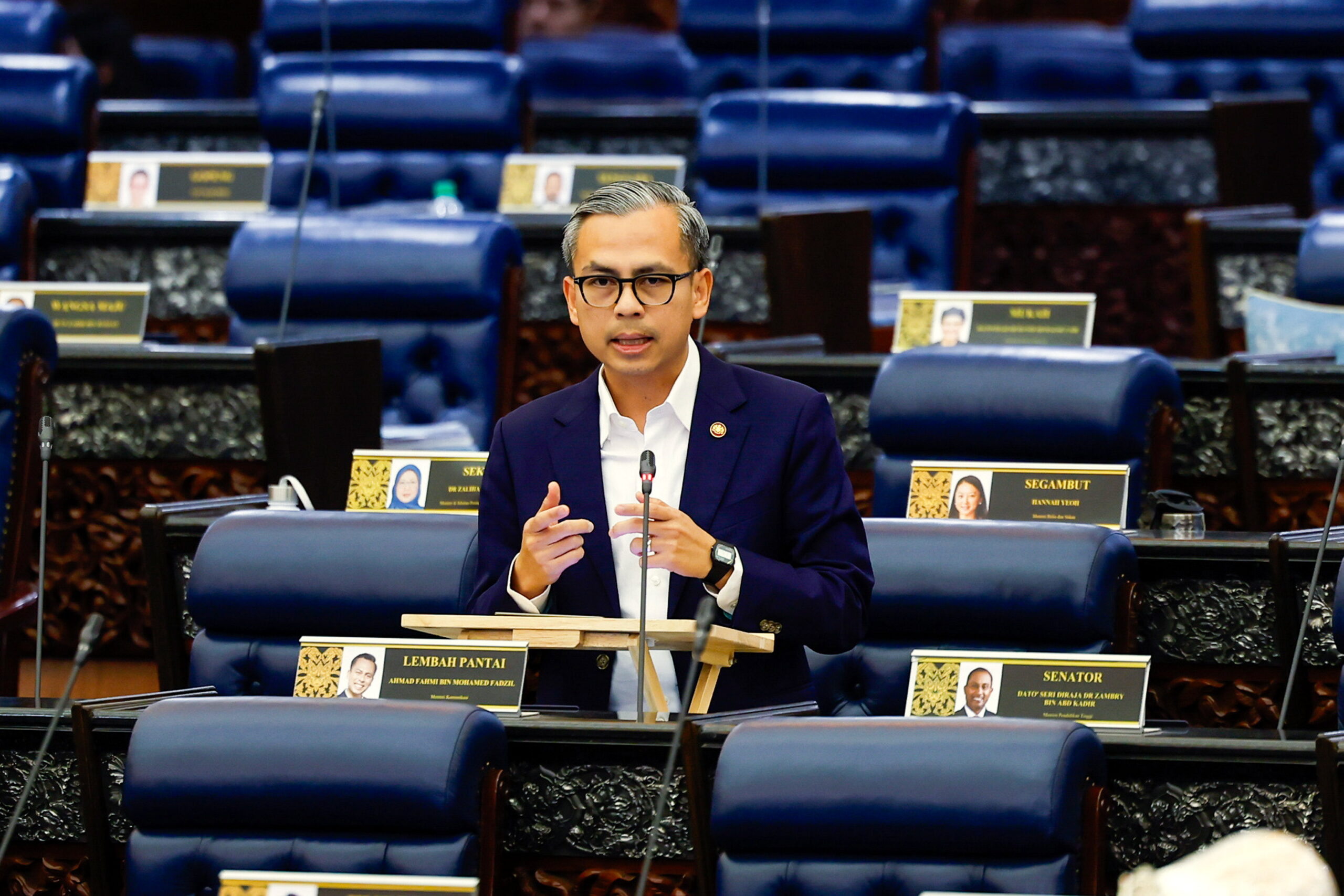
KUALA LUMPUR – A total of 13,883 manipulated images and deepfake content items have been removed following requests by the Malaysian Communications and Multimedia Commission (MCMC), the Dewan Rakyat was told today.
Communications Minister Datuk Seri Fahmi Fadzil said the takedowns followed public complaints received between Jan 1, 2024 and Oct 31 this year, Bernama reported.
He added that MCMC had investigated 61 cases involving the misuse of artificial intelligence (AI) under Section 233 of the Communications and Multimedia Act 1998 (Act 588) between Jan 1 and Oct 31 this year, with 10 cases brought to court.
Of those, six have been concluded, resulting in combined fines of RM19,500, while the remaining four are still undergoing court proceedings.
“Additionally, seven cases were offered compounds totalling RM755,000, while 17 warning letters were issued. The remaining 27 cases are either still under investigation or have been classified as requiring no further action,” he said during Question Time.
Fahmi was responding to Afnan Hamimi Taib Azamudden (PN-Alor Setar), who asked about the government’s measures to curb the growing use of deepfakes and AI-generated synthetic news to impersonate political leaders, institutions and individuals for scams and information manipulation.
He said the government took the misuse of AI seriously, particularly when the technology was used to produce deepfakes, impersonate identities and spread false information.
Under Section 233 of Act 588, enforcement action can be taken against content that fulfils the legal requirements of an offence, he added.
Fahmi also pointed to the Online Safety Act 2025 (Act 566), which provides a regulatory framework to address harmful online content, including AI-generated material falling within the scope of the legislation.
He said the Risk Mitigation Code (RMC), which took effect on June 1, required licensed service providers to put in place measures to identify, assess and address harmful online content.
“The code also requires images, audio or videos generated or manipulated using AI that could be mistaken for authentic content to be clearly labelled or marked,” he said.
The government, through MCMC, is also running the Safe Internet Campaign to improve public awareness and digital literacy, with a focus on helping people recognise deepfakes, identity impersonation and AI-generated misinformation. – November 17, 2026