

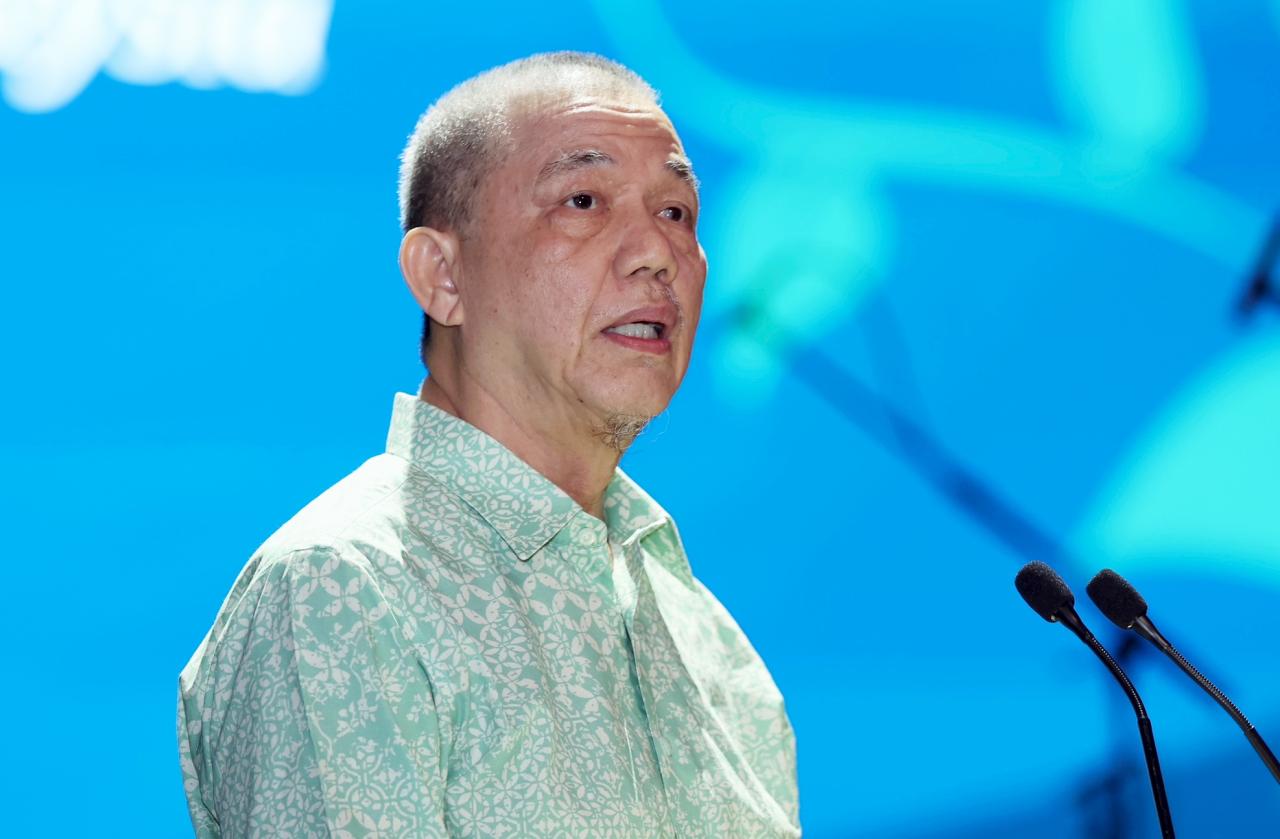
KUALA LUMPUR – Strong backbenchers and government audits can provide the necessary checks and balances even if Gabungan Parti Sarawak (GPS) wins every seat at the upcoming state election.
In an exclusive interview with FMT, Deputy Prime Minister, Datuk Seri Fadillah Yusof said elected representatives outside the administration could question the government, with audits providing another avenue for scrutiny.
“What we need are strong backbenchers that can really check and give constructive views or opinions to the government,” he said.
He said a strong opposition was not necessarily a prerequisite for effective governance, citing China as an example of a country that had become powerful despite having no opposition.
“Does China have an opposition? Why is China so powerful now?” he asked.
He was responding to a question about how the state government would be perceived if a GPS landslide left the assembly without representatives from the opposition.
GPS held 79 of Sarawak’s 82 seats before the state assembly’s recent dissolution, with another held by a government-aligned independent, leaving DAP as the only opposition party with two representatives.
The coalition plans to contest all 82 constituencies in the Dec 12 election, with nomination day set for Nov 28.
Sarawak DAP chief Chong Chieng Jen has made stronger legislative scrutiny part of his party’s electoral case, arguing that more opposition representatives are needed to provide effective checks and balances on the GPS government.
Stronger mandate for unfinished MA63 agenda
Fadillah urged Sarawakians to give GPS strong support, saying that, although progress has been made, key issues related to the Malaysia Agreement 1963 (MA63) remain unresolved.
“First of all, our struggle is not over,” he said, adding that a large majority would signal that Sarawakians stood behind GPS’s efforts.
In an October parliamentary reply, Prime Minister Anwar Ibrahim said 16 matters under the MA63 implementation framework had been resolved, while 13 remained under discussion.
Asked about the challenges of representing Sarawak federally, Fadillah said centralised planning could overlook matters in the state’s proposals, such as its unique geographical conditions, logistical constraints and higher development costs.
As an example, he pointed out that it would cost about RM7,000 to connect an urban home to the electricity grid, and between RM50,000 and RM75,000 for a rural household due to distance and accessibility challenges.
Fadillah said his role required taking national priorities into account while explaining Sabah and Sarawak’s needs to federal decision-makers.
“When we plan policies, programmes or projects, they must suit and meet local needs,” he said. – November 22, 2026