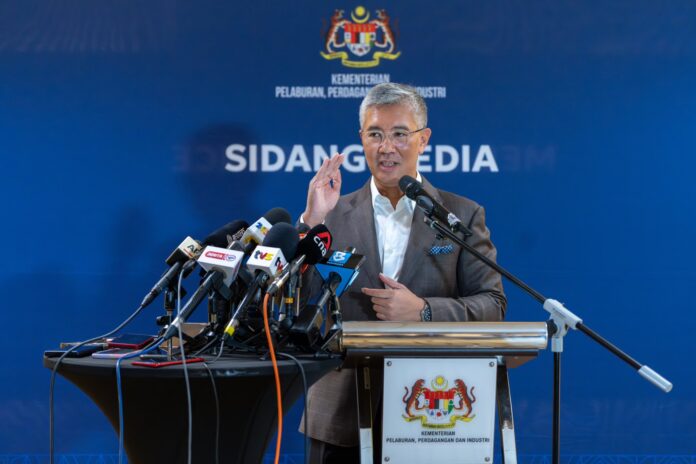
KUALA LUMPUR – Malaysia must be prepared for the possibility of additional United States tariffs on its semiconductor exports, Investment, Trade and Industry Minister Datuk Seri Tengku Zafrul Abdul Aziz told Parliament today.
While Malaysian semiconductor products are currently exempt from retaliatory tariffs, they remain under scrutiny as part of an investigation under Section 232 of the US Trade Expansion Act of 1962, which permits Washington to impose tariffs on national security grounds.
“We must be ready and prepared for the possibility of additional tariffs being imposed,” Zafrul said during a ministerial briefing on Malaysia’s trade negotiations with the US.
As part of ongoing efforts to narrow the bilateral trade deficit, Zafrul said Washington is encouraging Malaysia to increase its procurement from, and investment in, the US. This forms part of Section 6 — “Commercial Consideration” — of the forthcoming Agreement on Reciprocal Trade (ART), which is expected to be signed soon.
Among the commitments already made is a planned procurement of US$150 billion (RM636 billion) worth of goods over five years by multinational companies operating in Malaysia. The targeted sectors include semiconductors, aerospace, and data centres.
Zafrul said the Ministry of Investment, Trade and Industry (MITI) will closely monitor the implementation of these commitments to ensure they are properly executed and deliver long-term benefits to the Malaysian economy.
“For local industries, especially small and medium enterprises (SMEs), the government will continue supporting them in navigating these geopolitical challenges — including adapting their business processes and export strategies to the US,” he said.
MITI and its agencies, he added, will soon launch outreach programmes for affected sectors.
Zafrul also reaffirmed the government’s commitment to strengthening Malaysia’s economic ties with the US while preserving strategic relationships with other global partners.
“Our goal is to enhance bilateral trade and investment without compromising our national sovereignty or economic stability,” he said. — August 4, 2025