KUCHING — Shareholders of Cahya Mata Sarawak Berhad (CMS) overwhelmingly approved all resolutions tabled at the company’s 51st Annual General Meeting (AGM) today, signalling continued confidence in the group’s leadership despite mounting financial pressures, governance concerns and an ongoing family dispute linked to the legacy of former Sarawak governor Tun Abdul Taib Mahmud.
Polling results showed the resolutions received an average approval rate of about 98%, reflecting strong shareholder support as the conglomerate navigates weakening earnings, legal challenges and internal tensions involving members of the Taib family.
According to a Bursa Malaysia filing issued after the meeting, all 10 resolutions tabled at the AGM today were formally passed through poll voting, with the results validated by independent scrutineer Commercial Quest Sdn Bhd.
The strongest support was recorded for Ordinary Resolution 1, which proposed a 3.0 sen single-tier dividend. The motion secured 99.61% approval, with 253.64 million shares voting in favour and one million shares opposing it.
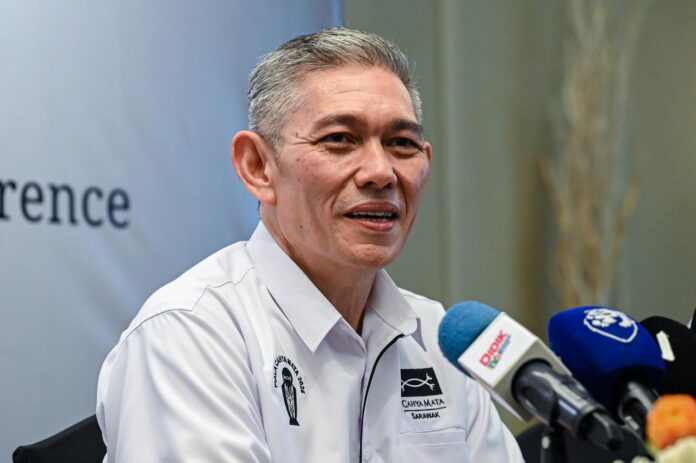
The re-election of managing director Datuk Seri Sulaiman Abdul Rahman Abdul Taib, who is Taib’s younger son, under Ordinary Resolution 3 was also overwhelmingly endorsed, receiving 99.21% shareholder support.
Similarly, the re-election of Umang Nangku Jabu, Jeyabalan S.K. Parasingam and Syed Zainal Abidin Syed Mohamed Tahir each received more than 99% approval.
The resolution approving up to RM5 million in remuneration and benefits for non-executive directors until the next AGM secured 98.64% support, although 3.46 million shares were voted against the proposal.
The most contested motion was Ordinary Resolution 9, which sought shareholder approval for a mandate allowing directors to issue shares under the Companies Act 2016. The resolution was passed with 64.86% support, while 35.14% of votes cast opposed the proposal — the highest level of dissent recorded during the AGM.
Shareholders also approved the renewal of the company’s share buy-back authority under Ordinary Resolution 10 with 99.21% support.
The filing further confirmed the re-appointment of Ernst & Young PLT as auditors for the financial year ending December 31, 2026, with 98.8% shareholder approval. Ernst & Young has served as the company’s auditors for more than 30 years.
The AGM had been closely watched amid an escalating dispute between Sulaiman and his elder brother, Datuk Mahmud Abu Bekir Taib, which has spilled into court proceedings and intensified scrutiny over governance and board oversight within the group.
Among the resolutions passed was the approval of a first and final tax-exempt single-tier dividend of 3.0 sen per ordinary share for the financial year ended December 31, 2025. The dividend is scheduled for payment on June 26, 2026, with the ex-dividend date fixed for June 4, 2026.
Shareholders also endorsed the re-election of four retiring directors, including Umang, Sulaiman and Tan Sri Syed Zainal Abidin Syed Mohamed Tahir.
Governance-related resolutions were similarly approved with strong support, including the ratification of Ernst & Young PLT as auditors and the RM5 million cap for non-executive directors’ fees, remuneration and benefits payable from May 26, 2026 until the next AGM in 2027.
The meeting also approved resolutions authorising the issuance of up to 10% of the company’s shares under the Companies Act 2016, alongside the renewal of the company’s authority to repurchase up to 10% of its issued shares.
The AGM took place against the backdrop of deteriorating financial performance. In April, CMS reported that profit attributable to owners for the financial year ended December 31, 2025, fell 48.8% to RM65.7 million from RM128.2 million a year earlier.
A representative of a major shareholder who attended the AGM said he left the meeting disappointed, claiming several questions regarding the company’s financial position and underlying risks were not adequately addressed by the board and management.
The representative, who declined to be named, said concerns were raised over the group’s solvency and liquidity position, as well as the sharp decline in total comprehensive income disclosed in the company’s FY2025 annual report.
He said the company did not provide a clear explanation for the drop in total comprehensive income from RM106 million in FY2024 to just RM2 million in FY2025.
The shareholder representative also questioned the rise in administrative expenses, which increased from RM141 million in FY2024 to RM160 million in FY2025, alongside a sharp increase in “other” expenses from RM74 million to RM108 million during the same period.
“The board refused to answer on the subsidiary that had an impairment amounting to RM185 million in 2025 alone,” he said.
“These were numbers that were not plucked out of thin air, but those contained in the 2025 annual report.
“No basis of the impairment was stated.”
He added that the absence of detailed responses during the AGM could heighten investor concerns over the group’s financial management and risk exposure.
Earlier reports showed that group revenue declined 7.3% to RM1.11 billion from RM1.20 billion, while basic earnings per share fell to 6.11 sen from 11.93 sen previously.
The company attributed part of the weaker earnings to a RM36.3 million unrealised foreign exchange loss linked to intercompany financing. Excluding the non-cash accounting impact, adjusted profit before tax would have stood at approximately RM145.1 million instead of RM108.8 million.
While the cement division remained the group’s strongest earnings contributor — recording revenue of RM665.1 million and a record pre-tax profit of RM160.6 million — the phosphates segment continued to drag on overall performance.
CMS’s Samalaju phosphates plant posted a pre-tax loss of RM145.9 million for FY2025, with cumulative losses now exceeding RM500 million. Full commercial production of yellow phosphorus has been delayed until the third quarter of 2026 following prolonged operational disruptions linked to electricity supply issues.
The matter has also escalated into a major legal dispute involving Syarikat SESCO Berhad, which is seeking RM342 million in alleged unpaid electricity bills tied to the phosphates operation, among a string of other court cases. – May 25, 2026