

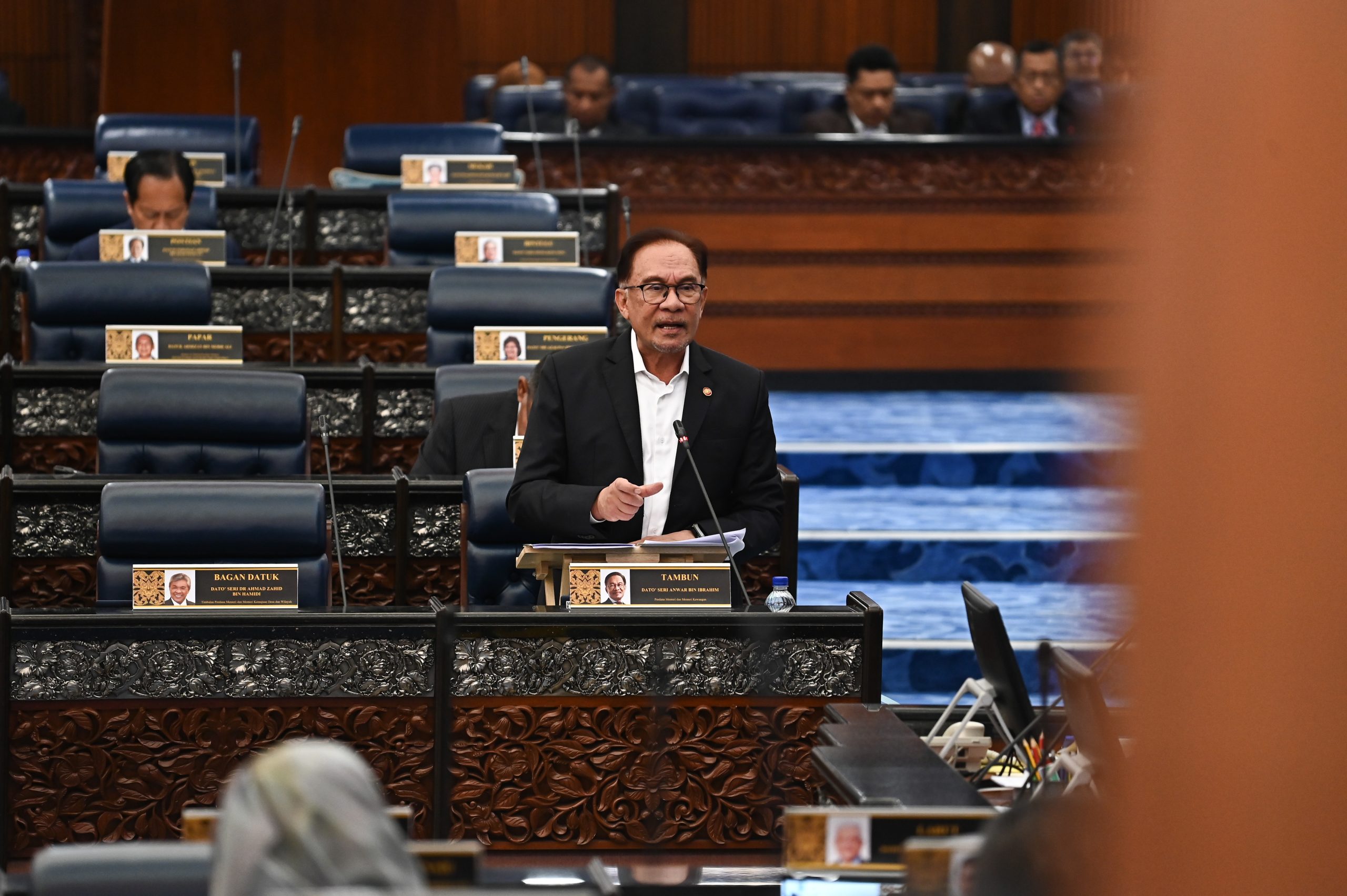
KUALA LUMPUR – Malaysia’s competitiveness will improve as the country rationalises subsidies for fuel and other items in a targeted manner, Prime Minister Datuk Seri Anwar Ibrahim said today.
He told the Dewan Rakyat that the country’s drop in competitiveness rankings was linked to the government’s high spending on subsidies, which was more than 3% of gross domestic product in 2022.
“We have not been firm in reigning in our spending, we are giving out more for STR (Sumbangan Tunai Rahman), i-Sara. This also relates to our delay in implementing subsidies, or our lack of firmness in implementing targeted subsidies earlier.
“Now that we have implemented targeted subsidies, it should be better,” Anwar said during the Prime Minister’s Question Time in Parliament today.
He was answering Afnan Hamimi Taib Azamudden (Alor Setar-PN) who asked the prime minister to explain Malaysia’s drop to 34th place in the World Competitiveness Ranking 2024 by the Institute for Management Development. The drop is seven rungs from 27th place in 2023.
Answering a supplementary question by Datuk Rosol Wahid (Hulu Terengganu-PN), Anwar cited Indonesia, which has raised fuel prices in recent years to reduce its spending on subsidies, as had Thailand.
“Indonesia reduced its subsidies and its competitiveness improved. Same with Thailand. Whereas for us, subsidies are an unrealistic economic prescription, prices are low compared to the real market price,” Anwar said.
In IMD’s competitiveness rankings for 2024, Malaysia is behind Indonesia, which rose to 27th place from 34th in 2023, and behind Thailand, which improved to 25th place from 30th.
Anwar said the government would not take a “defensive approach” to the world rankings but instead work on making improvements.
Besides the subsidy bill, he said other factors influencing Malaysia’s competitiveness were its weak ringgit, which is expected to strengthen this year, and economic growth, which had slowed from 8.9% growth in 2022 after the initial flurry of activity following the Covid-19 pandemic.
For 2024, GDP growth is projected to be between 4% and 5%, and Anwar said this should help improve Malaysia’s competitiveness. – June 25, 2024