

KUALA LUMPUR — Malaysia’s poor record of human rights has been noted in the areas of peaceful assembly and treatment of detainees, among others, in Amnesty International’s (AI) State of the World’s Human Rights report for 2024.
AI Malaysia’s interim executive director Vilasini Vijandran said although the right to peaceful assembly was guaranteed under Article 10 of the Federal Constitution and protected under international law, Putrajaya continued to “undermine” this freedom for Malaysians.
“Malaysian authorities used the Peaceful Assembly Act 2012 (PAA) and other punitive laws to criminalise peaceful protests,” she said in a statement on the annual report.
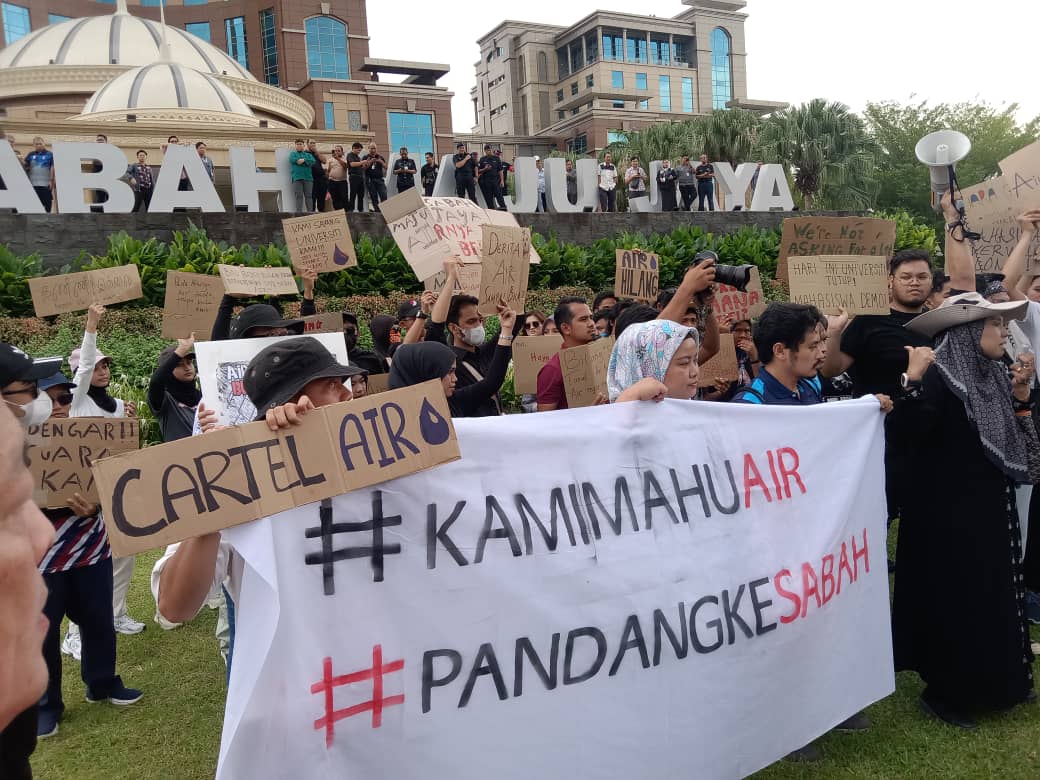
She highlighted particular episodes, such as the arrest of stateless Bajau Laut students, including children, for peacefully protesting over the right to water access for students in Sabah.
“(This) is a new low for the Malaysian government and illustrates how state power is being used to silence those most vulnerable…authorities must realise (that) they are not only suppressing protests but also sending a chilling message to young people that their voices are unwelcome.”
The incident referred to saw the arrest of a teacher and several students, some of them minors at a protest in Kota Kinabalu in June last year to demand water supply. They were released after about a week in detention.
However, AI Malaysia commended the government’s plans, announced in February, to amend the Peaceful Assembly Act by removing Section 11 that requires protestors to obtain permission from venue owners.
“While this is a welcome step, the government has yet to clarify whether broader, meaningful reforms to the PAA will follow. We urge the government to engage civil society meaningfully in the amendment process to ensure that all revisions align with international human rights standards…no one should be arrested, investigated, charged, or imprisoned for exercising their constitutional right to protest,” said Vilasini.
Malaysia was also cited for its treatment of refugees, migrants, and detainees, in particular, the use of “ indefinite detention, denial of legal safeguards, and systemic abuse in detention centres”, the annual report said.
“From arbitrary detention to unchecked abuse, the government’s current approach not only dehumanises people in search of safety and a better life but entrenches a system of impunity.”
Vilasini also noted that custodial deaths still persisted, as did claims of torture in detention.
“(Although) at least 24 deaths (were) reported in police custody from 2022 to mid-2024…accountability remained elusive,” she said.
AI Malaysia also reiterated its call for complete abolishment of the death penalty, noting that the courts still sentenced individuals to death, including for drug-related offences.
Malaysia has only removed capital punishment as a mandatory sentence, giving judges discretion to decide on the death penalty.
“True reform must address systemic injustice. Until the death penalty is abolished in full, the right to life remains under threat,” Vilasini said.
On protecting freedom of speech, she said Putrajaya “weaponised” existing laws to suppress artists, activists and political critics, noting the case of Mukmin Nantang was investigated for sedition after defending the rights of the Bajau Laut community.
She also cited artist-activist Fahmi Reza who was arrested for his satirical artwork targeting a political figure.
“Art is not a threat. Advocacy is not a crime. Criticism is not sedition,” said Vilasini.
“People in Malaysia must be able to express themselves freely, be it through speech, writing, film, painting, or posting online—without fear of censorship, harassment, or arrest.”
She also said there is a lack of transparency or oversight now that the government has enhanced government powers over online discourse through new laws and licensing requirements for social media platforms, even those these are meant to combat cyberbullying and other online crimes.
The annual report, which was launched today, covers 150 countries. Overall, the global picture is “grim” and showed “deepening authoritarianism and escalating repression”, AI said.
Notably, there is an increasing trend worldwide of criminalising dissent; weaponising laws, and using extreme labels such as “threat to national security” on activists and even protestors against Israel’s genocide in Gaza. – April 29, 2025