



KUALA LUMPUR – Malaysians must adopt a preventative healthcare approach from an early age to address the growing burden of kidney failure, said former Permatang Pauh MP Nurul Izzah Anwar.
Nurul Izzah, who currently heads the think tank Polity, stressed that inculcating health awareness—particularly among school students—is vital as the number of dialysis patients continues to rise nationwide.
She said the call for early education came directly from patients who are currently undergoing dialysis and are urging policymakers to act before more lives are affected.
“I remember visiting a dialysis centre, and the patients were speaking to me, where one of the patients, with teary eyes, said: For goodness sake, please just just create this awareness because don’t wait until it’s too late. I am stuck with doing dialysis.
“(Patients) do receive support in terms of care provided, such as logistics (including) for those from the public housing units (PPR) to go for dialysis.
“But I think (the patient’s) point was preventive care, like making sure that people understand the importance of (limiting) sugary intake, dietary requirements, and nutrition,” she said during a podcast on women’s health by Vital Signs Asia, a regional health information portal focused on patient advocacy and access to essential medical services.
The remarks came in response to podcast host Manvir Victor, himself a kidney transplant survivor, who asked Izzah about her experiences with dialysis patients during her time as an MP.
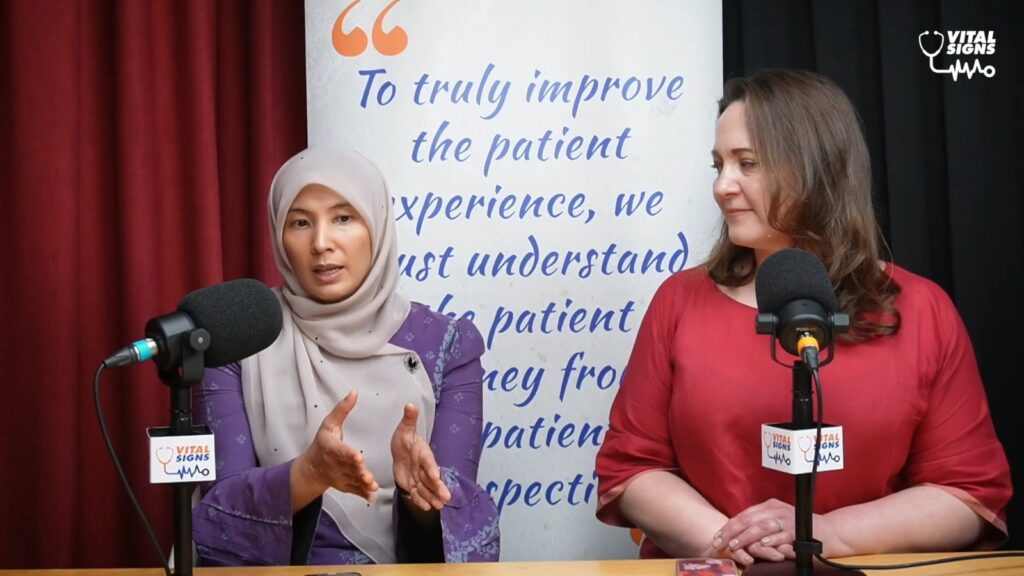
Manvir also cited alarming statistics, noting that 50,000 Malaysians are currently on dialysis, with 10,000 new patients added each year. By 2030, this number is projected to hit 100,000.
Nurul Izzah said preventative healthcare must begin in schools, where students can be taught the fundamentals of health literacy.
Adding to the discussion, healthcare advocate Dr Yolanda Augustin said wider access to screening is essential in detecting non-communicable diseases (NCDs) such as diabetes, hypertension and high blood pressure—primary contributors to kidney failure in Malaysia.
“We also need to encourage people to not smoke, and of course we’ve got a sugar tax in terms of, you know, encouraging people to go for plain water rather than, you know, the sugary, colourful drinks.
“But also understanding the nutritional intake of food, because I think that’s something that’s very poorly understood (among the public),” she said.
Dr Yolanda also highlighted the importance of placing women at the centre of community health education efforts.
“I think we really need to go to the heart of educating our women. When Izzah and myself first thought about who we wanted to target or focus on in terms of our community outreach, we realised that women were very much at the heart of it (as) they are actually the glue that holds the families together.
“If you educate the woman basically on all aspects of healthcare, but also on nutrition, on environmental health, et cetera, the chances of actually then having a positive impact on the children in that family is also much higher,” she said. – May 2, 2025.