

KUALA LUMPUR – The Domestic Trade and Cost of Living Ministry (KPDN) has assured the public that the price of chicken eggs will continue to be regulated, even as subsidies are gradually phased out by August 2025.
Minister Datuk Armizan Mohd Ali said the government’s decision to reduce the subsidy from 10 sen to 5 sen per egg starting May 1, and to remove it entirely by August 1, would not result in unchecked price hikes, as eggs remain under price control.
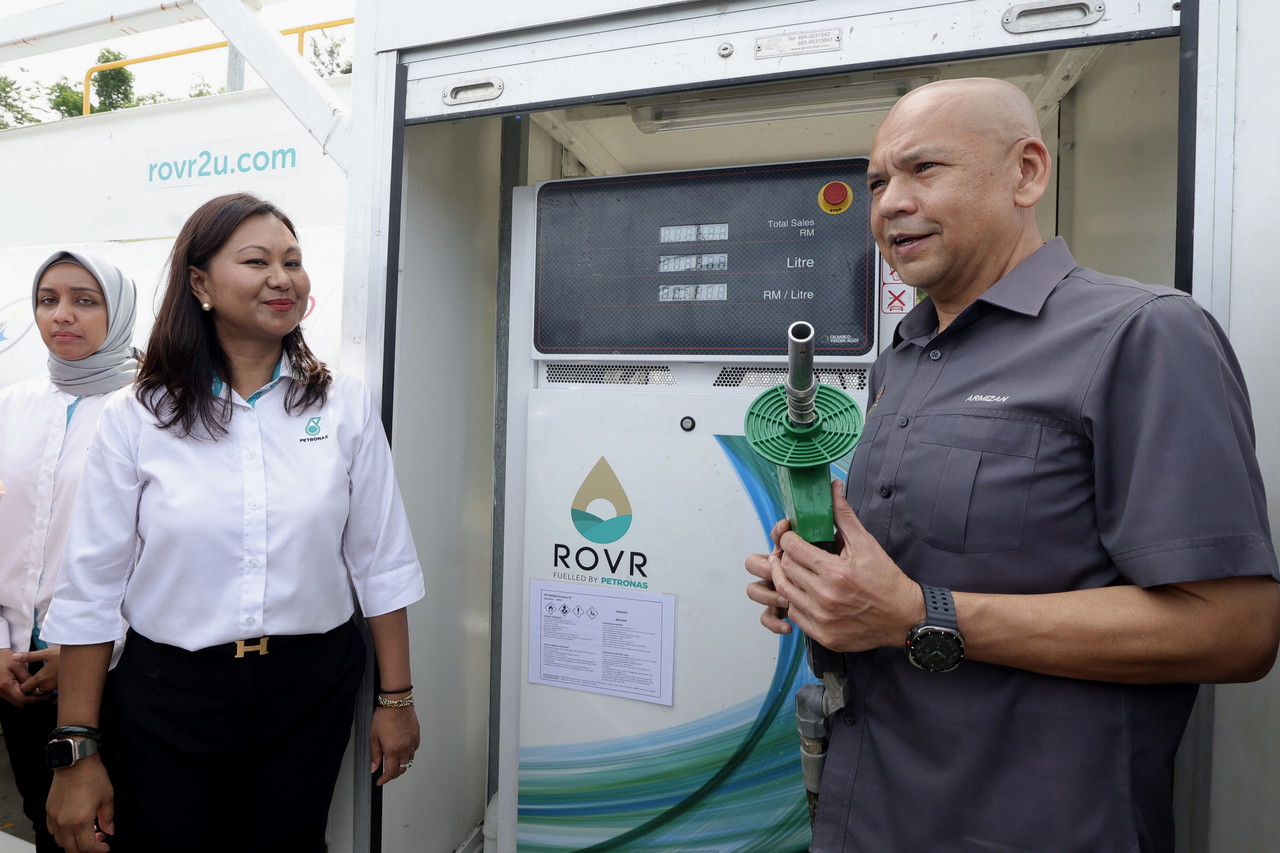
“We have specific operations in place to monitor supply, and recently the government set up a special committee chaired by KPDN to oversee supply and price stability,” he said at a press conference after launching RON97 fuel at the Petronas station in Kimanis on Saturday.
He also issued a stern warning to traders against arbitrary price increases.
“I am not merely expressing hope, but stressing and reminding all parties that they are still bound by the controlled price of eggs in the market, do not raise the price at will. Our officers are monitoring the situation together with the Ministry of Agriculture and Food Security (KPKM),” he said.
The minister encouraged consumers to report any violations through KPDN’s existing complaint channels.
“KPDN is committed to tracing each price-related complaint within 24 hours, so submit your report on the platform and we will take immediate action if any party raises egg prices,” he added.
The government had announced the phased reduction as part of its targeted subsidy rationalisation strategy under the Madani administration. The move follows extensive consultation and was made in view of maintaining a steady supply of eggs in the market while easing the strain on public funds.
According to the Agriculture and Food Security Ministry, the new approach reflects industry commitments to ensure sufficient supply, supported by more consistent production costs. It is also intended to promote the long-term sustainability of the domestic egg sector.
Recently, Mydin Hypermarket managing director and Bumiputera Retailers Association president Datuk Ameer Ali Mydin supported the government’s move, describing it as necessary to address recurring supply issues.
“This is exactly what we’ve been urging the government to do. We previously faced significant shortages of eggs in the market, but this initiative is expected to boost availability,” he told Scoop.
He acknowledged there could be a temporary rise in prices by about five to 10 sen as retailers recalibrate margins, but anticipated overall improvements in availability and investment.
“There may be a temporary price increase of around five to 10 sen, as some retailers may adjust prices to maintain margins. However, we’ve yet to make any decisions on our end,” he said.
“Thanks to the government’s move, we expect improved supply, more investment, and ultimately, for the market to stabilise on its own.”
He also noted that the subsidy rollback was timely in light of shifting global trade conditions.
“The removal of the subsidy is also a step in the right direction. In light of (US President) Donald Trump’s tariff policies, this shows we’re addressing non-tariff barriers — including agricultural subsidies. That said, the public need not worry. Retailers will ensure prices remain fair and not exceed the cost of Omega-3 eggs,” he said.
Industry stakeholders have echoed the sentiment that prices are unlikely to spike dramatically.
Datuk Jeffrey Ng, adviser to the Federation of Livestock Farmers’ Associations of Malaysia (FLFAM), expressed confidence that egg prices would remain stable under the revised scheme.
“The government has revised the subsidy, and after discussions with us, we’re impressed with the new scheme. We’ve conducted a thorough analysis and are confident that prices will remain stable. There will also be sufficient supply to meet demand,” he said.
Malaysia first introduced egg and poultry subsidies and price caps in February 2022, following disruptions to the global supply chain due to the war in Ukraine, which impacted key feed ingredients like wheat and corn. – May 3, 2025