

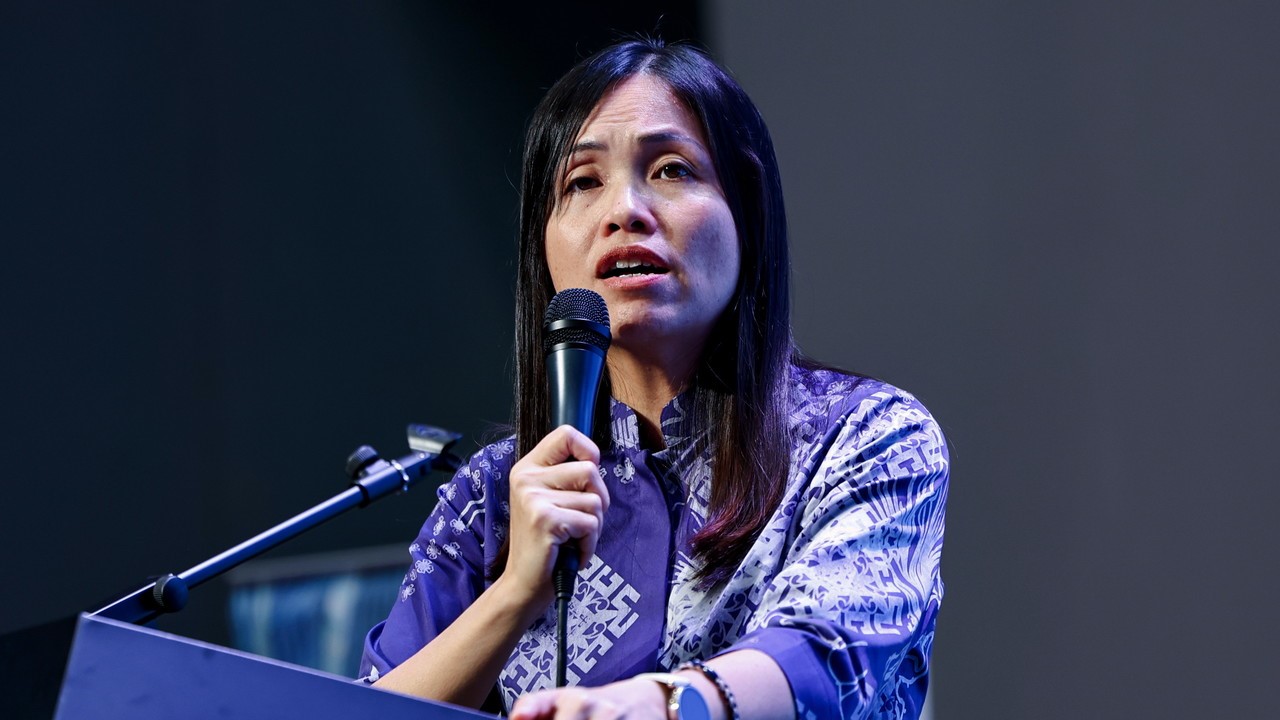
KUALA LUMPUR – Deputy Communications Minister Teo Nie Ching has praised Malaysia’s rise in the 2025 World Press Freedom Index, attributing the improvement to recent government reforms, particularly the establishment of the Malaysian Media Council.
Teo acknowledged the difficulty of balancing freedom of expression with the need to preserve social harmony in Malaysia’s diverse, multicultural society.
“One of the key factors contributing to the rise is the effort to establish the Malaysian Media Council. The Act was passed in both Houses of Parliament this year, which is a move aimed at fostering independent, responsible, and professional journalism,” she said in a statement.
She said as noted in the recent Reporters Without Borders report, online platforms have exacerbated the information space, contributing to the spread of manipulated and misleading content and amplifying disinformation.
In response, the government has modernised legislation, with the Communications and Multimedia Act amended in 2024 to clarify key terms.
The amendment explicitly states that content in the form of satire, parody, or clear fiction is not considered false information.
Teo described this as an important safeguard for creative expression and legitimate commentary in Malaysia’s unique landscape.
“While we recognise that we still have a long way to go, this year’s improvement shows that progress is possible,” she said.
“The Ministry and myself are committed to continue working towards a Malaysia where press freedom and social responsibility can coexist, and where diverse voices are heard and respected.”
On May 2, RSF reported Malaysia’s rise by 19 places in the 2025 rankings, placing it at 88th out of 180 countries with a score of 56.09. This marks a significant improvement from 2024 when Malaysia ranked 107th, although it still falls short of its 2023 position of 73rd.
In Southeast Asia, Malaysia ranks second, just behind Thailand (85th), and ahead of Brunei (97th), the Philippines (116th), Singapore (123rd), and Indonesia (127th).
While Malaysia made progress in economic, social, and security indicators, it still faces challenges in the legislative and political realms. RSF highlighted threats to investigative journalism, sensitivities surrounding the monarchy, and restrictions on discussions of race and religion as ongoing concerns.
“The authorities are after investigative reporters, and the monarchy is an extremely sensitive subject,” RSF noted, adding that the concentration of media ownership continues to threaten editorial independence.
Earlier this year, the government introduced a journalism code of ethics and passed the Malaysian Media Council Bill, which will establish an independent media regulatory body. Despite these steps, RSF reiterated calls for the repeal of outdated laws such as the Sedition Act 1948 and the Printing Presses and Publications Act 1984.
RSF also warned that press freedom globally faces increasing threats, with economic pressures posing a significant challenge to journalism, and media ownership increasingly concentrated in the hands of political elites. – May 3, 2025