

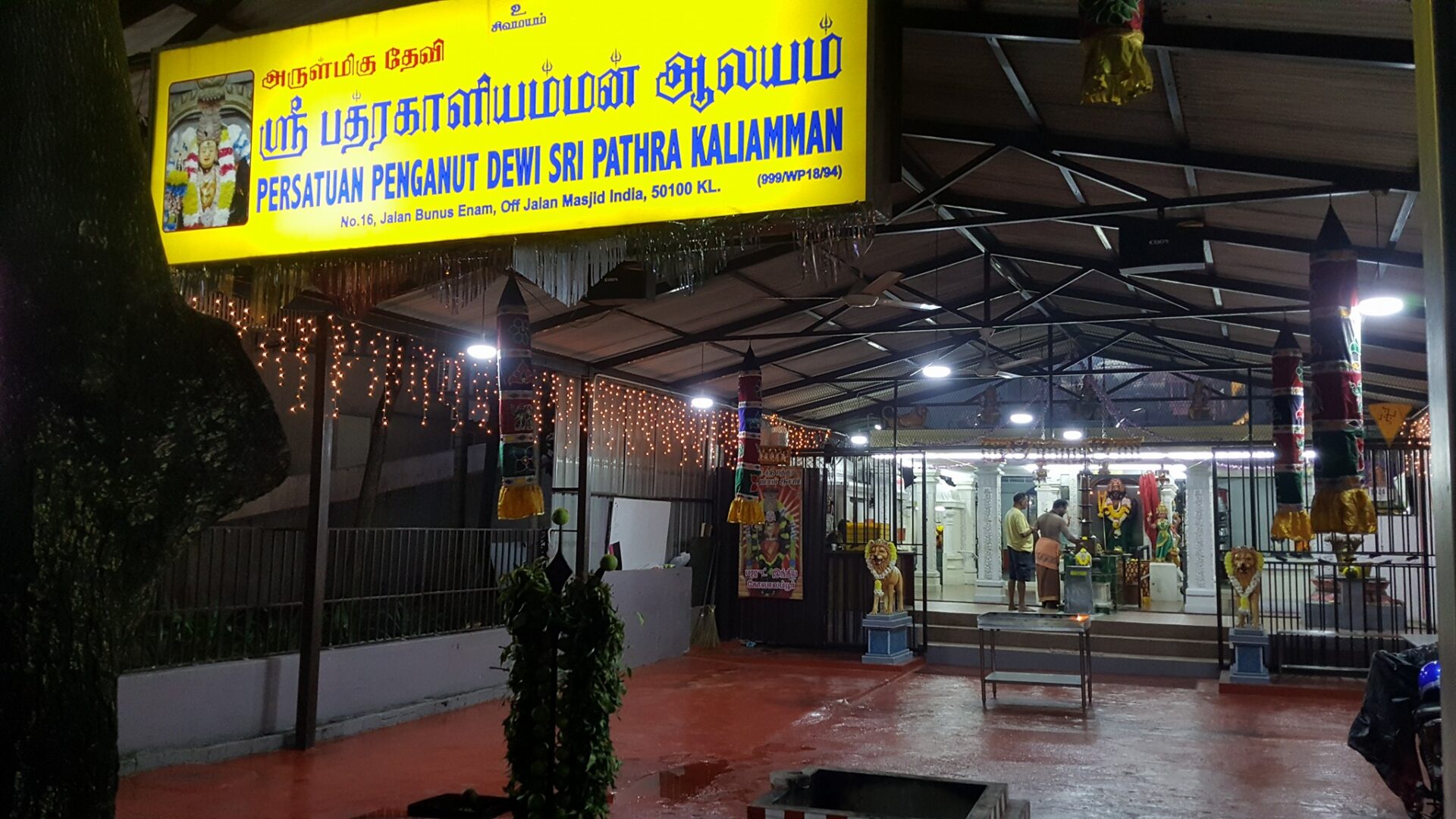

GEORGE TOWN – Penang should look to its own state Islamic Religious Council (MAINPP), which has been managing Islamic houses of worship statewide, to effectively address the issue of temple evictions and land ownerships that have gained traction nationwide following the Dewi Sri Pathrakaliamman temple fiasco in Kuala Lumpur, suggested a backbencher in the state assembly today.
Gooi Hsiao Leung (Bukit Tengah-PH) said MAINPP should be emulated for how it manages surau and mosques registered under it, noting that Islamic houses of worship rarely face threats of demolition or eviction.
“This is due to the fact that (MAINPP) has a good rule in managing all houses of worship, where its approval is required to build them. Maybe this is something that we can consider,” said Gooi while debating the motion of thanks to the governor in the state assembly today.
The PKR assemblyman also proposed that the Penang government create an online registry for all non-Muslim houses of worship in the state to record their establishment history, legal status, and land ownership.
While it is known that there are 1,200 registered non-Muslim houses of worship statewide, these institutions are currently registered on a voluntary basis.
“Therefore, I would like to suggest that we do a comprehensive audit, whether we survey all existing temples and include them in a register, where we can see what problems are being faced by each Hindu and Chinese temple in Penang,” he added.
Gooi also called for the Penang Hindu Endowments Board (PHEB) to be empowered as the “custodian” and “legal guardian” of all Hindu temples in the state.
PHEB is a statutory body under the Hindu Endowments Act 1906. Its main role is to administer endowments placed under its care – including land, landed property, buildings, houses, burial grounds, temples, and monetary contributions for the benefit of the Hindu community in the state.
“Perhaps it is also time for the state government to table an enactment that prohibits the eviction of any temple that is more than 50 years old,” added Gooi.
Gooi acknowledged the sensitivity of the temple issue, noting that past incidents of demolition and relocation had sparked the Hindraf rally in 2007 and the Seafield Sri Maha Mariamman temple riot in 2018, which claimed the life of firefighter Muhammad Adib Mohd Kassim.
He also pointed out that in the aftermath of the Dewi Sri Pathrakaliamman temple issue, a Facebook group named “Rumah Ibadat Haram Dibina Dimana Hari Ini?” emerged, encouraging members to identify Hindu temples, upload their location, and report them as illegal structures.
“This is not civic activism, but a form of racial profiling which is dangerous for a country that is well aware of the dangers of racial divide.
“Penang is a symbol of diversity as our streets are serenaded with azan chants, rings of church bells, and hymns from hundreds-of-years-old temples.
“We are a living mosaic, but we can’t afford to be complacent. We need to ask: what legal mechanisms do we have to ensure Hindu temples, which have existed since colonial times, are not left in legal limbo?” he asked. – May 20, 2025