


KUALA LUMPUR – Malaysia’s media industry is at a critical crossroads, facing mounting challenges including funding constraints, the dominance of foreign platforms, and a flood of unverified news spread by “citizen journalists”.
TV AlHijrah chief executive officer Namanzee Harris said the evolution of the media industry requires urgent attention from the government – particularly the Communications Ministry and the Digital Ministry – to ensure the sustainability and long-term survival of local media.
“Our dependence on foreign platforms like TikTok and Facebook must be scrutinised.
“We have no control over these platforms, and at any time, media content or portals can be deactivated.
“For example, in February, several local media portals were suspended following reports on a video of sexual harassment involving a child at a surau.
“This is proof of how vulnerable local media are to unilateral actions by international platform providers,” he said.
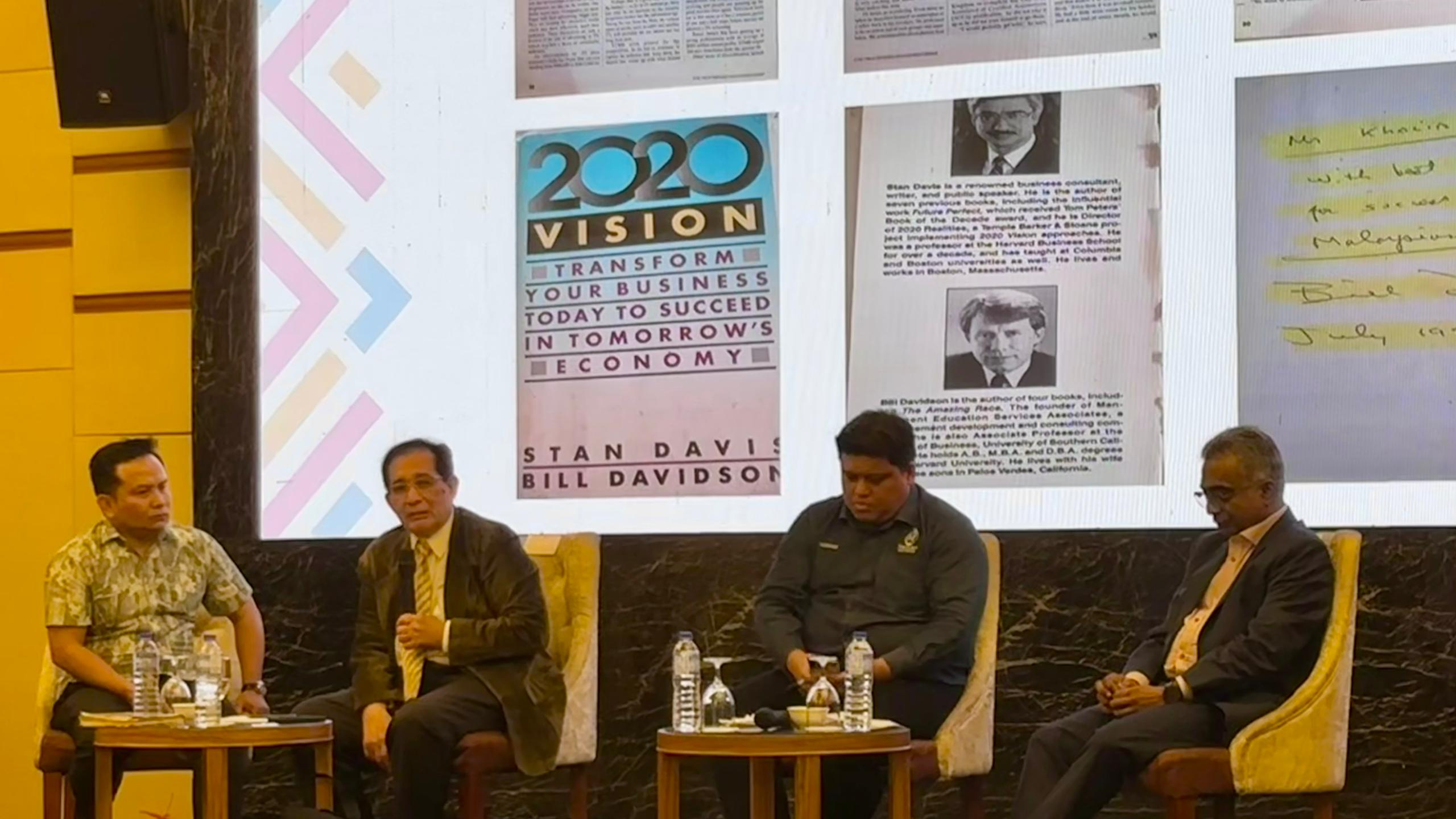
He was speaking as a guest panellist at the Media and Nation-Building: Ethics, Cyber Protection and Regulatory Frameworks seminar held today.
The seminar was jointly organised by the Malaysian Press Institute (MPI) and the Malaysian Communications and Multimedia Commission (MCMC).
Namanzee added that mainstream media are also facing a credibility crisis, competing with a growing number of unofficial social media accounts that often circulate unverified news faster than traditional outlets.
“Journalists are bound by ethics and fact-checking. But now, fake news spreads faster because it bypasses any verification process,” he said.
He stressed that national media policy must be renewed to become more holistic and inclusive, with a clear emphasis on providing space and support for journalists to produce accurate and ethical reporting.
Funding: critical issue for industry
Free Malaysia Today (FMT) executive chairman Datuk Nelson Fernandez, also on the panel, said funding remains a crucial issue in ensuring the survival and growth of the media industry.
“We can talk about technology, evolution, and the future of media, but the reality is, without money, we can’t even pay staff salaries.
“We are all still struggling to find revenue sources – and it’s not just us; even large, long-established media companies face the same issue. Some are downsizing and reducing staff.
He added that media organisations have had to implement paywalls to sustain operations, despite the move being unpopular with readers.
“When people ask why so much content is now behind paywalls, the answer is that this paid content enables other readers to access our reporting for free. Media companies are forced to make trade-offs.
“We’re not in this industry to get rich. The truth is, we’re journalists who still wear the same one suit, one shirt, and one pair of trousers. Our only real currency is influence,” he said. – May 30, 2025