

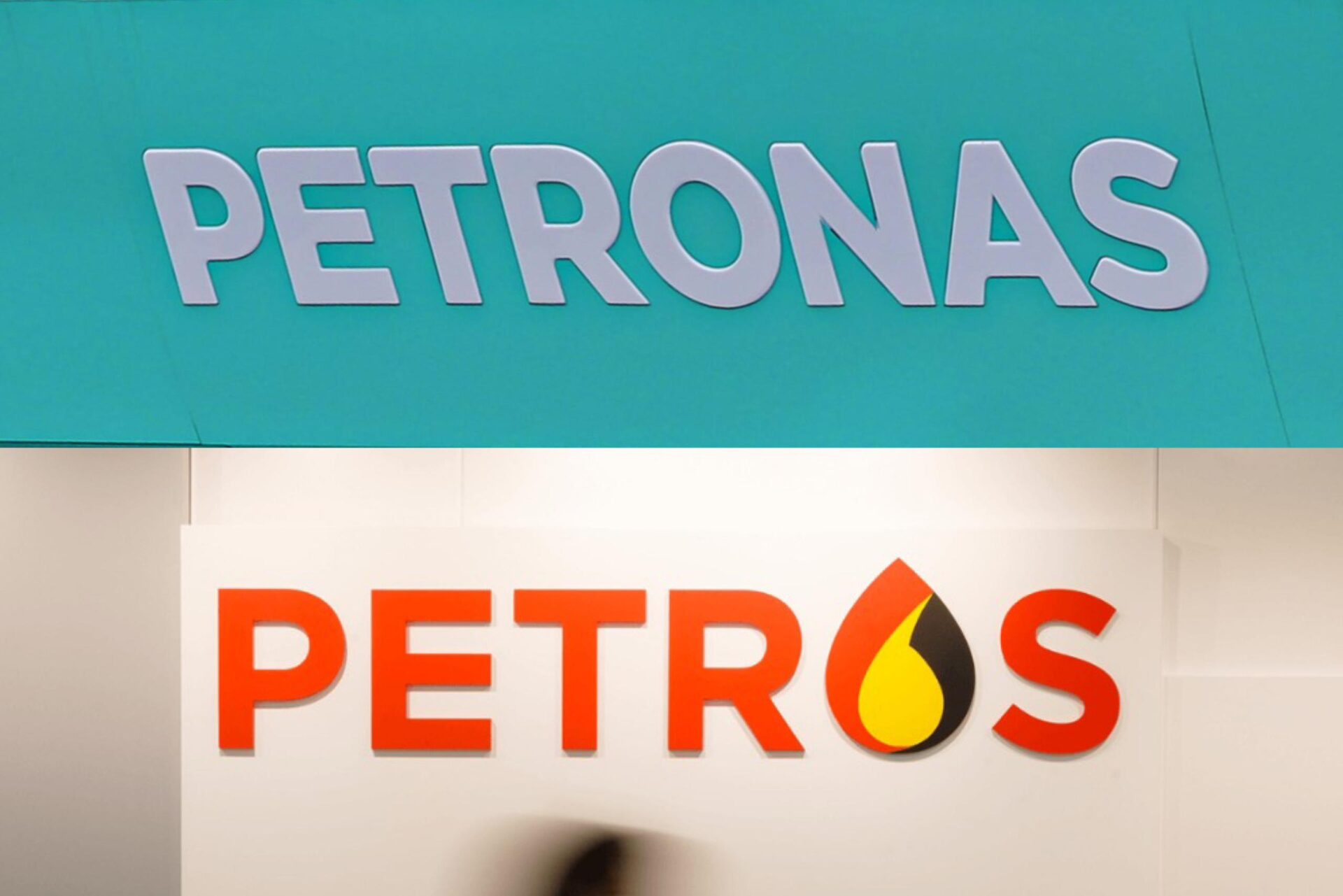
KUALA LUMPUR – The recent recognition of Petroleum Sarawak Bhd (Petros) as the natural gas aggregator in Sarawak has been hailed as a milestone in the state’s ongoing quest for greater autonomy.
Yet, according to Sarawak DAP Socialist Youth (DAPSY) leader Jordan Soo Tien Ren, the significance of this development must be understood within a broader political and legal context – one that balances symbolism with structural realities.
“While the exact details of Petros’ role have not been publicly disclosed, the term aggregator typically refers to an entity responsible for the procurement, distribution, and/or supply of natural gas,” Soo, who is also the political education director of DAPSY Sarawak, explained in an interview with Scoop.
“It is reasonable to infer that Petros will be entrusted with supplying natural gas across Sarawak. However, this does not include extraction or processing,” Soo, who is a practising lawyer, said.
He stated that Petros will likely need to purchase gas from Petronas, which retains upstream capabilities.
“It’s not a full transfer of the oil and gas value chain, but it’s a major step,” he said.
Recognition without legislation
When asked how the recognition of Petros as an aggregator was formalised, Soo said the move did not require new legislation.

“This recognition appears to be an executive directive within the framework of existing laws – specifically the Petroleum Development Act (PDA) and the Distribution of Gas Ordinance (DGO),” he said.
“It’s about implementation, not reinvention.”
He stressed that Petronas will continue upstream operations, while Petros assumes a midstream role – setting the stage for a commercial, rather than combative, relationship between the two entities.
Still, the question of whether Sarawak will eventually enter the upstream sector remains open.
“There is a clear political will,” Soo acknowledged.
“But if Sarawak is serious about upstream activities like exploration and production, we must invest in technical capacity and technology. That takes time and money.”
A realist’s view on autonomy
As debate intensifies over Sarawak’s place in the federation, Soo offered a sobering view of what autonomy actually means.
“Total autonomy is a myth,” he said.
“After six decades of nationhood, our legal, economic, and political systems are deeply interwoven. The real question isn’t whether autonomy should be granted – it’s how much power should remain at the federal level, and how much can be devolved.”
Soo warned against the politicisation of the autonomy narrative, urging transparency from all parties.
“We should stop capitalising on nationalist sentiment without being honest about what is legally and administratively possible.”
Education and healthcare: high aspirations, hard realities
Among the sectors often cited for devolution, education and healthcare top the list. But Soo called for caution and clarity – especially in interpreting the Malaysia Agreement 1963 (MA63).
“MA63 does not confer education autonomy to Sarawak. That’s a common misconception,” said Soo, who studied the agreement during his university years.
“Using MA63 to justify education autonomy is legally indefensible – though socially and politically understandable.” Instead of building a separate education system, Soo advocates a unified national system with localised content.
“A parallel education system is not only costly—it’s divisive. We risk creating a two-tiered society.”
DAP’s role in the unity government
As a youth leader in the federal ruling coalition, Soo said DAP and DAPSY support autonomy – but not just for Sarawak.
“We advocate nationwide decentralisation,” he said.
“Now that DAP is part of the federal government, DAPSY Sarawak will push for greater devolution of power within the party and in the public domain.”
He stated that fiscal autonomy, in particular, is crucial.
“Without fiscal control, executive autonomy is hollow. But it must be balanced. The federal government still has core responsibilities – education, security, and healthcare. It would be unfair for states like Kelantan to finance those through federal taxes while Sarawak keeps its petroleum income.”
He noted that pushback is inevitable.
“There will always be a power struggle between the center and the states. But we can learn from the US, the UK, and Germany. Decentralisation has proven merit.”
Political symbolism and long-term vision
Soo acknowledged that Petros’ elevation also carries political weight.
“Symbolically, this is an alignment between PH and GPS at the federal level – especially between PKR and PBB,” he said.
“But electorally, it may not move the needle much in seats where the real contest is between DAP and SUPP.”
Looking ahead, Soo believes Malaysia must revisit its federal structure.
“Back in 1963, there were two competing visions. Malaya saw Malaysia as a union of 14 states. But for Sarawak, Sabah, and Singapore, it was meant to be a partnership of three entities, with Malaya representing 11 states,” he said.
“This mismatch of expectations is the root of decades of dissatisfaction.”
He noted that in prosperous times, this tension recedes.
“But during economic downturns, nationalist sentiment resurfaces. Sometimes, it morphs into calls for secession. That’s unhealthy for national unity.”
The way forward, he said, is through mutual respect and restructuring.
“Putrajaya must be open to meaningful regional empowerment. Within the next 15 years, I believe we’ll see serious conversations on restructuring the federation – not to divide Malaysia, but to strengthen it.” – June 5, 2025