

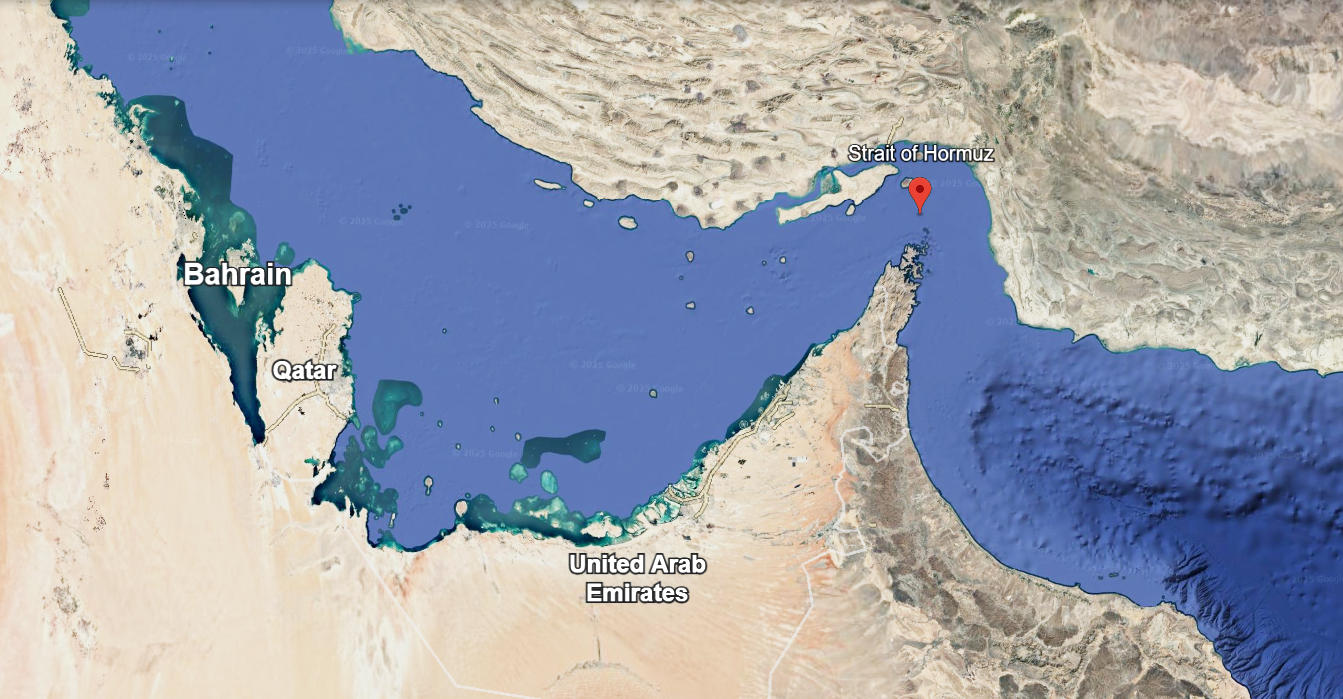

KUALA LUMPUR – Iran’s proposal to close the Strait of Hormuz is not expected to put significant pressure on the United States or Israel in terms of their oil and liquefied natural gas supply needs.
Geostrategist and senior fellow at the Nusantara Academy for Strategic Research (NASR) Azmi Hassan said that if the closure were to occur, it would have a more significant impact on the supply and oil needs of most Asian countries.
“I believe Iran will not decide to close the Strait of Hormuz 100%, even if the Iranian Parliament approves it.
“This is because the impact will not be on Iran’s enemies, but a drastic impact on its allies such as China.
“The Strait of Hormuz is important for oil and liquefied natural gas export routes, accounting for nearly 20% of the global market, especially to Asian countries like China, Japan and South Korea.
“That’s why I believe the decision will not reach the closure of the Strait of Hormuz, because it affects Iran’s trading partners and not Iran’s enemies, especially the US and Israel,” he told Scoop when contacted.

Azmi said that if the closure of the route continues, it will definitely increase world crude oil prices.
“If the Strait of Hormuz closes, the impact on Malaysia (would be) the rise of oil prices – and when it happens, the prices of other products will rise.
“So, willy-nilly, even if the world crude oil price rises, it will give a slight profit to the country’s income, but the prices of imported goods and products will rise,” he said.
Earlier, the proposal to close the Strait of Hormuz was approved by the Iranian Parliament, but the final decision can only be made by the country’s highest leadership, including the Supreme Leader of Iran, Ayatollah Ali Khamenei.
The strait, located between the Persian Gulf and the Gulf of Oman, is a vital sea route with about one-third of global oil trade, or 17 to 20 million barrels of crude oil and condensate, passing through it every day.
Major oil-producing countries such as Saudi Arabia, Iran, the UAE, Kuwait and Iraq rely heavily on this route to export their oil to Asia, their main market.
According to the International Energy Agency (IEA), about 70% of that total is shipped to Asia, including China, Japan, India, South Korea, Singapore, Thailand, Pakistan and the Philippines.
Putra Business School MBA programme director Ahmed Razman Abdul Latiff said that world oil prices could soar to US$100 a barrel if Iran decides to close the Strait of Hormuz.
“If oil prices soar, the transport sector that uses diesel will experience an increase in operating costs, including all sectors that depend on logistics for the movement of their goods.
“Oil-related companies may enjoy increased revenue, but the government will have to increase subsidies for RON95 unless the rationalisation of RON95 petrol is implemented immediately,” he said.
For Bank Muamalat chief economic analyst Mohd Afzanizam Abdul Rashid, geopolitical tensions in the Middle East, especially the risk of disruption in the Strait of Hormuz, have restored uncertainty in the global oil market.
“Although our baseline forecast does not expect Brent oil prices to exceed the US$100 (RM425) a barrel level, our internal estimates indicate that if this scenario occurs, RON95 pump prices could rise to RM3.73 per litre – that is about 80% higher than the current subsidised price level.
“This will significantly increase the government’s fuel subsidy burden and make it difficult to implement the planned subsidy rationalisation in the second half of 2025, as previously outlined.
“However, the reform measures do not necessarily have to be cancelled, but may instead affect the rate of implementation or related fiscal considerations,” he said.

He added that the value of the ringgit remains relatively stable, which is now trading around 4.29 against the US dollar.
“Current technical indicators show that the USD/MYR pair is hovering in a neutral range around 4.25, with resistance and support levels at 4.3348 and 4.2430 respectively.
“In the event of a breakout beyond the resistance level, the currency pair could test the 4.3661 level in the near term, particularly if geopolitical tensions continue to escalate.
“While we maintain our year-end exchange rate forecast at 4.30, we will remain vigilant to external uncertainties and any changes in global monetary dynamics, given that geopolitical risks persist.
According to yesterday’s trading data, Brent oil futures recorded an increase of 2.45% to US$77.33 (RM328.54) a barrel, following increased tensions in the conflict between Iran and Israel. – June 25, 2025