

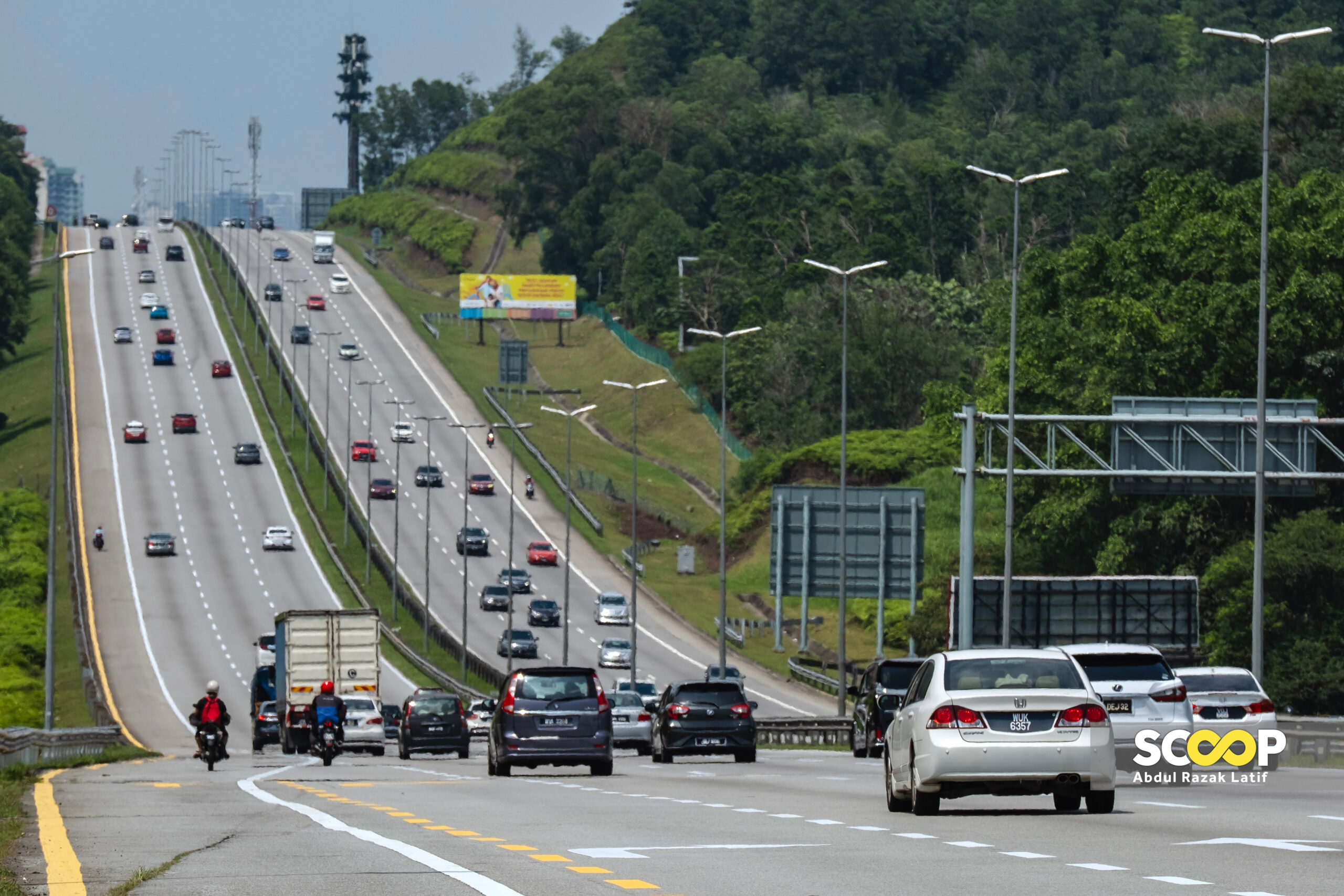

GEORGE TOWN — Imagine breaking down on a dark stretch of highway, needing urgent help — but your phone signal drops to zero. That’s the very scenario the government wants to eliminate through a bold push for blindspot-free highways, and a new app called Nexus could be the tool to make it happen.
As part of the Di Mana Ada Jalan, Di Situ Ada Internet initiative, the Malaysian Communications and Multimedia Commission (MCMC) is partnering with the Malaysian Highway Authority (LLM) to identify and fix poor telco coverage along major roads — and they want everyday road users to help map the problem.
The initiative, announced on July 1, is still in its planning stage, with locations yet to be finalised. However, Communications Minister Datuk Fahmi Fadzil said the goal is to include these routes under Phase 2 of the Jalinan Digital Negara (Jendela) programme, as they would likely require new telecommunications towers.

Why seamless connectivity on highways matters
MCMC commissioner Derek Fernandez told Scoop that the commission is prioritising consistent mobile service coverage to ensure drivers are not disconnected, particularly in emergency situations.
“Highways with telco blind spots would spell trouble for users who need to seek emergency services for vehicle breakdown or health emergencies,” Derek said.
“What if the certain area you break down at doesn’t have a very weak signal, you can’t get through? Therefore, it would be very detrimental if we cannot provide (good telco coverage), especially when roads are the areas of trade and commerce as well as movement of people,’’ he added.
Derek noted that logistics companies also depend on continuous coverage to track and monitor vehicles — a necessity for safety and efficiency.

Coverage must extend to key highway touchpoints
Asia Mobiliti’s Chief Commercial Officer, Vicks Kanagasingam, said coverage should focus on essential points such as rest areas (R&Rs), emergency lay-bys, petrol stations, EV charging stations, toll gates and CCTV monitoring posts.
As Malaysia prepares to implement multi-lane free flow (MLFF) tolling systems, Vicks stressed the importance of stable, high-bandwidth and low-latency connections to support real-time vehicle number plate recognition and toll payment.
“For IoT vehicle telematics, tracking and monitoring logistic assets (especially cold-chain), the current telco coverage is sufficient on the highway.
“Yes, there are some gaps but we don’t need real-time streaming of GPS data and video surveillance data in the vehicles,” he added.
The role of Nexus in mapping blindspots
To support this effort, the MCMC is encouraging the public to use its Nexus mobile app, which helps measure internet signal strength along roads and highways. Developed with input from Derek, the app provides real-time data that can alert the commission and service providers to weak coverage spots.
“When you activate it (Nexus), will inform MCMC and the service providers of where the signal has dropped or not strong.

“As more and more motorists begin to do that, we will have a lot of data, and we can now know which areas need to (have telco coverage) boosted so that there is a seamless connectivity.
“We need to have a more precise detail, and therefore we have (collaborated) with the LLM to promote the use of the Nexus (app) and ask (road users) to participate,” Derek said.
He added that user feedback via the app could lead to improvements, as the commission forwards complaints to service providers for action.
Scoop’s test runs with Nexus
On June 6, Scoop tested the Nexus app in two locations:
The North-South Expressway (PLUS) in Seberang Perai Tengah, which included areas like Permatang Pauh, Butterworth and Juru.
Rural areas of Seberang Perai Tengah such as Sungai Lembu, Kampung Mengkuang Semarak, Penanti and Kampung Petani in Kubang Semang.
The app gave detailed readings of average download speeds, peak speeds and overall quality of connectivity at each stop.
Fernandez said Nexus not only helps users assess if they’re receiving the internet speeds they pay for, but also aids telcos in fine-tuning their network delivery.
“(MCMC is) focusing now on user experience as a criteria for good internet rollout. Good internet development in our country means a good user experience.
“No more (the days where we) just we subscribe to the database (plan) and (simply) say that the service is good. Good is when you use it, you get the speed which you pay for, the speed you subscribe for. These (indicators) show that you have a good experience with the internet.”
Broader applications beyond highways
While Nexus has proven useful for highways, Vicks believes the app has greater potential.
He urged MCMC to use it to assess telco coverage in residential and commercial areas across urban, suburban and rural regions, where digital connectivity still lags. Closing this gap, he said, is vital for education, healthcare, food security and climate resilience.

For example, telco towers equipped with IoT-based weather stations could collect localised data on wind speed, rainfall and humidity — and make this data available via Nexus. Such efforts, Vicks suggested, could be realised through public-private partnerships.
“The telco tower will provide data coverage for the schools and public clinics in these areas and the weather data will be available via Nexus app – to be used by private and public to take proactive actions in managing climate issues.
“With telco coverage in these areas, we can also implement ‘Smart Longkang & Sungai’ IoT solutions connected to the telco-weather stations tower — to monitor potential floods,” he added. – July 9, 2025