

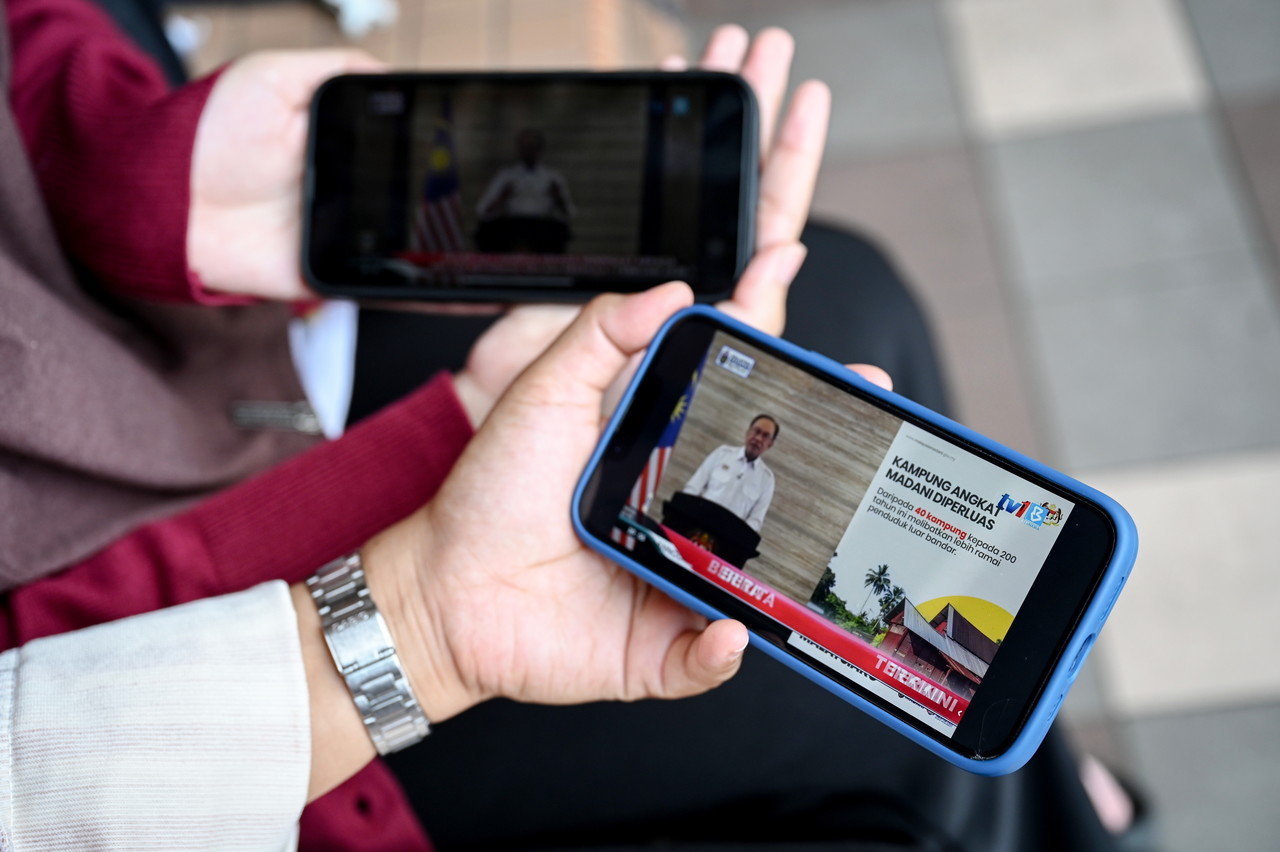

KUALA LUMPUR – Prime Minister Datuk Seri Anwar Ibrahim’s announcement of special initiatives for Malaysians today has been described as a timely and critical move that could provide significant relief to the public, especially the B40 and M40 groups who continue to grapple with rising living costs.
Universiti Malaya sociopolitical analyst Prof Datuk Awang Azman Awang Pawi said the measures show the government is listening and acting in response to public concerns. He noted that in the current climate of food inflation, unaffordable housing, burdensome loan interest rates, and global economic uncertainty, any initiative that lightens the rakyat’s burden should be welcomed.
If the announcement is comprehensive and effectively targets vulnerable groups, he said, it reflects a government that is not only aware of public grievances but also willing to act proactively. The announcement, he added, comes at a crucial juncture – when many are trapped in household debt, facing job insecurity, and dealing with a widening income gap.
According to Awang Azman, targeted assistance such as direct subsidies, tax reductions for low- and middle-income earners, or employment incentives would not only help people get by but also enable better financial planning.

However, he cautioned against normalising one-off or direct cash handouts as a long-term policy response. While helpful in the short term, such announcements risk becoming cosmetic if they do not address structural issues like wage stagnation, the lack of affordable housing, and weak social safety nets.
“The key question,” he said, “is whether this announcement is structural or merely cosmetic.”
He stressed that policy effectiveness depends not only on its content but also on execution.
“Will the aid reach those truly in need? Are monitoring mechanisms transparent enough to prevent leakages?” he asked.
Within the Madani governance framework, Awang Azman said, implementation integrity and efficiency are the real test of the government’s sincerity.
He also pointed out that politically, such announcements can serve to boost public trust in the administration, especially as the country moves into a more dynamic political phase.
Still, he emphasised that they must go beyond political optics and reflect genuine empathy and sustainable economic planning.
“The prime minister’s announcement can certainly bring much-needed short-term relief,” he said, particularly in addressing cost of living pressures. However, he warned that without inclusive long-term policy, competent implementation and tight oversight, sustainable prosperity and social justice will remain out of reach.
“Temporary aid must be matched with structural reforms so that rakyat’s well-being becomes a lived reality, not just political rhetoric,” he said.
Earlier, Anwar unveiled several initiatives aimed at easing living costs and supporting Malaysians through the country’s structural economic transition.
Among the key measures is a one-off RM100 cash credit to be channelled to all Malaysian adults via MyKad, under the Sumbangan Asas Rahmah (SARA) programme.
Valid from August 31 to December 31, the RM100 can be used to purchase essential goods at over 4,100 outlets nationwide. The initiative is expected to benefit around 22 million individuals, bringing the total allocation for SARA and Sumbangan Tunai Rahmah (STR) to RM15 billion this year.
RON95 petrol will be priced at RM1.99 per litre once targeted fuel subsidies begin – a move projected to benefit 18 million drivers and motorcyclists, including youth and gig workers.
A planned toll hike for 10 highways has been postponed, saving the public over RM500 million.
Additionally, 85% of domestic users will see up to a 14% drop in their electricity bills for the second half of 2025, compared to the first six months of the year. – 23 July 2025