

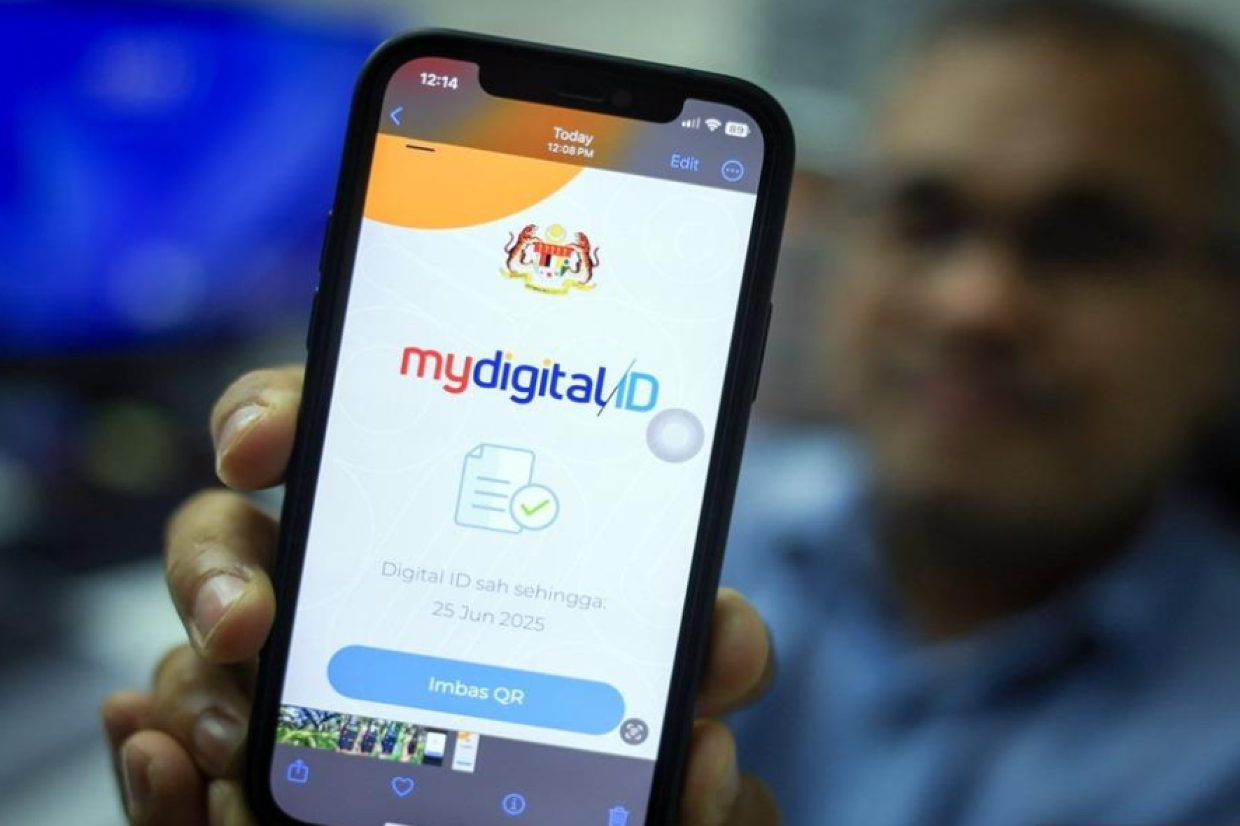
KUALA LUMPUR – With only 2.8 million people registered under MyDigital ID, the digital system needs a long time to gain the trust of Malaysians, said Dr Helmy Haja Mydin, chairman of the Social and Economic Research Initiative (SERI).
He said that most Malaysians do not understand how the MyDigital ID system works and the benefits it offers them, therefore the government needs to consider this before drafting an act to compel people to register.
He explained that, although legislation may be needed in the long run, forcing the issue too early risks undermining public confidence in a national platform that is supposed to be transformative.

“We must not forget that public trust must be earned, not assumed to exist automatically.
“A digital identity system can bring great benefits, but only if people believe that the system is safe, effective, and in their best interests. Forcing the issue before confidence is built risks undermining the system we are working on.
“Although MyDigital ID is designed to verify a person’s identity and connect users to various digital services, public awareness of its function is still limited.
“More focused communication efforts to explain its role and practical uses, such as secure access to government assistance, education, or financial facilities, will be essential to gaining public support,” he said in a statement today.
At a recent session of the Dewan Rakyat (Parliament), the Minister in the Prime Minister’s Department (Federal Territories), Datuk Seri Dr Zaliha Mustafa, said that the government is considering drafting an act to encourage or compel people to register for MyDigital ID.
This is because, she said, there are constraints in ensuring that Malaysians register for MyDigital ID, as it has been voluntary until now.
She said that, up to the second quarter of this year, approximately 2.8 million Malaysians had registered with MyDigital ID, an increase of one million compared to the first quarter of 2025.
Elaborating further, Helmy said that public trust needs to be earned, and people will consider it safe, effective, and in their best interests if the digital identity system can bring great benefits.
“Let the public see for themselves how MyDigital ID makes life easier, whether for accessing subsidies, paying taxes, or dealing with banks.
“When digital identity is seen as something that helps, people will accept it without being forced,” he said.
SERI, Helmy said, also emphasised that legislation should not be the primary option because coercion can have the opposite effect before people truly understand it.
He stressed that promising too many digital initiatives without delivering a smooth and reliable experience not only risks failure but can also damage public trust and political credibility in the long run.
For example, he said, the Main Database (Padu) provides a useful lesson, where it initially received a positive response.
However, issues such as data accuracy, ease of use, and coordination between agencies have undermined confidence in an initiative that was originally hoped to be a pillar of national reform.
“These weaknesses have made many Malaysians increasingly sceptical of digital platforms, and this is something that policymakers need to pay serious attention to in their efforts to encourage the use of MyDigital ID,” he said.
Therefore, to build trust and encourage voluntary registration, SERI proposes several measures: avoid hasty legislation to mandate registration, provide awareness and education about the benefits of MyDigital ID, ensure the reliability and resilience of the platform, and meaningful service integration.
“In addition, other steps include facilitating system interoperability between ministries, providing meaningful consent options including the option to opt out of non-essential services, and working with communities and community networks to improve inclusivity and digital literacy across the country,” he said.
Helmy said that Malaysia has an opportunity to be a leader in responsible digital governance, but it must do so carefully.
“The goal is not mass registration regardless of the consequences, but to build a system that is trusted and chosen by the people themselves to use,” he said. – July 26, 2025