

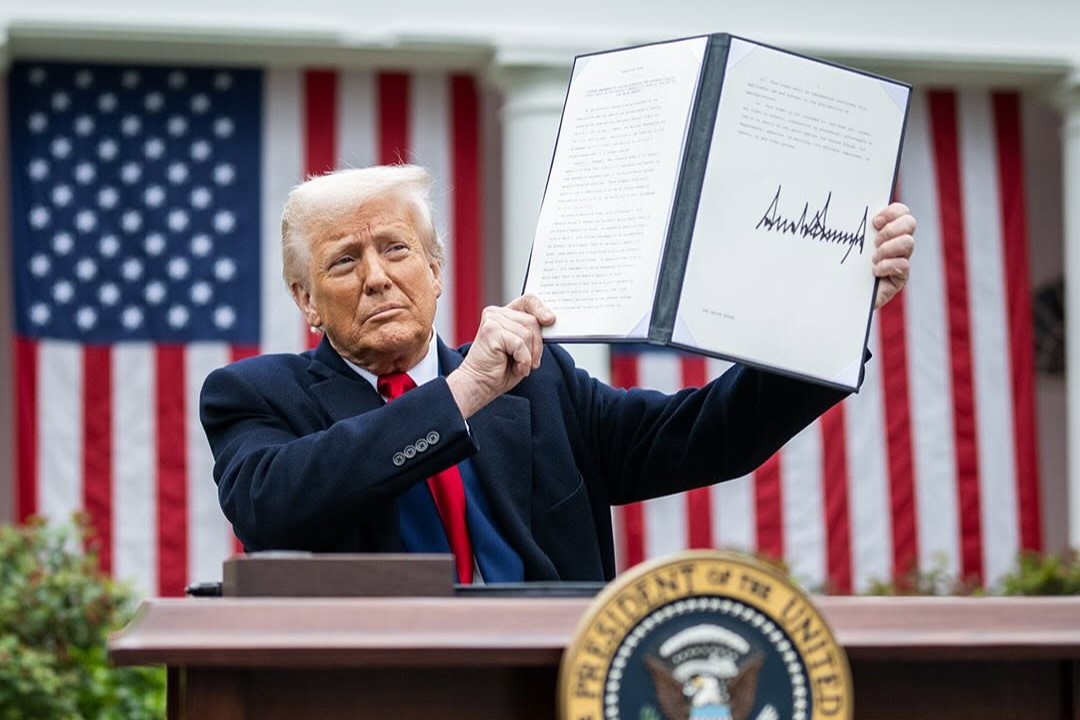
KUALA LUMPUR – Malaysia has been subjected to a reduced tariff rate of 19%, down from 25%, based on an executive order signed yesterday by U.S. President Donald Trump.
Early last month, the U.S. imposed a 25% tariff on Malaysia, scheduled to take effect today. Trump had previously described the rate as “much lower” than necessary to eliminate the U.S. trade deficit with Malaysia.
The revised retaliatory tariff order, dated 31 July 2025 and signed by Trump, was uploaded to the White House website.
Other ASEAN countries facing similar tariffs include Brunei (25%), Cambodia (19%), Indonesia (19%), Laos (40%), Myanmar (40%), the Philippines (19%), Thailand (19%), and Vietnam (20%).
In a statement, the White House said countries that have yet to sign a trade agreement or receive official tariff notification will be formally informed by midnight Thursday.
The U.S. has reached a new trade agreement with South Korea, which includes a 15% tariff, a US$100 billion energy purchase commitment, and US$350 billion in investments into U.S. industries.
Negotiations with China are ongoing, with a goal of reducing the U.S. trade deficit by US$5 billion. Communication channels remain open.
White House spokesperson Karoline Leavitt said the U.S. trade team is actively engaging with as many countries as possible.
“Over 200 countries have contacted our trade and tariff team. We’re prioritising major trade partners, and two-thirds of our top 18 have already signed special agreements.
“For countries yet to receive notification, they’ll get a letter or executive order by midnight,” she said.
Separately, Leavitt announced that the U.S. had concluded a new trade deal with South Korea after negotiations at the White House on Wednesday.
Under the deal, South Korea will be subjected to a 15% tariff, including on the automotive sector. South Korea has agreed to major concessions on American products such as rice and energy.
This includes a commitment to purchase US$100 billion worth of American energy by 2028 and invest US$350 billion in U.S. industries, with 90% of returns directed to the U.S. government to reduce national debt and support current administration policies.
Leavitt also stated that trade talks with China are progressing positively.
“The current trade arrangement is expected to reduce the U.S. deficit by US$5 billion this year,” she said.
U.S. Treasury Secretary Scott Bessent and Trade Representative Jamison Greer recently concluded a third round of talks with Chinese officials in Geneva, with communication between both nations remaining open.
This marks the Trump administration’s aggressive effort to reshape global trade relationships, using strict deadlines and tariff pressure as key negotiating tools.
Countries that have yet to reach agreements are expected to face major decisions by midnight.
Yesterday, Prime Minister Datuk Seri Anwar Ibrahim, who also serves as Finance Minister, announced that he had a phone call with U.S. President Donald Trump at 6:50 a.m. to discuss tariff matters based on free trade principles.
Anwar said the conversation also touched on ongoing negotiations between the Ministry of Investment, Trade and Industry (MITI), the U.S. Trade Representative, and the U.S. Secretary of Commerce. — August 1, 2025