

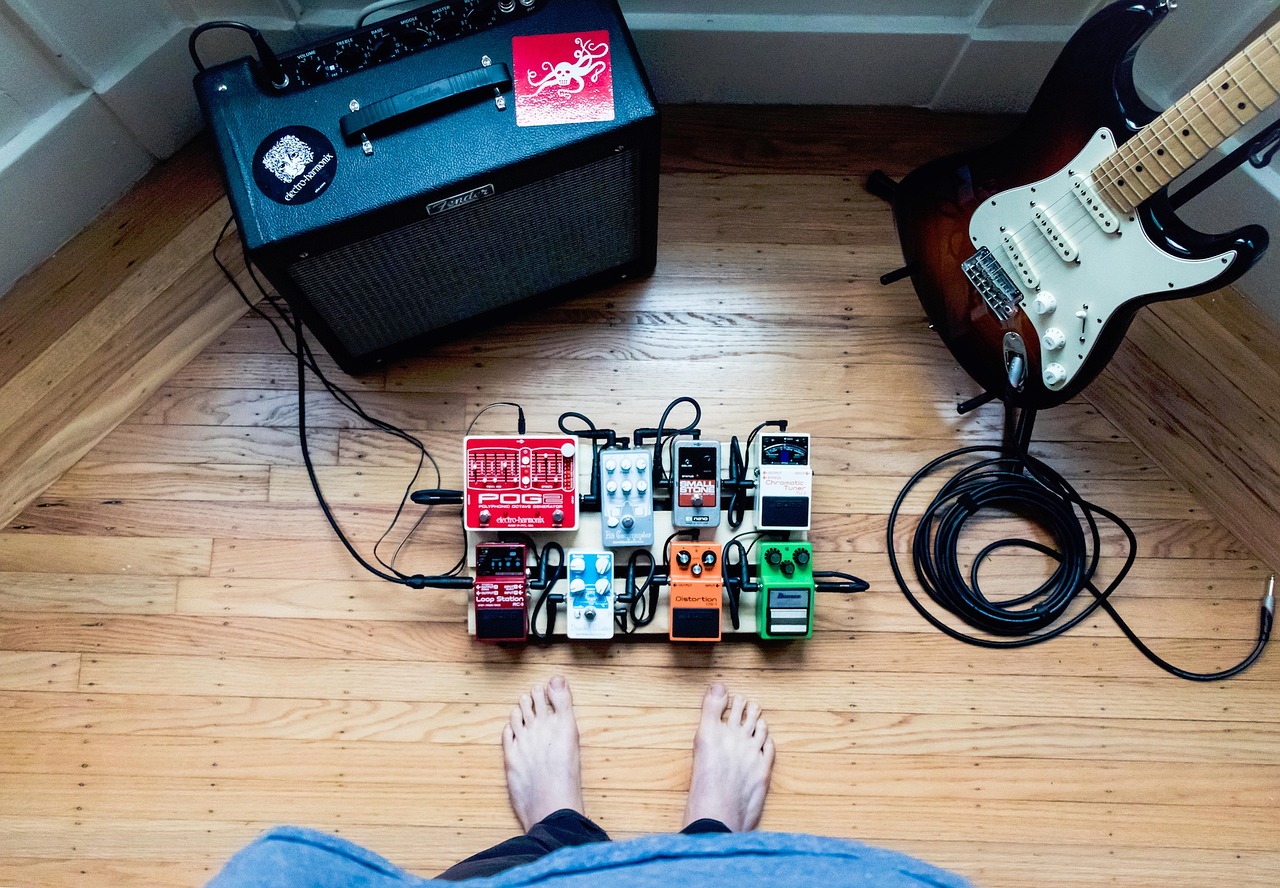

KUALA LUMPUR — Malaysian musicians and studio owners are increasingly moving away from iconic American-made instruments and gear, turning instead to more affordable Chinese, Indonesian and even custom-built alternatives in the face of rising costs triggered by US trade tariffs.
The shift follows the financial strain brought on by US President Donald Trump’s trade policies, including a revised 19% tariff on Malaysian imports.
Many artists now see premium American brands—once considered the industry gold standard—as a luxury they can no longer justify.
At the heart of the issue is the rising cost of Chinese-made electronic components, widely used by American gear manufacturers such as Earthquaker Devices and Strymon.
Although these companies assemble their products in the US, their reliance on imported parts has forced them to pass increased production costs onto global consumers.
For working musicians like Shankar Laxminarayanan, guitarist for post-rock outfit Damn Dirty Apes, the price hike has made American gear practically unattainable.
“Earthquaker, Strymon, etcetera—they’re a bit out of the budget at the moment,” said Shankar, who also features for other indie bands such as Zero, Priwayat and Ling Band.
“The taxes have made them close to impossible to consider unless you’re earning top-tier bucks.”


The sentiment is echoed widely across the independent music scene. Kien Lim, a solo indie artist, pointed to the dramatic increase in the price of an American Bigsby tremolo unit—from around RM600 a few years ago to nearly RM900 today.
“Can’t justify paying that much,” he said. “I really don’t feel compelled to buy American anymore.”
Instead, many musicians are embracing Chinese-made gear, which they say has improved significantly in quality.

Riz Rashid, founding member of rock band Demondolls, has almost entirely switched to non-US gear.
“Most of my pedals are China-made. Works as good as any other. I’m no longer a ‘brand’ snob,” said Riz.
Shankar drives this point home with his main guitar, a Chinese-made Les Paul copy he bought for RM500.
“It’s my mainstay in the studio and live for DDA. Fooled a few sound techs who thought it was a Gibson,” he said.
While acknowledging that lower-end imports can come with inferior components, musicians agree that Chinese manufacturers with solid quality control offer strong value for money.
“If brands tighten the quality control, China has the know-how, tech-wise,” said Kien.
The impact of rising costs is also being felt in recording studios.
Farouk Kamil, a Sarawak-born artist who runs AOK Records in Kuching, said the pressure extends beyond hardware to essentials like software subscriptions—including industry-standard platforms such as Pro Tools, which are affected by foreign exchange rates.
As a musician, Farouk believes good music starts with ideas, not expensive equipment.
“It starts from ideas and good songwriting—not whoever has the best guitar tone out there,” he said.
However, as a studio owner, he admits the issue is more nuanced.
“Yes, I want to hear good recordings coming from local artists. So for me, it’s a bit contradictory to say I don’t mind cheaper instruments.”
Farouk also noted that viable alternatives now come not just from China, but increasingly from other parts of Asia as well.
For many, the shift away from US-made gear is not just necessary but welcomed. The high tariffs are accelerating a more practical, budget-conscious approach to music-making—one that prioritises function over prestige.
“Instead of buying a US Fender, it’s more fun to build a guitar based on what you want, at a fraction of the cost,” said Riz.
While purists may lament the shift, Shankar believes the increased accessibility of affordable gear is a net positive for Malaysia’s music scene.
“China’s cutting corners with materials and such to make things affordable. It’s a win for starting musicians and also for touring musicians.” — August 3, 2025