

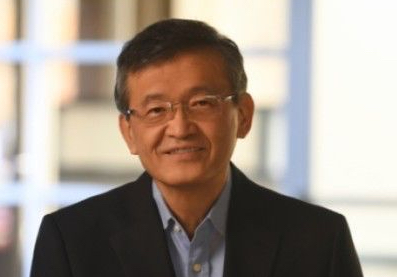
KUALA LUMPUR — US President Donald Trump on Thursday called for the immediate resignation of Intel’s CEO, Lip-Bu Tan, accusing him of being “highly conflicted” due to his business ties with China.
The announcement came shortly before the opening bell, resulting in a drop in Intel’s stock price.
In a post on Truth Social, Trump wrote, “The CEO of Intel is highly CONFLICTED and must resign, immediately. There is no other solution to this problem. Thank you for your attention to this problem!”
The call for the Malaysian-born Tan’s resignation follows a letter sent on Tuesday by Senator Tom Cotton, a Republican from Arkansas, to Intel Chairman Frank Yeary.
In the letter, Cotton expressed concerns regarding Tan’s extensive investments and business relationships with Chinese companies.
“Mr. Tan reportedly controls dozens of Chinese companies and has a stake in hundreds of Chinese advanced-manufacturing and chip firms,” Cotton wrote. “At least eight of these companies reportedly have ties to the Chinese People’s Liberation Army.”
Tan, a seasoned semiconductor executive, took the helm at Intel in March after the removal of his predecessor, Pat Gelsinger.
The president’s remarks sent Intel’s stock tumbling by over 4% in premarket trading. According to Reuters, Trump’s criticism casts doubt over the future of the company, as Intel navigates a significant strategic overhaul initiated under Tan’s leadership. The restructuring aims to reduce costs by cutting the workforce and halting plans for new manufacturing plants.
The timing of Trump’s statement came just a day after Reuters reported that Senator Cotton had raised concerns regarding Tan’s alleged links to Chinese firms and a recent criminal case involving his former company, Cadence Design. Reuters had previously revealed that Tan, either directly or through his venture funds, had invested in numerous Chinese companies, several of which are connected to the Chinese military.
“There is no other solution to this problem,” Trump reiterated, as Intel shares fell nearly 4% in premarket trading.
Intel, a crucial player in the US government’s push for domestic chip manufacturing, received nearly $20 billion in grants and loans last year under the 2022 CHIPS and Science Act. This funding aims to bolster US semiconductor production.
Tan, who took over the CEO role in March, has yet to respond to requests for comment. However, an Intel spokesperson issued a statement on Wednesday, assuring that both Intel and Tan remain committed to U.S. national security and their role in the U.S. defense ecosystem. The company added that it would address the issues raised by Senator Cotton.
Reports from April revealed that Tan had invested at least $200 million in Chinese chip firms and advanced manufacturing companies between March 2012 and December 2024. Although Tan reportedly divested from some of these investments, sources familiar with the matter were unable to confirm the details of his divestitures at the time.
Once a dominant force in the chip-making industry, Intel has recently lost ground to its Taiwanese rival, TSMC, and has struggled to enter the rapidly expanding market for artificial intelligence chips, which is currently dominated by Nvidia.
To reverse Intel’s fortunes, Tan has committed to reducing the company’s workforce by 22%, bringing the total number of employees to 75,000 by the end of this year. Additionally, Intel has promised a more disciplined approach to manufacturing investment moving forward. – August 7, 2025