

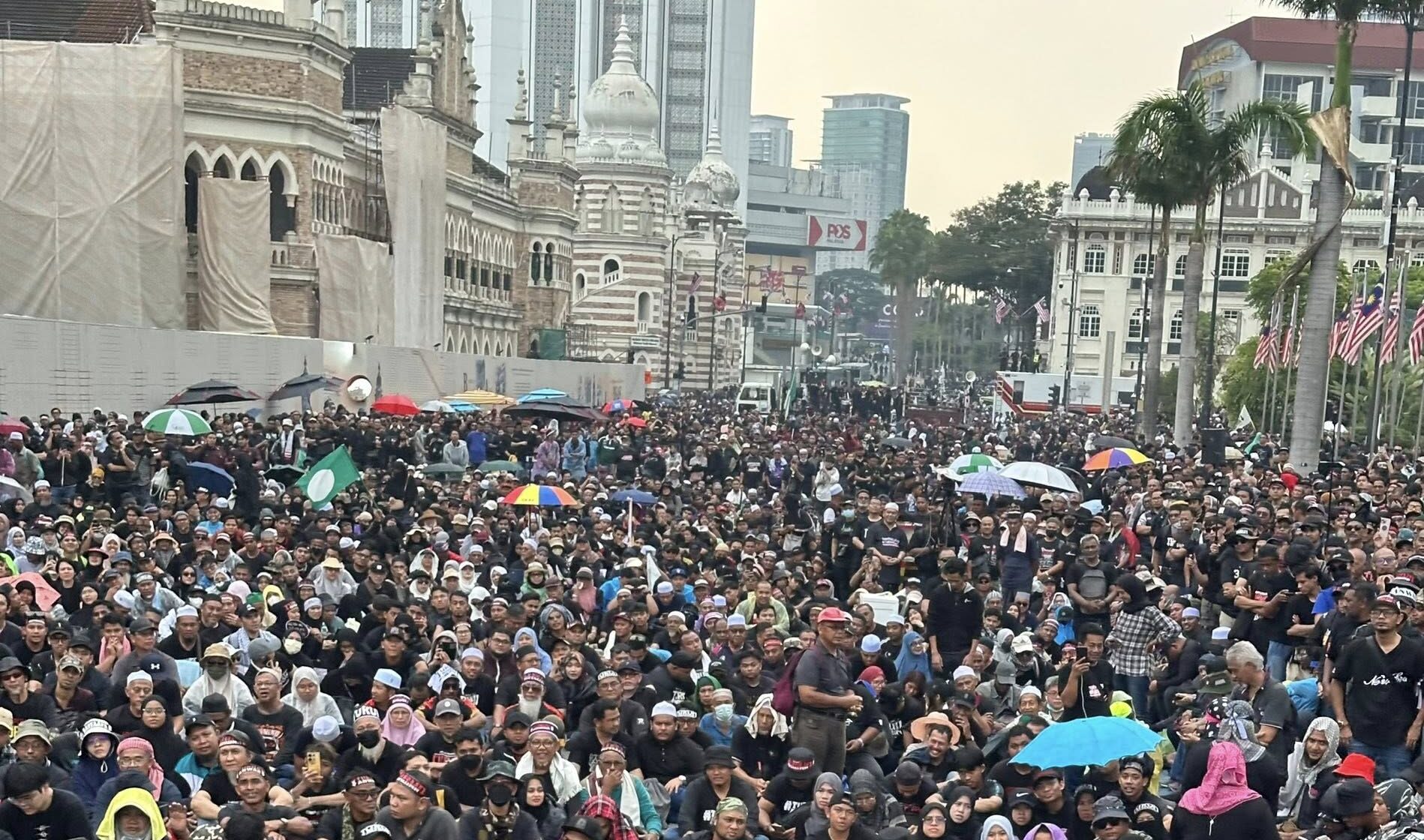

KUALA LUMPUR – Protests in Malaysia often lack deep-rooted political conviction and are more performative than principled, according to prominent human rights lawyer and activist Michelle Yesudas.
Speaking on the Scoop Insight podcast, Michelle criticised Malaysia’s protest culture as being driven more by social trends than by early political awareness or long-term organising.
“There’s no intergenerational organising here. Protest in Malaysia is like, ‘Oh, my friends are doing it, let’s go’. It’s bandwagoning,” she said.
Michelle, who has worked across Southeast Asia on human rights and refugee issues, contrasted the situation with neighbouring Thailand, where youth-led movements are often marked by strategic planning, long-term demands and sustained civic education.
“The Thai kids are very good at protest — by 15, they already understand how power works. They know who’s in the House of Representatives and what the Senate does. Malaysian kids, even in university, don’t know that.”
She attributed the gap to a lack of early political education and the absence of a shared language for activism that could unite Malaysia’s diverse communities.
“In Thailand, there’s only one language. When something goes viral, it’s accessible to the entire country. But in Malaysia, we’re fragmented — Malay Twitter doesn’t talk to Chinese Twitter, who doesn’t talk to English Twitter.”

Michelle said this linguistic and cultural fragmentation makes it difficult to build large, consistent movements with common demands.
While protests such as Turun Anwar may have faced no violent suppression, she argued this was not proof of genuine government tolerance, but rather a matter of political optics.
“We’ve seen Borneo Komrad founder Mukmin Nantang being arrested, people detained for holding candles, medical students interrogated for doing sexual health education. So, when people say Turun Anwar was a peaceful success, I say, just wait. The state will still come for you later — quietly.”
Michelle stressed that Malaysia must invest in civic education, particularly among young people, if it is to see meaningful, sustained protest movements that go beyond trend-driven mobilisation.
“Until we teach kids how systems work — what laws exist, how policy is made — we’ll keep seeing protests that fizzle out after a photo op. That’s not organising. That’s Instagram activism.”
She also called for stronger inter-community collaboration, more inclusive language, and an honest reckoning with the continued use of laws such as the Sedition Act and Section 233 of the Communications and Multimedia Act to criminalise dissent.
“We need to build a culture where people aren’t afraid to speak, where protest isn’t a one-off event but a political education in itself.” — August 11, 2025