

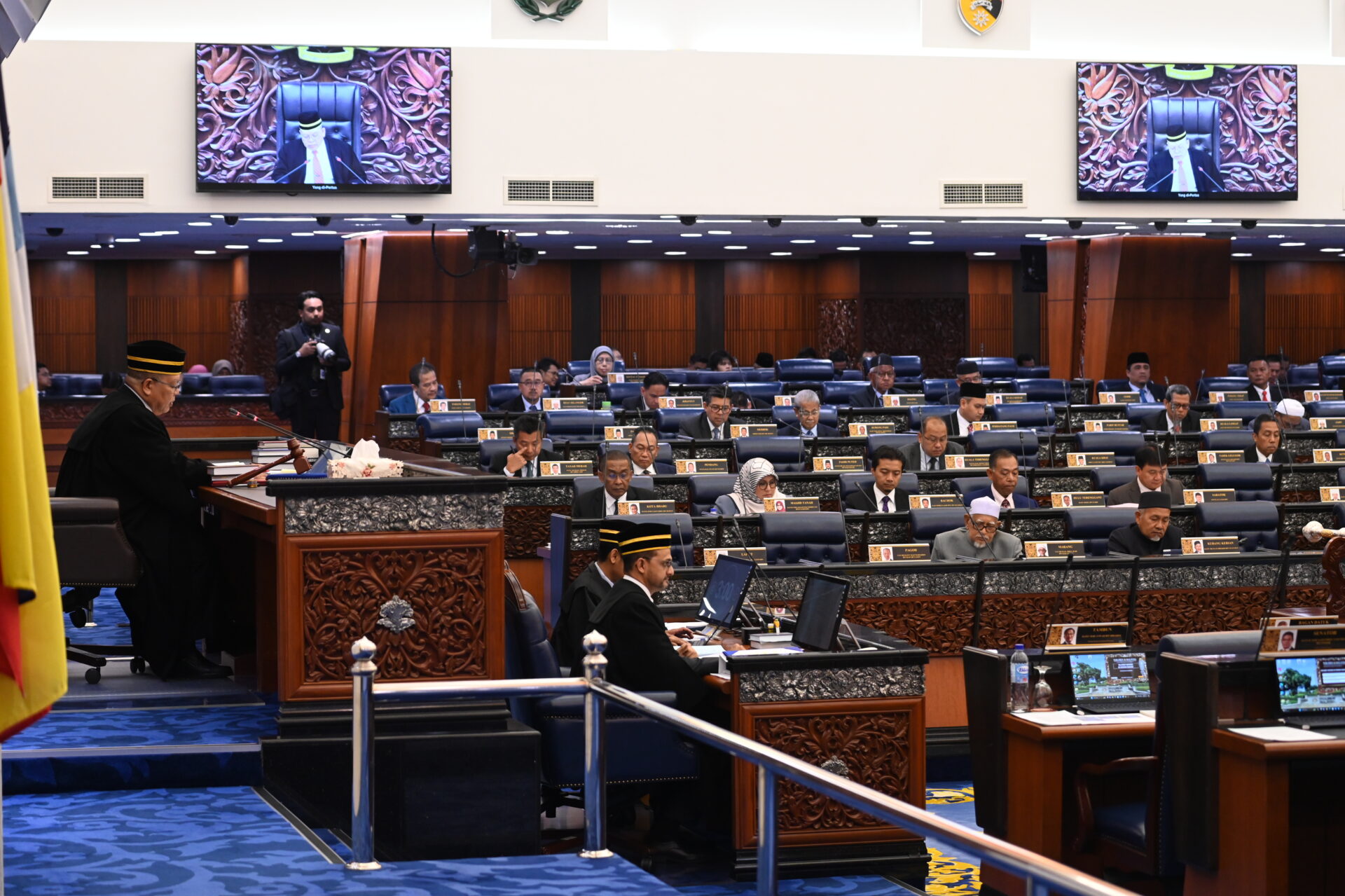
KUALA LUMPUR — The Dewan Rakyat has approved the landmark Gig Workers Bill 2025, a legislation that extends rights and protections to more than 1.2 million gig workers in Malaysia, following years of drafting.
The bill, comprising 112 clauses, was passed by voice vote today. It had been tabled by Human Resources Minister Steven Sim, with debates involving 23 Members of Parliament (MPs) from both government and opposition benches.
Centred on four key areas, the new law defines who qualifies as a gig worker, establishes a tripartite council to address matters such as income, introduces a dispute resolution framework, and strengthens social security coverage.
In his winding-up speech, Sim accused the opposition of failing to put workers first.
“For example, Rompin (Datuk Abdul Khalib Abdullah) asked us to study the implementation of gig worker-related laws in Spain, but Machang (Wan Ahmad Fayhsal Wan Ahmad Kamal) said we should not copy Spain because he was worried investors would flee.
“There were also (those) who seemed to raise concerns that have long been voiced by corporate companies. As if this law must satisfy corporations, otherwise we should not agree yet.
“We must understand, this law is to provide protection to gig workers, while also maintaining the country’s economic competitiveness,” said the Bukit Mertajam MP.
On the proposed establishment of the Malaysian Gig Economy Commission (SEGiM), Sim clarified that it would not conflict with the bill as the two initiatives serve different purposes.
“The Gig Workers Bill 2025 is about labour protection for gig workers, while the government has already decided that a committee led by Deputy Prime Minister Datuk Seri Dr Ahmad Zahid Hamidi will study SEGiM.
“I am confident he will set the terms, conditions, and jurisdiction in a way that does not contradict this law.
“There are also claims that this bill lacks enforcement. This is not true, because we have enforcement from the Labour Department, the Industrial Relations Department, the Gig Workers Tribunal and PERKESO (which also) has its enforcement agency.
“Therefore, it is inaccurate to say that without SEGiM there is no responsible authority. This bill and SEGiM are separate, and the government is in the process of studying SEGiM’s establishment,” he explained.
Sim also reminded the House that gig workers were previously excluded from the definition of “employee” under existing labour legislation, leaving them without formal recognition. With the passing of the bill, they are now legally recognised and granted protections long denied to them. – August 28, 2025