KUALA LUMPUR – In response to a presently undisclosed security threat, the government has ordered all liquefied natural gas (LNG) facilities in Bintulu, Sarawak, to immediately tighten security.
This directive, issued today by the National Security Council (NSC), aims to facilitate swift investigations by security forces and relevant agencies.
“The public is reminded not to speculate on this statement,” the NSC added.
“Updates on the situation will be provided from time to time. National security agencies remain prepared to face any eventuality and have already implemented control measures against the security threat.”
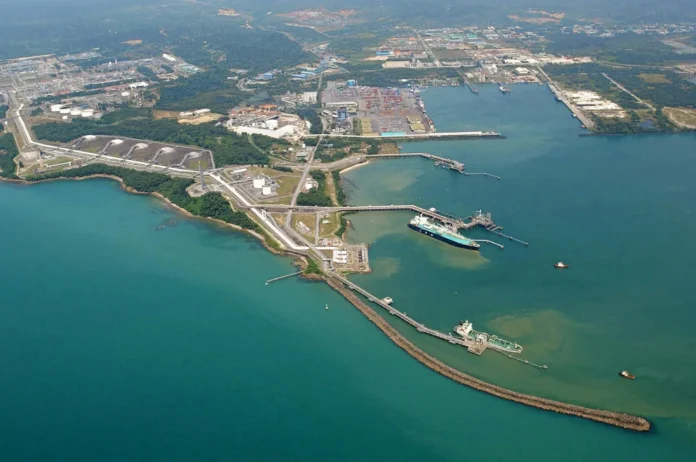
Nestled on the northern coast of Borneo, Bintulu is the site of Malaysia’s flagship LNG complex, operated primarily by Petronas.
With an annual production capacity of approximately 29.3 million metric tons, it stands among the world’s largest LNG facilities at a single location.
According to data from Kpler, Malaysia ranked as the fifth-largest LNG exporter globally as of last year, sending almost 28 million tons of fuel mostly to markets including Japan, China, and South Korea.
The complex spans 276 hectares and contributes to more than 40% of Sarawak’s gross exports, underlining its economic significance.
Beyond its production prowess, the Bintulu facility plays a pivotal role in ensuring energy security and facilitating regional economic integration.
Recent developments affirm its ongoing expansion: the Pegaga gas field, operational since 2022, feeds new volumes into Bintulu, and Malaysia’s LNG exports saw renewed growth in early 2024.
Moreover, long-term partnerships—such as continued LNG delivery agreements with Japan, solidified via deep ties with Mitsubishi Corporation—emphasise the facility’s strategic importance to global energy stability.
Any disruption to Bintulu’s operations would have cascading effects—potentially impacting international LNG supply chains, investor confidence, and Malaysia’s export-driven revenue.
Its centrality to both state and national energy strategies elevates the gravity of the current security concern. — September 8, 2025