

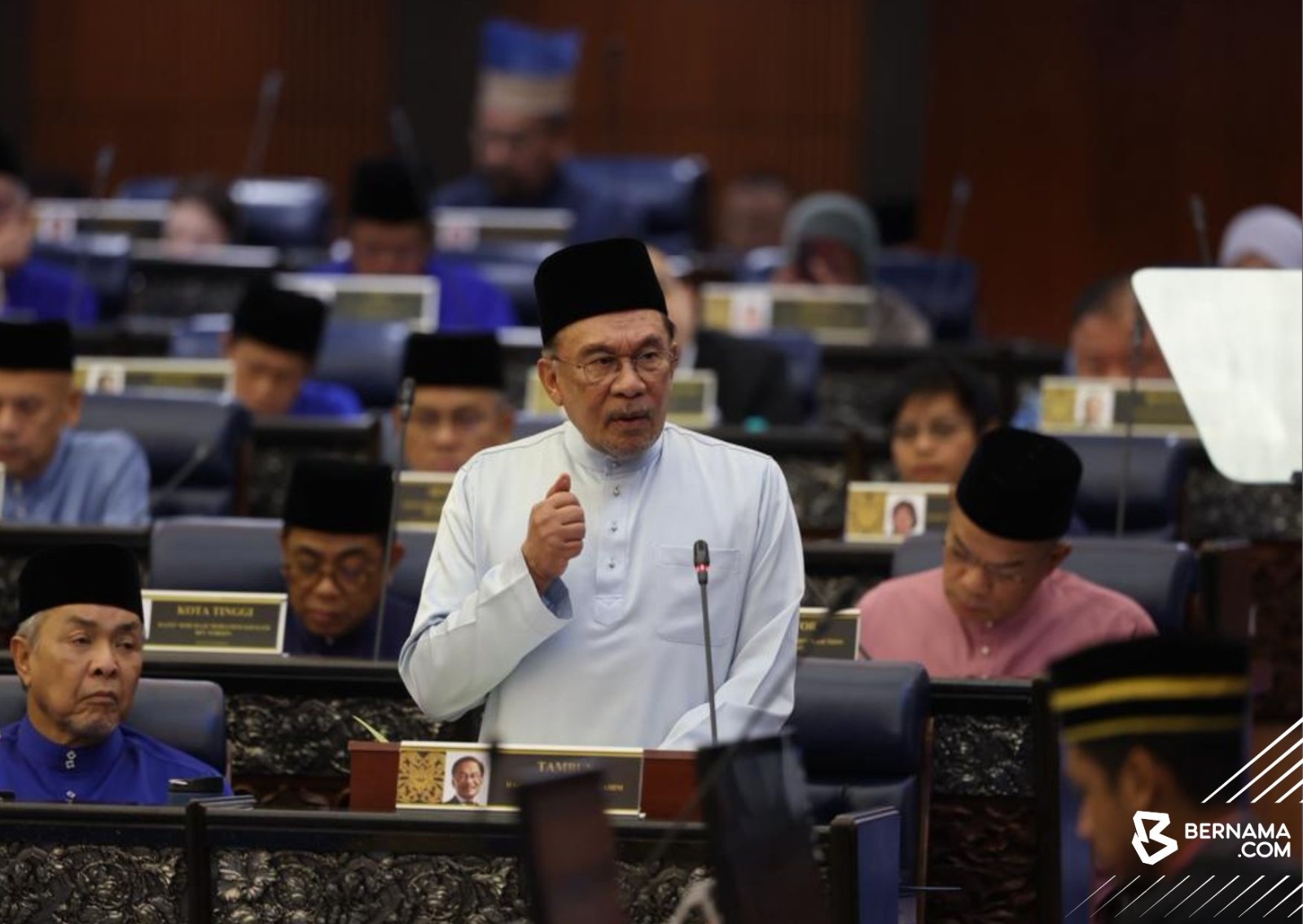
KUALA LUMPUR – Prime Minister Datuk Seri Anwar Ibrahim has presented Malaysia’s RM470 billion budget for 2026, marking a notable increase from the RM452 billion allocated for 2025. The budget highlights the government’s commitment to maintaining operational stability and driving strategic investments across both federal and semi-government entities.
The breakdown of the 2026 allocation is as follows:
- RM338.2 billion for Federal Operating Expenditure (OE), ensuring the continuation of essential government functions and services.
- RM81 billion for Federal Development Expenditure (DE), aimed at improving infrastructure, education, and healthcare.
- RM30 billion in investments from Government-Linked Investment Companies (GLICs), fostering long-term national growth.
- RM10 billion in public-private partnership investments, designed to support collaborative development projects.
- RM10.8 billion in capital injections from Federal Statutory Bodies and MKD-linked companies, strengthening institutional capacity.
This increase in total spending signals Putrajaya’s intent to balance fiscal responsibility with targeted economic stimulus, particularly in sectors critical to Malaysia’s long-term competitiveness. Analysts are expecting further details on sector-specific allocations and proposed reforms during the upcoming parliamentary debates.
Malaysia’s economy projected to grow at 4-4.5% in 2026, despite global uncertainties
Anwar has forecasted Malaysia’s economy will grow at a moderate rate of between 4 and 4.5% in 2026, building on the earlier projection of 4 to 4.8% for 2025.
“Despite the pressures from regional conflicts and the volatility of global tariffs, the fundamentals of our economy remain strong, enabling Malaysia to weather external economic shocks,” he said.
Anwar, who also serves as the Finance Minister, made these remarks in the foreword to the Fiscal Review and Federal Revenue Forecast 2026 report, issued by the Finance Ministry today.
“The trajectory of Malaysia’s structural reforms should be guided by prudent public financial management principles, particularly as the world grapples with various disruptions,” he added.
He further noted that international institutions such as the International Monetary Fund (IMF) and the World Bank have shown confidence in Malaysia’s economic outlook, as evidenced by their continued positive projections despite global economic headwinds.
The Prime Minister highlighted Malaysia’s economic resilience, noting that the country had achieved a growth rate of 4.4% in the first half of 2025, positioning it as one of the top performers in the region.
This growth was driven by robust domestic demand, supported by a steady inflow of investments, rising wages, and a stable labour market. – October 10, 2025