

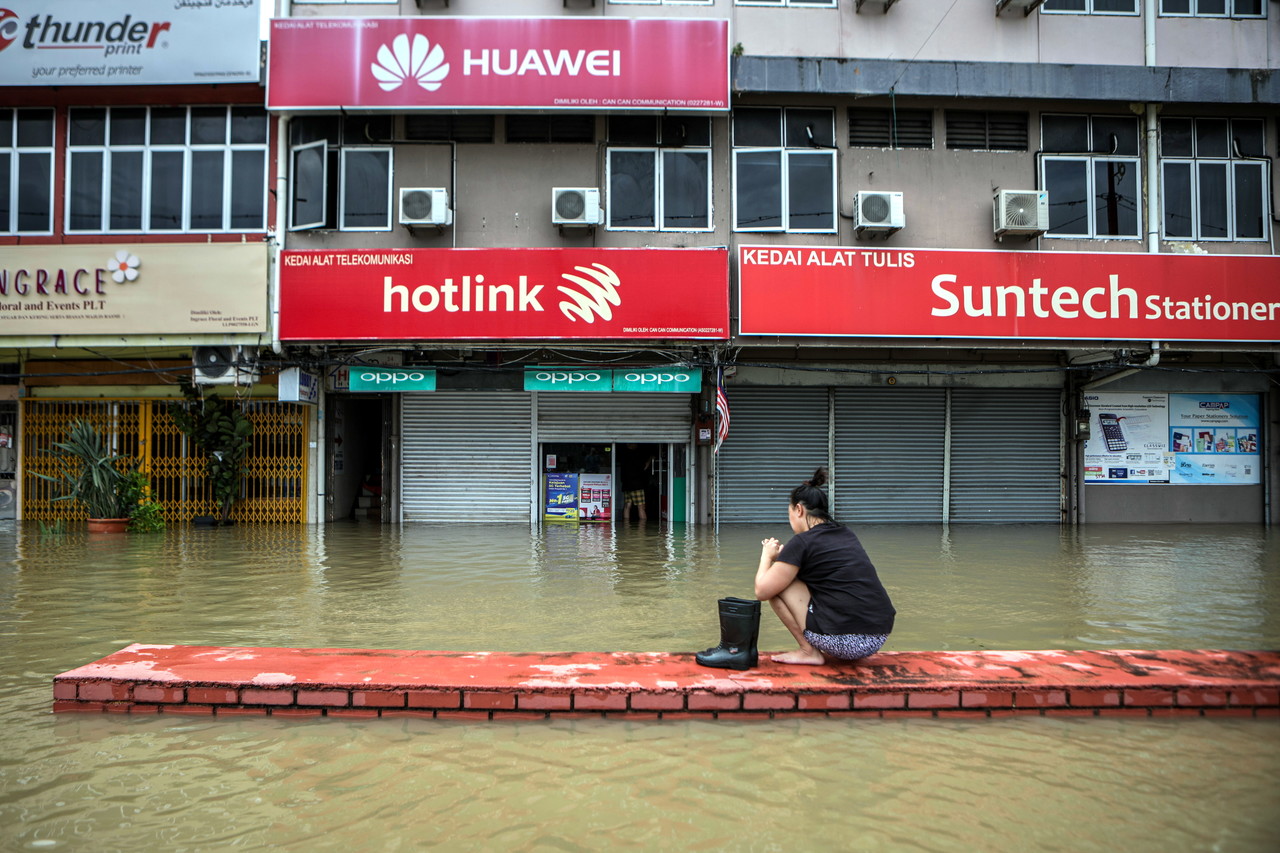

KUALA LUMPUR – The Malaysian Communications and Multimedia Commission (MCMC) and the National Disaster Management Agency (NADMA) are intensifying their efforts to improve the country’s flood early warning systems, focusing on better technology and response coordination.
In parliamentary written response to a question by Baling MP Hassan Saad, Deputy Prime Minister Datuk Seri Ahmad Zahid Hamidi provided insights into the ongoing efforts to enhance Malaysia’s flood preparedness.
Zahid explained that floods remain a major annual threat to public safety, property, and the nation’s economy. Therefore, a comprehensive flood early warning system is critical to ensuring the country is adequately prepared.
He outlined that the collaboration between NADMA and key agencies, including the Meteorological Department (MET Malaysia), the Department of Irrigation and Drainage (JPS), state governments, and security agencies, plays a crucial role in providing accurate and timely flood warnings.
“MET Malaysia provides weather forecasts and heavy rainfall warnings, while JPS offers hydrological data such as river water levels through telemetry systems and sirens in at-risk areas,” Zahid said.
“This collaboration results in a more integrated and precise flood warning system, as it takes into account both meteorological and hydrological factors simultaneously.”
The information generated by MET Malaysia and JPS is channelled into the National Flood Forecasting and Warning Centre (PRABN), which helps to provide integrated alerts. Zahid highlighted that this collaborative effort enables NADMA to better coordinate responses and relay flood risk information to relevant stakeholders and affected communities.
“In terms of field operations, NADMA acts as the main coordinator at the national level, while state governments, through their respective Disaster Management Committees (JPBN/JPBD), are responsible for taking immediate action, such as opening Temporary Evacuation Centres (PPS) and evacuating residents,” Zahid added.
“Response agencies, including the Royal Malaysian Police (PDRM), Fire and Rescue Department (JBPM), Civil Defence (APM), and the Malaysian Armed Forces (ATM), ensure that rescue and evacuation operations are carried out effectively.”
Zahid also noted that multiple channels are used to disseminate early flood warnings to the public, such as the MyCuaca app, mass media, social media, and SMS systems, with support from MCMC and telecommunications companies. In the 2024/2025 Northeast Monsoon season, more than 8.6 million SMS warnings were sent to communities in flood-prone areas.
Looking to the future, NADMA and MCMC are collaborating on a new system to replace the SMS-based warning system. Zahid explained that the new Cell Broadcast System (CBS) will offer a faster and more efficient means of communicating flood warnings to communities.
“This new technology will improve the speed and accuracy of delivering warnings, safeguarding lives and property,” he said.
Furthermore, Zahid mentioned that the government is working closely with the UK’s Met Office through the Weather and Climate Science for Service Partnership (WCSSP) programme. This partnership aims to improve weather and climate forecasting, particularly for high-impact events like floods.
“The programme focuses on enhancing forecasting models, developing user-friendly prediction products, and implementing impact-based forecasting,” he explained.
Through this collaboration, Zahid said, the accuracy of weather predictions in Malaysia will be improved, thus strengthening flood preparedness. The government is also exploring the use of big data and artificial intelligence (AI) to further enhance the flood early warning system.
Zahid reaffirmed that the ongoing collaboration between NADMA, MET Malaysia, JPS, state governments, and other agencies has proven effective in enhancing Malaysia’s flood early warning capabilities.
He assured that the government remains committed to continuously improving the system, ensuring it can better protect the public and mitigate the impact of future floods. – November 26, 2025