

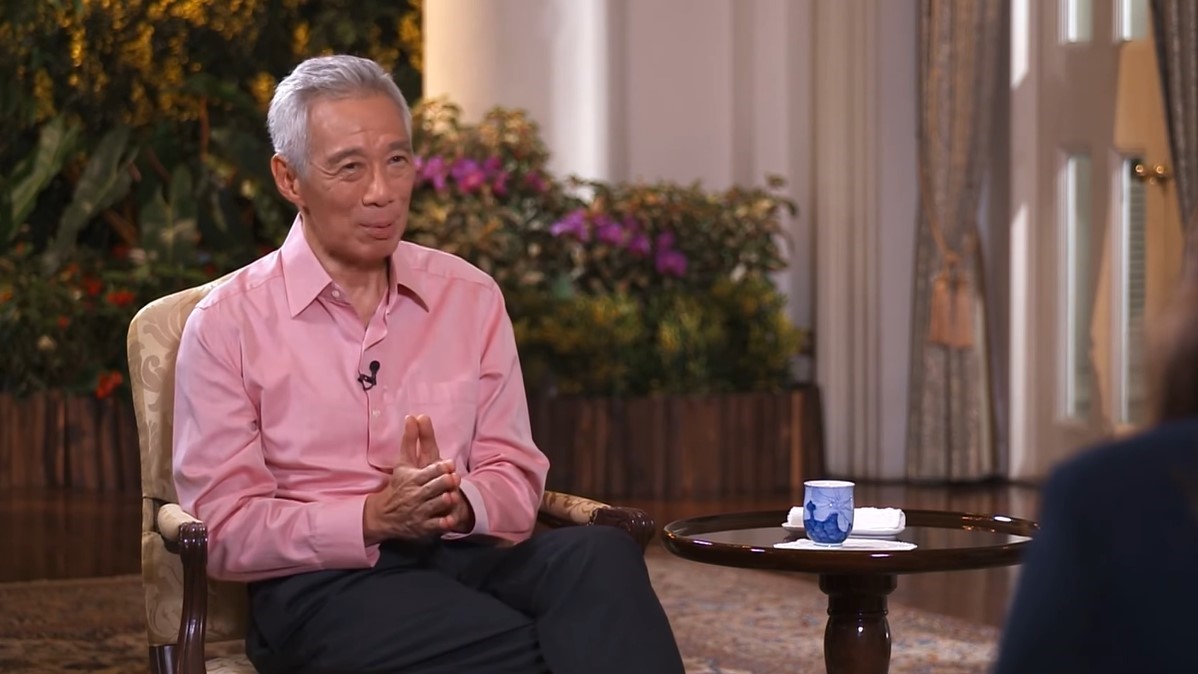
KUALA LUMPUR – In the final days before Singapore’s separation from Malaysia, founding prime minister Lee Kuan Yew was ambivalent about the split, according to his son, Lee Hsien Loong.
Speaking at the launch of the Albatross File book and exhibition on December 7, Lee Hsien Loong recounted a moment in August 1965 when the Lee family was on holiday in Cameron Highlands, Singapore’s Straits Times reported.
It was there that Lee Kuan Yew received a fateful call from Dr Goh Keng Swee, who had been leading Singapore’s negotiations with Malaysia.
“I was in the room at Cluny Lodge when my father took a call that afternoon. I heard him tell Dr Goh in Mandarin: ‘This is a huge decision; let me think about it,’” Lee Hsien Loong recalled. “I didn’t know then what it was about, but it became plain soon enough.”
Lee Kuan Yew’s initial reluctance to accept separation was grounded in his desire to strengthen Singapore’s political position within the Malaysian Federation. As Lee Hsien Loong explained, the founding prime minister had used political pressure to push for greater autonomy, but he saw separation as a last resort.
“His aim was to strengthen Singapore’s position politically, so as to compel the federal government to grant Singapore greater autonomy… Separation was to be an option only if Singapore could not get such a rearrangement,” Lee Hsien Loong was quoted as saying.
However, as events unfolded, all of Singapore’s founding leaders, including Lee Kuan Yew, came to the conclusion that separation was the best thing that had ever happened to Singapore.
Lee Hsien Loong poignantly reflected on this shift: “In this SG60 year, we are very glad that Dr Goh did what he did. Singapore has thrived and progressed far beyond anything the founding fathers imagined,” he said, his voice breaking with emotion.
The Albatross File, a collection of previously classified documents, offers a detailed account of Singapore’s secret negotiations for independence.
These include Dr Goh’s personal notes, which reveal his thoughts during key discussions with Malaysian leaders. Dr Goh, who was the finance minister at the time, named the file “Albatross” because he believed that Malaysia had become a burden around Singapore’s neck.
Lee Hsien Loong also discussed the racial tensions and political instability that characterised Singapore’s early years within Malaysia, particularly after the 1963 merger. The aftermath of the race riots of 1964 left deep scars and further strained relations between the Malay and Chinese communities. This, Lee Hsien Loong suggested, was a major factor in his father’s eventual acceptance of separation.
“We separated from Malaysia because of racial and religious politics. We will not allow race or religion to break up Singapore,” he said.
Reflecting on his father’s decision-making, Lee Hsien Loong revealed a surprising twist from his personal history.
“I found out only decades later, when I was preparing my memoirs, that contrary to his instructions, Dr Goh had never tried for the looser federation he had preferred, and from the start sought a clean break from Malaysia,” he said. “When I first learned this in August 1994, I was so astonished that I made a note of it in the margin of Dr Goh’s oral history transcript.”
The Albatross File is not just a historical record but also a window into the emotions of the leaders who fought for Singapore’s independence. As Lee Hsien Loong noted, the documents, along with oral history interviews, convey the passion, anxiety, and conviction that drove their decisions.
“The reader will not only understand the actions and events that led to Separation, but also feel the emotions and passions of our founding leaders,” Lee Hsien Loong said. “It is a history well worth publishing.”
At the book launch, Lee Hsien Loong highlighted two lessons from Singapore’s two-year union with Malaysia. The first is the importance of trust in government. He observed that the Singaporean people stood by Lee Kuan Yew because they knew he would never compromise the country’s interests, no matter the pressure.
“No Singapore prime minister has ever allowed any force or power, whether foreign or domestic, to intimidate us into compromising our national interest or sovereignty,” Lee Hsien Loong added.
The second lesson, Lee Hsien Loong emphasised, is the fragility of racial and religious harmony.
“It can be snapped, broken, smashed,” he cautioned. “Even in HDB estates, where Singaporeans of different races live together, I never allowed myself to forget how fragile interracial harmony and trust is.”
In his speech, Lee Hsien Loong also addressed how today’s Singaporeans may find it hard to understand why the founding leaders were so conflicted about separation. “Isn’t it obvious that what happened was inevitable and right? Why the tears?” he asked.
“But at that time, when the issue was live and the stakes were huge, it was far from obvious that Singapore should be independent,” he explained.
He urged visitors to the Albatross File exhibition to appreciate the uncertainty and emotional toll of those critical months leading up to Singapore’s independence. “They will realise it was hardly foreordained. It was − and still is – a miracle,” Lee Hsien Loong concluded.
The exhibition, which opens on December 8 at the National Library, provides a rare and intimate look at the high-stakes negotiations and emotional struggles that defined Singapore’s path to sovereignty. – December 7, 2025