

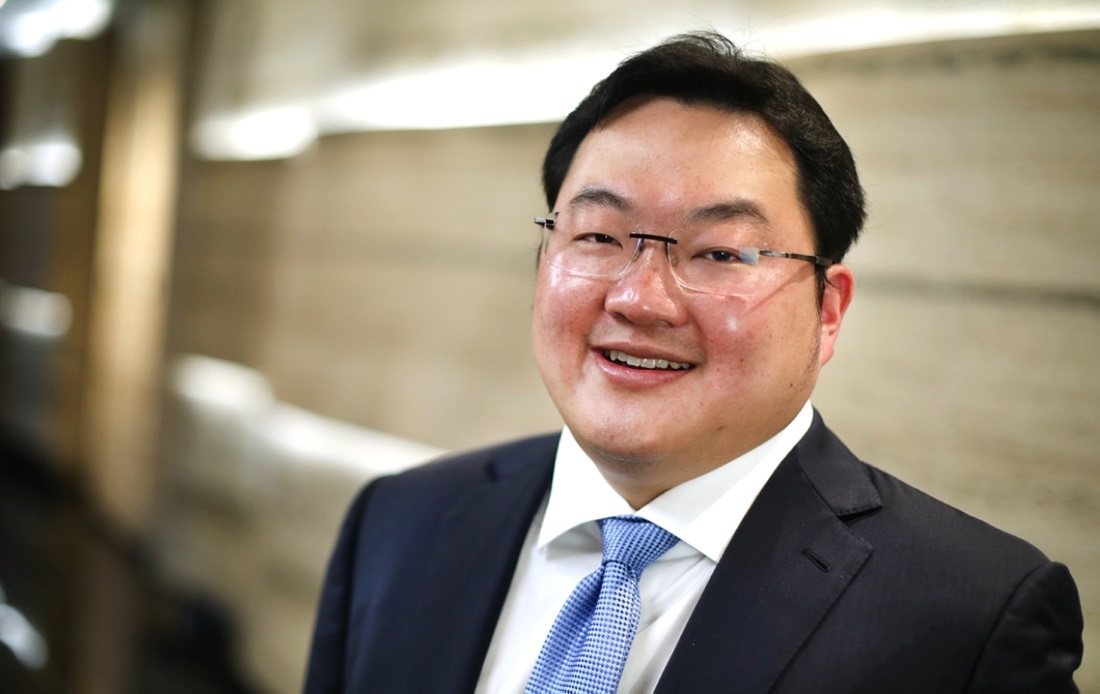

KUALA LUMPUR — The High Court has ruled that Low Taek Jho, better known as Jho Low, and Datuk Seri Najib Razak knew each other personally, a fact proven by photographs showing them holidaying together.
The ruling was delivered by Datuk Collin Lawrence Sequerah, who was the High Court judge at the time and is now a Federal Court judge.
Justice Collin said the arguments and evidence adduced during the trial established that Jho Low, a fugitive businessman, acted as Najib’s proxy in matters related to 1Malaysia Development Berhad (1MDB).
“The credibility of the prosecution witnesses remained intact even after cross-examination by the defence, which challenged Jho Low’s involvement,” he said.
In his written judgment, Justice Collin referred to the testimony of the ninth prosecution witness, former 1MDB chief executive officer Datuk Shahrol Azral Ibrahim Halmi, who stated that Jho Low was the main architect of 1MDB projects on Najib’s behalf.
“Another witness, the 15th prosecution witness and former 1MDB chairman Tan Sri Mohd Bakke Salleh, testified that Jho Low acted as an intermediary between the board of directors and the accused, with management receiving instructions outside the board,” the judge said.
The defence had earlier argued that testimony from prosecution witnesses claiming they received instructions from Jho Low on Najib’s behalf amounted to hearsay evidence.
Justice Collin said there was no reason for him to revisit his findings after the defence was called.
“The court will not re-examine the defence’s argument that the evidence was hearsay, given the existence of supporting documentary evidence.
“All witnesses testified that the instructions came from the accused himself. All such communications are deemed admissible,” he said.
Justice Collin also noted that several individuals, including Jho Low and Nik Faisal Ariff Kamil (another former 1MDB chief executive officer), could not be traced, and therefore subpoenas could not be served on them.
The court will reconvene at 3pm after Friday prayers.
Najib, 72, faces four charges of abusing his position to obtain gratification amounting to RM2.3 billion from 1MDB funds through AmIslamic Bank Berhad’s Jalan Raja Chulan branch between Feb 24, 2011 and Dec 19, 2014.
He is charged under Section 23(1) of the Malaysian Anti-Corruption Commission (MACC) Act, punishable under Section 24(1) of the same Act with imprisonment of up to 20 years and a fine of either five times the amount of gratification or RM10,000, whichever is higher, if convicted.
For 21 money laundering charges, the former prime minister is accused of committing the offences at the same bank between March 22, 2013 and Aug 30, 2013.
The charges were framed under Section 4(1)(a) of the Anti-Money Laundering, Anti-Terrorism Financing and Proceeds of Unlawful Activities Act 2001, which provides for a maximum fine of RM5 million and imprisonment of up to five years, or both, upon conviction. — December 26, 2025