

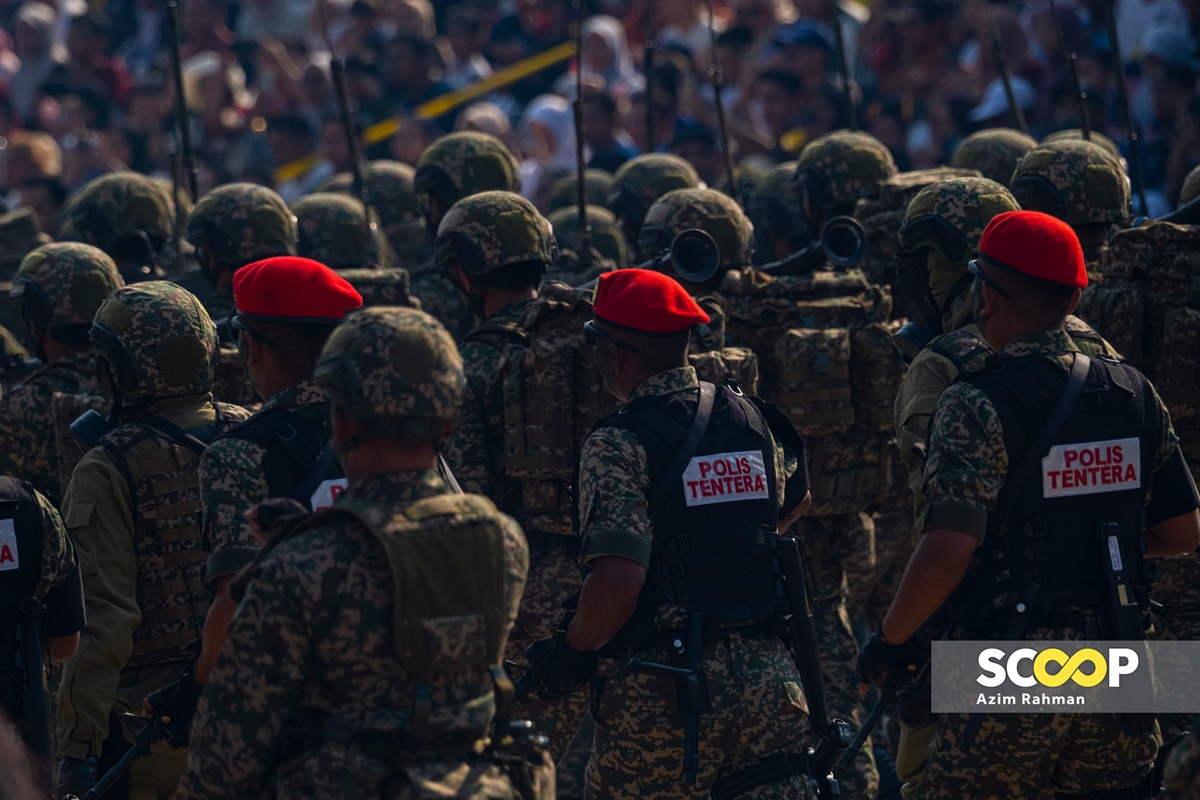

MALAYSIA’S armed forces are home to some of Southeast Asia’s most disciplined and capable personnel. Our commandos endure grueling jungle training, our naval special forces master maritime warfare, and our air force operators are drilled in precision operations. Units like the GGK, PASKAL, and PASKAU are respected regionally for their skill and endurance. Yet, their excellence is consistently betrayed by a system riddled with corruption, leaving them under-equipped and under-supported.
The tragedy of Malaysia’s military is not a lack of talent, but a lack of integrity in leadership and procurement. Over the past two decades, scandal after scandal has revealed how billions meant to strengthen national defence were siphoned away, mismanaged, or lost to graft. The result is a hollowing out of our armed forces: brave personnel shackled by outdated equipment, grounded aircraft, and undelivered ships.
The rot became glaringly visible in the Scorpene submarine scandal of the early 2000s, when Malaysia purchased two French-made submarines at a cost of over RM7 billion. Allegations of massive kickbacks and corruption surrounded the deal, with investigations revealing that hundreds of millions were paid to intermediaries. The scandal was further tainted by the shocking murder of Mongolian national Altantuya Shaariibuu, who was linked to the deal. While the submarines eventually arrived, the scandal left a permanent stain on Malaysia’s defence procurement, symbolising how corruption can overshadow even strategic acquisitions.
Fast forward to the 2010s and 2020s, and Malaysia faced another defence debacle: the Littoral Combat Ship project. Six ships were promised to the navy, billions were allocated, but years later, not a single vessel has been delivered. Investigations revealed mismanagement, questionable payments, and alleged graft. For sailors who train to defend Malaysia’s maritime borders, this scandal is more than financial—it is a betrayal of their mission. The LCS fiasco has become a symbol of how corruption corrodes national security, leaving Malaysia vulnerable in contested waters.
The rot has not stopped. In 2025, Malaysia was rocked by revelations that army intelligence officers were involved in cross-border smuggling, pocketing tens of thousands per trip while compromising national security. Around the same time, reports surfaced of senior officers allegedly leaking state intelligence for RM5 million a month, exposing Malaysia’s vulnerabilities to external actors. Most recently, the Malaysian Anti-Corruption Commission (MACC) launched a probe into a senior army official, investigating claims that defence-linked funds were funneled into his accounts. This ongoing investigation underscores how deeply corruption has penetrated the military establishment, reaching even the highest ranks.
Yet, despite these betrayals, Malaysia’s soldiers have shown time and again that their courage is undiminished. The Lahad Datu incident of 2013 remains a powerful reminder of their heroism. When armed intruders from the southern Philippines landed in Sabah, Malaysia’s security forces responded with discipline and bravery. The operation was costly—lives were lost—but it demonstrated the resolve of our personnel to defend the nation’s sovereignty. Lahad Datu should have been a turning point, a moment to invest in modern equipment and strengthen our forces. Instead, the years that followed were marred by more scandals and more wasted billions.
This failure is especially dangerous given Malaysia’s strategic position. In the South China Sea, tensions continue to rise as major powers assert claims and militarise disputed waters. Malaysia, with its long coastline and vital maritime routes, cannot afford to be weak. Our navy should be a deterrent, our air force a shield, and our commandos a rapid response force. Instead, corruption has left us vulnerable, with sailors waiting for ships that never arrive and pilots training on aircraft that should have been retired years ago.
Closer to home, the conflict between Thailand and Cambodia over border disputes is a reminder that Southeast Asia is not immune to sudden flare-ups. Malaysia may not be directly involved, but instability in the region affects us all. A strong, well-equipped military is not just about defending our borders—it is about ensuring Malaysia can play a credible role in regional security. Yet, how can we project strength when our own forces are undermined by graft?
The consequences of these scandals are devastating. Air force pilots train on aging fighter jets, some grounded due to lack of spare parts. Naval personnel prepare for missions on ships that never arrive. Commandos endure grueling training only to be sent into operations with outdated gear. Corruption doesn’t just waste money—it endangers lives and erodes morale. It robs soldiers of the tools they need to succeed, and it robs the rakyat of the security they deserve.
Every ringgit lost to corruption is a ringgit stolen from the men and women who risk their lives for Malaysia. It is a theft from the rakyat, who expect their taxes to secure the country, not enrich a few. It is a betrayal of Malaysia’s sovereignty, leaving us vulnerable in a region where maritime disputes and security challenges are ever-present.
If Malaysia is to honour its soldiers, reform in defence procurement must be treated as a national security priority, not a political talking point. Transparency in contracts, accountability for senior officers, and independent oversight are essential. Without these, the cycle of scandal will continue, and our soldiers will remain shackled by mediocrity in leadership.
Malaysia’s military story should be one of pride: elite personnel mastering jungle and maritime warfare, standing tall among Southeast Asia’s best, so much so that even armies from western nations come to Malaysia to train in numerous exercises and drills. Instead, it is too often a story of betrayal. Until corruption is rooted out, courage will remain wasted, and Malaysia’s defenders will continue to fight with one hand tied behind their backs. – December 30, 2025
A. Azim Idris is a News Editor at Scoop.