

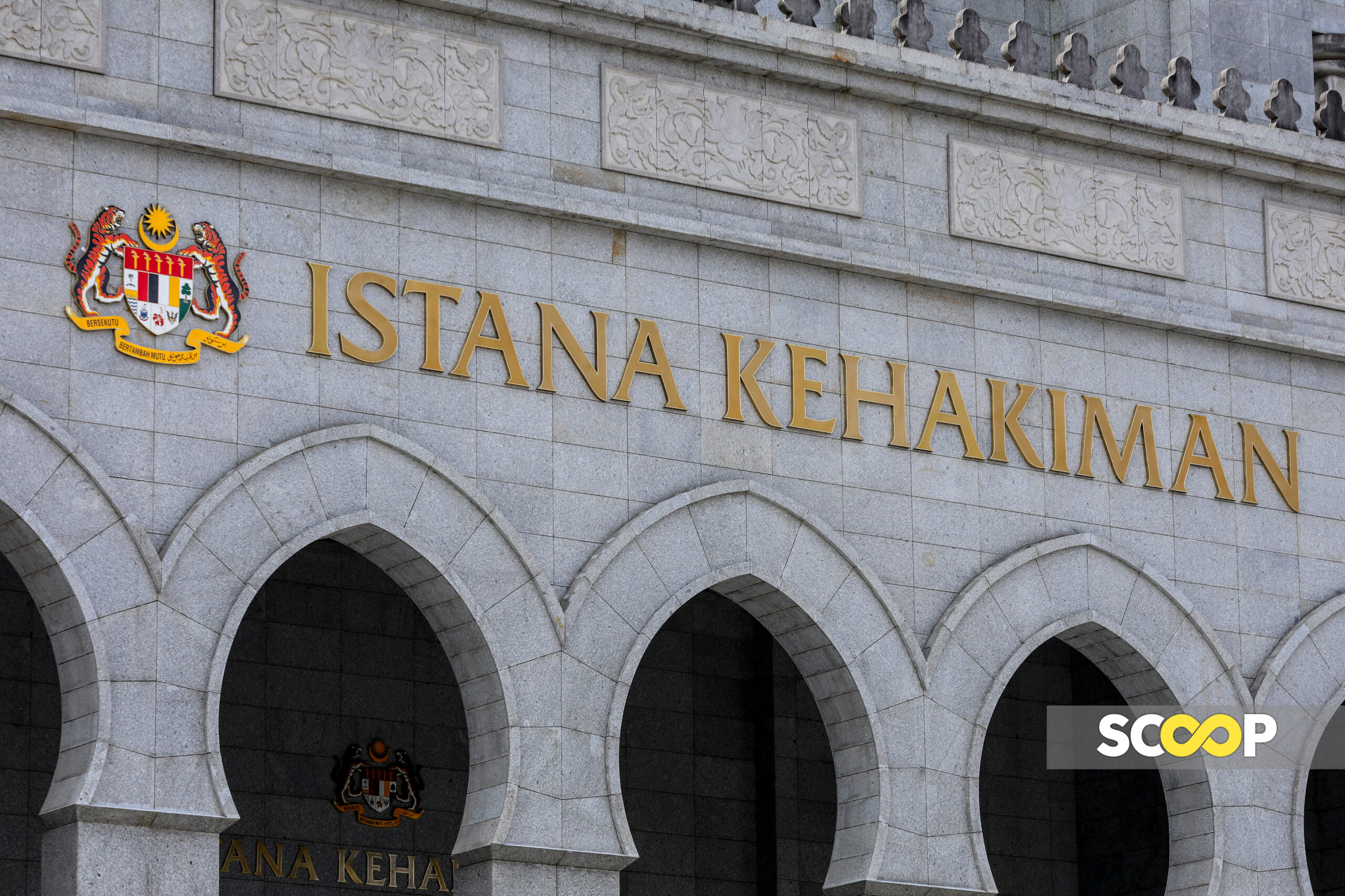
KUALA LUMPUR — Section 233 (1)(a) of the Communications and Multimedia Act 1998 (Act 588) (CMA) serves to protect individuals and communities from harm arising from misuse of online communication, and is meant to target communications that fall outside the scope of the constitutionally protected right to freedom of speech, Federal Court Judge Tan Sri Nallini Pathmanathan said today.
The apex court, which today granted the government’s appeal to reinstate the words “offensive” and “annoy” in the law, also affirmed the purpose of Section 233 (1)(a) to ensure that the right to freedom of speech and expression under the Federal Constitution is not used to damage, affect or distress other network users in the context of Malaysia’s multi-ethnic society.
“In the context of Malaysia, which is a plural and multi-racial society, the issues of race and religion are of primary concern. Section 233 (1) (a) of CMA ensures that communications which are intended to offend the sensitivities of each of the plurality of races that comprise its population are prohibited.
“Individuals are not spared. When a communication which is offensive is made with the intent to annoy an individual repeatedly over a course of time, escalating to a call for that individual to harm or injure herself,then Section 233 (1)(a) becomes entirely relevant and necessary,” Bernama reported the judge saying at the Federal Court in Putrajaya today.
In that context, the section does not infringe Article 10 (1)(a) of the Federal Constitution on the freedom of speech and expression, the judge added.
Nallini was delivering the unanimous judgement of the Federal Court’s five-member panel today which also comprised Chief Justice Datuk Seri Wan Ahmad Farid Wan Salleh and other apex court judges Datuk Che Mohd Ruzima Ghazali, Datuk Mohd Nazlan Mohd Ghazali and Datuk Collin Lawrence Sequerah.
Section 233(1)(a) criminalises any online communication which is obscene, indecent, false, menacing or offensive in character with the intent to annoy, abuse, threaten or harass another person.
While overturning the Court of Appeal’s decision on the words “offensive” and “annoy”, Nallini however, said the federal bench today decided that Section 233 (1)(a) should not have been used to charge activist Heidy Quah.
Quah’s post could not form the basis of a charge under the section, Nallini added.
This affirmed the Court of Appeal’s ruling that there was no basis to prosecute Quah, as the activist’s post did not amount to a communication that was ‘offensive with intent to annoy” as the content was not offensive, and the mens rea element of “intent to annoy” was absent.
Nallini, who is due to retire this month, also said that the the prosecution against Quah is a distinct and separate issue from the constitutionality of the two words within Section 233 (1)(a).
In July 2021, Quah was charged in the Kuala Lumpur Sessions Court for allegedly making “offensive” online comments in a Facebook post. In her post, she had described the conditions and alleged abuse of migrants in immigration detention centres.
In April 2022, the Sessions Court granted her a discharge not amounting to an acquittal (DNAA) due to the charge under Section 233(1)(a) being defective.
Quah, in a reaction to the Federal Court’s judgement, said despite its decision on the two words, the ruling was still “a meaningful shift for freedom of speech in Malaysia”.
“Crucially, the court has now made it clear that Section 233(1)(a) must be applied narrowly and with a very high threshold – requiring clear proof of harm, demonstrable intent, and conduct that is vexatious, malicious, injurious, and repeated. A single post is no longer enough,” the 31-year-old refugee rights activist said.
“Most importantly, political speech is now firmly excluded from Section 233(1)(a). The Court affirmed that speech which advances democratic dialogue, disseminates information, or seeks truth lies at the heart of freedom of expression. Discontent or anger arising from political views (even controversial ones) does not amount to ‘harm’ under the Federal Constitution. That distinction matters.”
In the proceedings at the Federal Court today, senior federal counsel Shamsul Bolhassan and Liew Horng Bin appeared for the government, while lawyers Datuk Malik Imtiaz Sarwar, New Sin Yew and A.Surendra Ananth acted for Quah.
Lawyer Benjamin John Dawson appeared for the Malaysian Communications and Multimedia Commission (MCMC).
Counsel K. Shanmuga appeared for the Malaysian Bar, while lawyer Lim Wei Jiet represented Suara Rakyat Malaysia, the Clooney Foundation for Justice and the International Bar Association’s Human Rights Institute (IBAHRI), all appearing as amici curiae. – February 6, 2026