

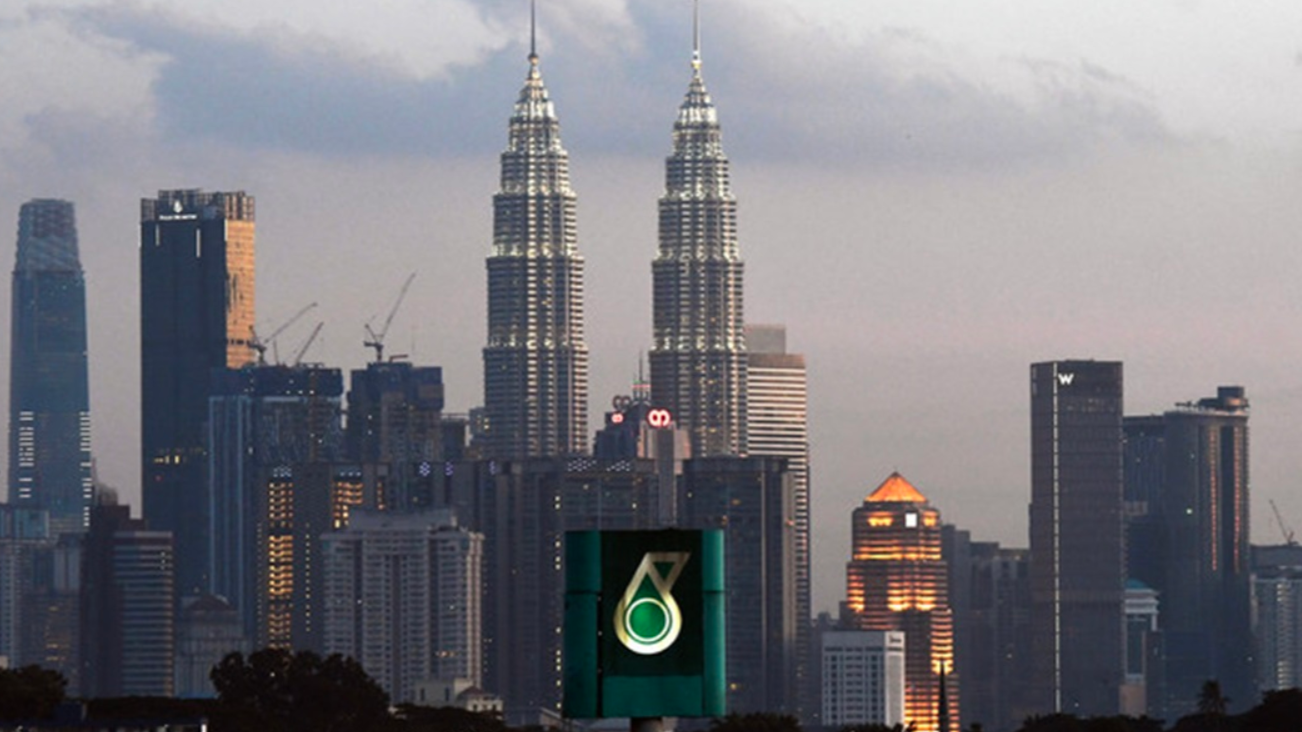

KUALA LUMPUR – Petroliam Nasional Berhad (Petronas) is exploring alternative sources of gas and fuel amid concerns over a prolonged blockade of the Strait of Hormuz, Deputy Prime Minister Datuk Seri Fadillah Yusof said.
Fadillah, who also serves as the Energy Transition and Water Transformation Minister, said the national oil company is assessing contingency plans while studying how countries in the Asia-Pacific region, including Australia, are managing supply disruptions.
“Petronas is evaluating various strategies to secure alternative sources should oil and gas shipments be unable to pass through the Strait of Hormuz due to the ongoing conflict,” he told reporters after attending an event organised by community leaders in Petra Jaya at the CIDB Convention Centre in Sarawak.
He added that Malaysia’s energy position remains stable for now, with preparations already in place to mitigate potential supply shocks.
Fadillah also urged Malaysians to adopt more prudent energy consumption habits, noting that the government has instructed civil servants to set air-conditioning in public buildings to no lower than 24°C to reduce gas usage.
In addition, the government is considering implementing work-from-home (WFH) arrangements for non-essential sectors. A decision is expected after the Hari Raya Aidilfitri celebrations.
“The public must also play their part by conserving electricity. If it is not necessary, switch off air-conditioning and electrical appliances,” he said.
Addressing concerns over rising oil prices, Fadillah said Putrajaya is closely monitoring global developments to safeguard national energy security, particularly if Brent crude were to surge to US$150 per barrel.
“For now, we are still able to sustain subsidies for RON95 petrol and diesel despite fluctuations in global prices. Certain sectors, such as logistics, continue to benefit through fleet card mechanisms, while Sabah and Sarawak also receive diesel subsidies,” he said.
He stressed that enforcement efforts must be intensified to curb smuggling activities involving subsidised fuel, warning that illegal sales undermine national interests.
“Smuggling not only harms the country but also affects the rakyat,” he added.
Tensions escalated after Iran shut the Strait of Hormuz on Feb 28 following military strikes involving the United States and Israel, triggering volatility in global oil markets.
Before the disruption, Brent crude traded between US$70 and US$73 per barrel. Prices surged past US$100 after the closure, peaking above US$119 on March 19 before easing to US$108.65 later that day.
As of March 21, Brent crude stood at US$112.19 per barrel.
On the same day, US President Donald Trump reportedly warned of potential strikes on Iranian power facilities if Tehran failed to reopen the key shipping route within 48 hours.
The Strait of Hormuz remains the world’s most critical oil transit chokepoint, serving as the primary maritime gateway for crude exports from the Gulf. – March 22, 2026