

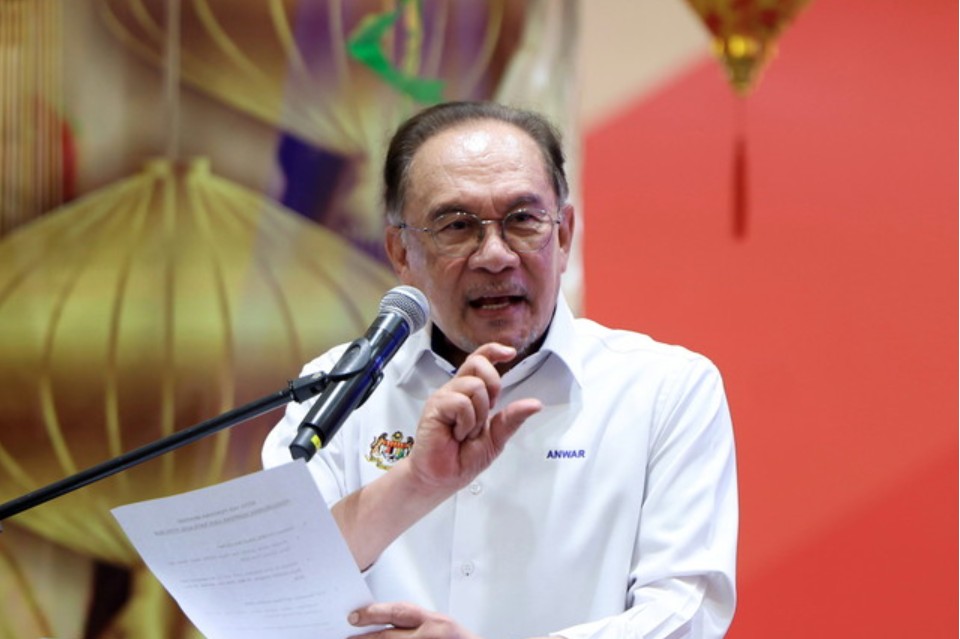

KUALA LUMPUR – Government fuel subsidies have surged sharply within days, rising from RM700 million to RM3.2 billion, Prime Minister Datuk Seri Anwar Ibrahim revealed.
In a statement shared on his official Facebook page, Anwar explained that the spike was driven by escalating global oil prices following the ongoing conflict in West Asia.
He addressed public concerns over why domestic fuel prices were affected despite Malaysia being an oil-producing nation.
He pointed to disruptions in the Strait of Hormuz, a key global shipping route responsible for a significant share of the world’s oil supply.
“When this critical passage is affected, global supply tightens and prices inevitably rise,” he said, noting that nearly half of Malaysia’s oil supply passes through the strait.
Anwar added that Malaysia, while an oil producer, remains a net importer of petroleum, making it vulnerable to global price fluctuations.
“To cushion the impact on the public, the government has increased subsidies from approximately RM700 million to RM3.2 billion in under a week,” he said.
He explained that the additional support is being channelled through targeted programmes such as Budi95 and the Budi diesel initiative, ensuring that consumers and most businesses are shielded from full market prices.
“In an increasingly uncertain global environment, safeguarding the welfare of the people remains a key priority of the Madani government,” he added.
Earlier, Deputy Prime Minister Datuk Seri Fadillah Yusof said that Petroliam Nasional Berhad (Petronas) is exploring alternative sources of gas and fuel amid concerns over a prolonged disruption in the Strait of Hormuz.
Fadillah, who also serves as Energy Transition and Water Transformation Minister, said the national oil firm is evaluating contingency measures. This includes studying how countries in the Asia-Pacific region, such as Australia, are managing similar supply challenges.
Tensions escalated after Iran shut the Strait of Hormuz on Feb 28 following military strikes involving the United States and Israel, triggering volatility in global oil markets.
Prior to the disruption, Brent crude prices hovered between US$70 and US$73 per barrel. Prices then surged past US$100, peaking above US$119 on March 19 before easing slightly to US$108.65 later that day.
As of March 21, Brent crude was trading at US$112.19 per barrel.
On the same day, US President Donald Trump reportedly warned of possible strikes on Iranian power facilities if Tehran failed to reopen the vital shipping route within 48 hours.
The Strait of Hormuz remains the world’s most critical oil chokepoint, serving as the main maritime gateway for crude exports from the Gulf, and its disruption continues to send shockwaves through global energy markets. – March 22, 2026