

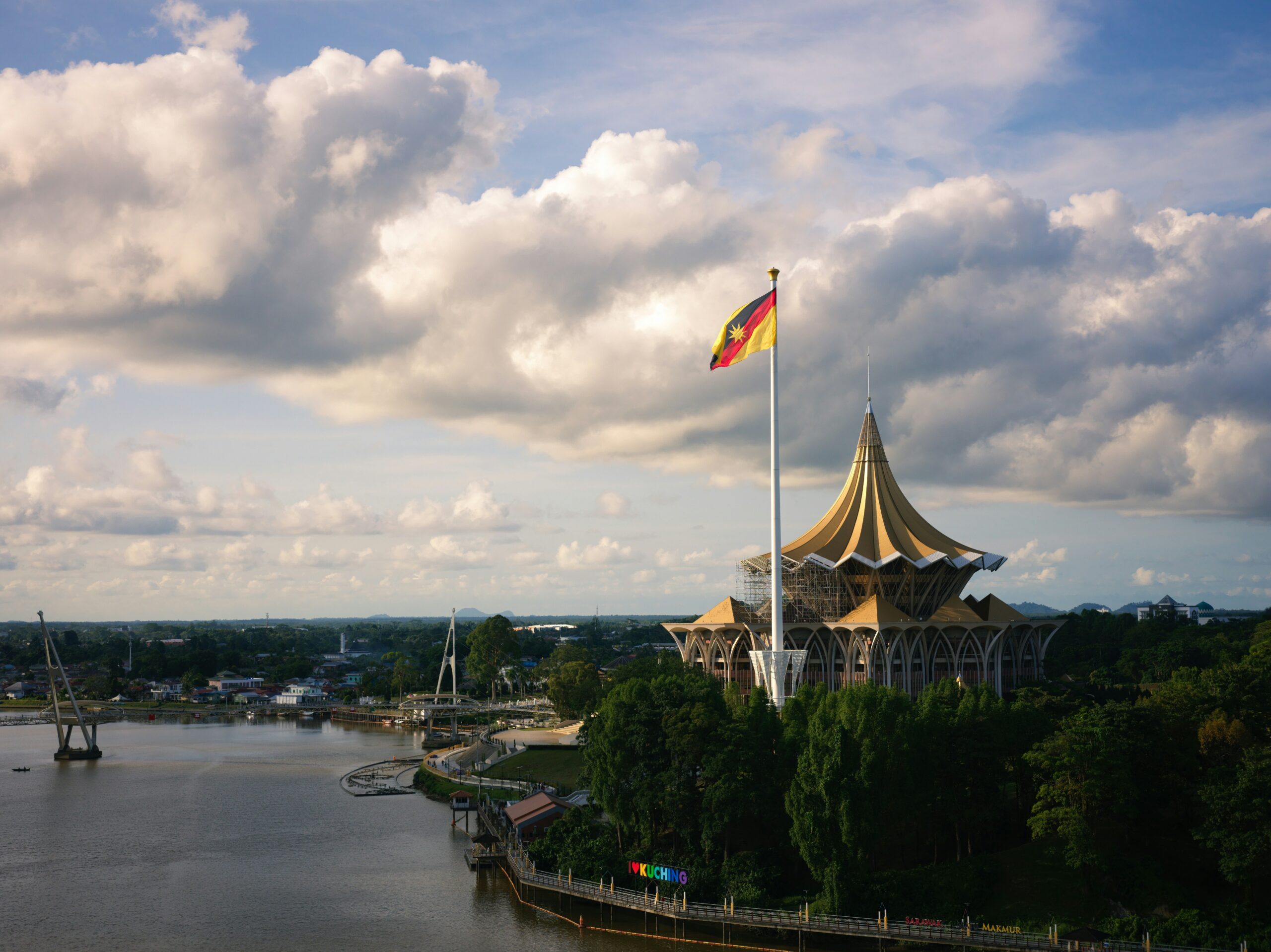
KUCHING —The Sarawak Legislative Assembly (DUN) has approved an increase in the number of state seats, expanding from 82 to 99 following the addition of 17 new constituencies.
Acting Head of State Mohamad Asfia Awang Nassar said the decision had already been passed in the assembly, but the next step lies with the Election Commission (SPR), which will conduct ground-level studies on the proposed delineation.
“At this stage, there is no report yet from SPR on whether the 17 new constituencies have been confirmed. Once the report is ready, it will be displayed before being gazetted, including whether there are any objections, including to the new constituencies,” he told reporters during the Deputy Minister of Natural Resources and Urban Development Datuk Len Talif Salleh Hari Raya Aidilfitri open house at Petra Jaya here on Sunday.
He explained that the addition of DUN seats only requires a simple majority and should not pose any issue.
However, increasing parliamentary seats would require a two-thirds majority in Parliament, which may be more challenging for the ruling government.
“For now, we are waiting for verification from SPR on the ground. After that, it will be displayed and then brought to Parliament. We have yet to hear from SPR or the federal government, but the state assembly has already made a clear decision,” he added.
He noted that if the process is completed in time, the new constituencies could be implemented in the next general election, although there has been no response yet from the federal authorities.
On the need for redelineation, he stressed that it should be based on geographical factors rather than population size.
“For example, Bintulu is the largest parliamentary constituency in Sarawak, with one parliamentary seat covering four state assemblymen (ADUN). It is too large and should be split into two parliamentary areas. It is not practical for one constituency to have four ADUN, especially when the number of voters is close to 120,000. Sarawak is very big,” he said.
He further highlighted the logistical challenges of managing vast constituencies, recalling that in the past, travelling across the Kuala Rajang parliamentary area required a helicopter to refuel four times, while Baram required three refuelling stops.
“How can one Member of Parliament (MP) manage such a large area? Approval should not be based on population alone, but geography. In coastal areas, for instance, fishermen operate across boundaries, making population-based delineation less practical,” he said.
The current term of the assembly runs until February 2027 and it may be dissolved at any time by the Yang di-Pertua Negeri upon the advice of the Sarawak Premier.
Last Thursday, the Tourism, Creative Industry and Performing Arts Minister Abdul Karim Rahman Hamzah said SPR would have the final authority in determining the locations of the 17 proposed new DUN seats.
He explained that while the state government had proposed the increase, the responsibility to identify and delineate the constituencies rests solely with SPR after Parliament approves the constitutional amendment.
The proposal aims to improve representation in Sarawak, given its vast geographical size, with the additional seats increasing the total number of assemblymen from 82 to 99. – March 23, 2026