

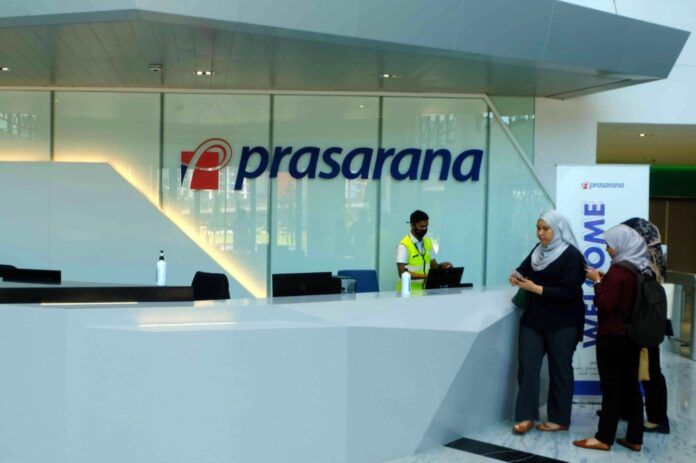
KUALA LUMPUR – The washroom at the Sentul Light Rail Transit (LRT) station, where a recent voyeurism incident shocked commuters, does not fall under Prasarana Malaysia Berhad’s direct jurisdiction, according to an industry source, amid growing scrutiny over safety gaps at the facility.
The clarification follows an incident earlier this morning in which a woman was allegedly spied on from the ceiling while using the toilet at the station.
The suspect was later detained by auxiliary police and has since been remanded.
The source told Scoop that the washroom is located outside the operator’s core premises, with Prasarana’s responsibilities at the station limited to designated operational areas.
“The washroom is not situated within the official station premises under Prasarana’s control. Sentul station is an older facility, and certain adjoining structures, including that washroom, fall outside its operational boundary,” the source said.
“Prasarana’s scope is primarily focused on rail operations and key commuter areas such as platforms and ticketing zones. Facilities beyond that, particularly legacy structures, are not necessarily under its direct management,” the source added.
It is also understood that the washroom is not equipped with closed-circuit television (CCTV), as it lies outside the secured zone monitored by the operator.
“That area is beyond the station’s secured perimeter, which is why there is no CCTV coverage. It was not designed as part of the modern station layout, and that has resulted in certain security limitations,” the source said.
Despite this, the source indicated that the incident has prompted a reassessment of safety measures, particularly at older stations.
“While the facility itself is outside Prasarana’s direct purview, the company is aware of the concerns raised and is looking at broader improvements. This includes refurbishment plans for ageing stations such as Sentul, with a focus on enhancing safety standards,” the source said.
“Any upgrades being considered will take into account improved design, better access control and stronger safety features, especially for women commuters,” the source added.
The case has sparked concern among commuters and renewed calls for tighter security at public transport hubs, particularly in areas where infrastructure falls outside clearly defined operational boundaries. – April 17, 2026