

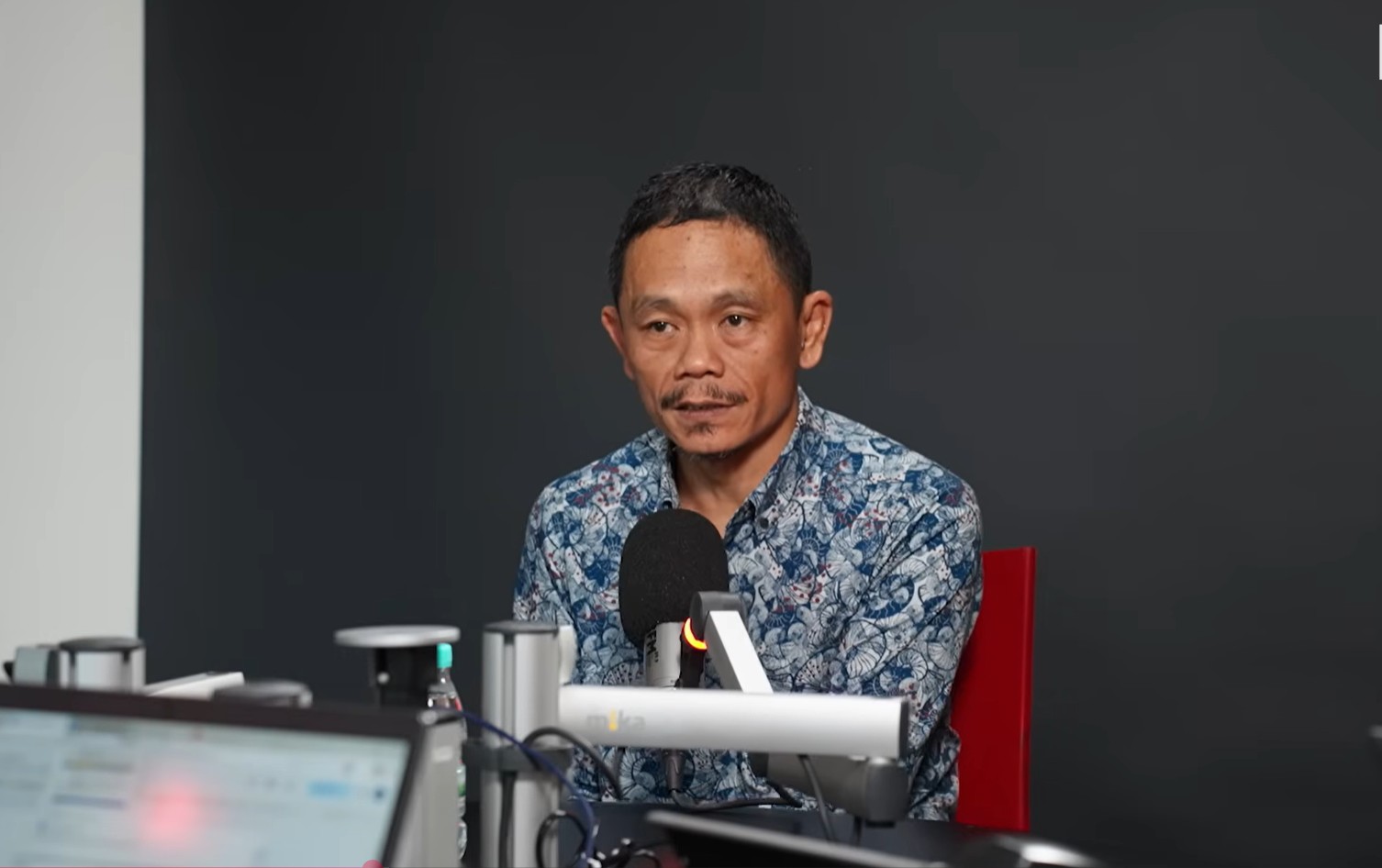
KUALA LUMPUR – Malaysia is bracing for a worsening supply-side crisis as disruptions linked to the Middle East conflict begin to ripple across fuel, food, manufacturing and healthcare supply chains, according to Economy advisor in the Prime Minister’s Office, Nurhisham Hussein.
Speaking in an interview with BFM, Nurhisham warned that the country is entering a “multi-wave” disruption that could become significantly more visible in the coming months as businesses exhaust existing inventories and struggle to secure replacement supplies.
“Which is why I’m thinking June, July is going to be the real point where we can see this crisis being very evident.”
Because that’s at the point where a lot of businesses run out of their old stock, I think, in terms of raw materials, and they’re still waiting for the new one to come in,” he said.
The head of the Secretariat of the Crisis Management Taskforce Team of the National Economic Action Council, also added that the government is currently spending between RM1.5 billion and RM1.7 billion on subsidies to cushion the impact of rising fuel and supply costs, placing growing pressure on public finances.
Nurhisham added that Putrajaya is now being forced to examine spending cuts across ministries as part of broader fiscal management efforts, although he stressed that basic public services would remain protected.
“You simply have to cut the expenditure,” he said.
The head of the Secretariat of the Crisis Management Taskforce Team of the National Economic Action Council, also added that the government is currently spending between RM1.5 billion and RM1.7 billion on subsidies to cushion the impact of rising fuel and supply costs, placing growing pressure on public finances.
The issue gained public attention after a leaked internal document revealed discussions on possible cuts involving major ministries, including healthcare and education.
Nurhisham described the document as “a very preliminary letter” intended for internal discussions between the Ministry of Finance and other ministries.
“It was leaked. And so, you know, we haven’t even, you know, this was just a starting point for discussion between MOF and the other ministries. So it was never meant to be announced. It was not meant to be frankly, caused panic,” he said.
He added that healthcare and education appeared prominently because their budgets had expanded significantly over the last three years.
“The reality is that those are the two biggest budgets. So that’s why they were looking at those first,” he said.
Nurhisham also pushed back against criticism that cuts would immediately undermine public healthcare services.
“Whatever basic services that we provide is going to be guaranteed,” he said.
“You’re looking at cutting those expenditures that are more discretionary.”
The crisis is already affecting sectors heavily dependent on petrochemicals and diesel, including manufacturing, construction, agriculture and tourism.
According to Nurhisham, Malaysia has identified around 60 critical supply items facing shortages, with industry groups now scrambling to secure alternative sources.
He highlighted plastics as one of the most pressing concerns.
“Plastic from the US is made from ethylene, whereas ours is typically naphtha derived. So there’s a specification mismatch,” he said.
“It’ll take, I was told, 45 days to get here, compared to, say, about 20 days or so from the Gulf.”
Businesses are also facing mounting cash flow pressures as suppliers tighten credit terms and demand upfront payments amid uncertainty.
“The issue there is that whatever alternative supplies could have the wrong specification, not quite to the quality standard that we want, will take too long to get here,” he said.
To ease pressure on companies, the government has expanded financing support through existing relief schemes. Nurhisham said more than RM1 billion in loans had already been restructured, while Bank Negara Malaysia had opened a RM5 billion relief facility for affected businesses.
At the same time, authorities are becoming increasingly concerned about hoarding behaviour, particularly within industrial sectors already facing supply shortages.
“Yes, unfortunately, yes. We’re starting to see some hoarding, especially at industrial level,” Nurhisham said.
“The danger point would be if the general public starts doing that as well.”
He stressed that the current crisis differs fundamentally from previous economic downturns such as the 1997 Asian Financial Crisis, the 2008 global financial crisis and the COVID-19 pandemic because it is driven primarily by supply shortages rather than weak demand.
“This is a supply crisis. And it’s very different from the crises that we’ve gone through before, which are always about demand,” he said.
“In a supply side crisis, you can’t spend your way out of it, because you cannot buy something that’s not there.”
Nurhisham urged Malaysians to moderate consumption and avoid panic buying as the country navigates the coming months.
“The government can only do so much.”
“So I think in that sense, understanding the nature of this crisis, understanding, we need to go back to that spirit of COVID, kita jaga kita.” he said. – May 16, 2026