

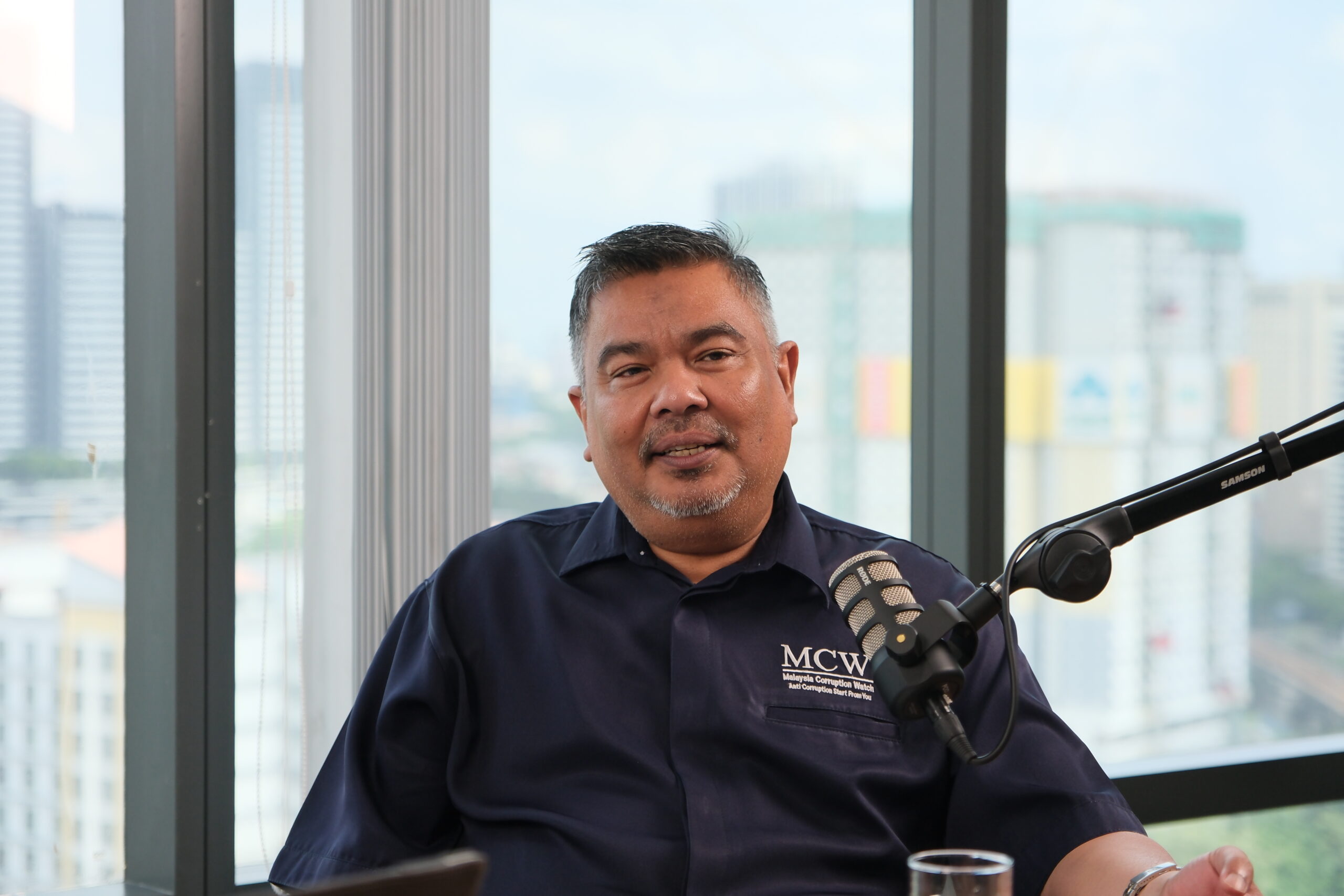

KUALA LUMPUR – Malaysia Corruption Watch (MCW) has called for the standardisation of appointments for amil or zakat collection agents across state religious departments, aiming to strengthen oversight of zakat contributions.
Its president, Jais Abdul Karim, noted that zakat collection falls under the jurisdiction of each state government, which often operate under differing procedures.
“We want to monitor these amil, but we do not have a proper system to oversee zakat collection. They are paid to collect zakat and it concerns issues of trust.
“We do not want zakat collectors to misuse terms such as asnaf, sabil, and others due to greed, and if there is a breach of trust, it is very serious and requires attention,” he said during a recent episode of the Podcast Scoop Insight.
The podcast, titled ‘RM230 million: Amanah or Khianat’, is scheduled for release today.
The call comes in the wake of public concern over the misappropriation of RM230 million in donations to a non-governmental organisation (NGO), which included funds intended for a state zakat body, according to the Malaysian Anti-Corruption Commission (MACC).

Jais added that zakat institutions should implement real-time dashboards to allow donors to track collections.
“This is the first filter; when people can see the system, they are less likely to commit fraud for fear of being caught.
“But if there is room for manipulation or leakage, misappropriation will inevitably occur,” he explained.
He further emphasised that the MACC should be involved if any misconduct or breach of trust arises.
“If we care about an individual, we must report them. That is why we need multiple layers of oversight, and donors have the right to clear reports on contributions.
“Agents or amil should not be treated as religious brokers; they are facilitators, not owners of the funds,” he said.
Jais also praised former MACC chief Tan Sri Azam Baki for his assertive enforcement, which he said has helped uncover longstanding irregularities in religious institutions.
“This has been happening for 30 years. It is not new. Aggressive enforcement brings out these residual wrongdoings, and we must learn from this to ensure it does not happen again,” he added. – May 18, 2026