

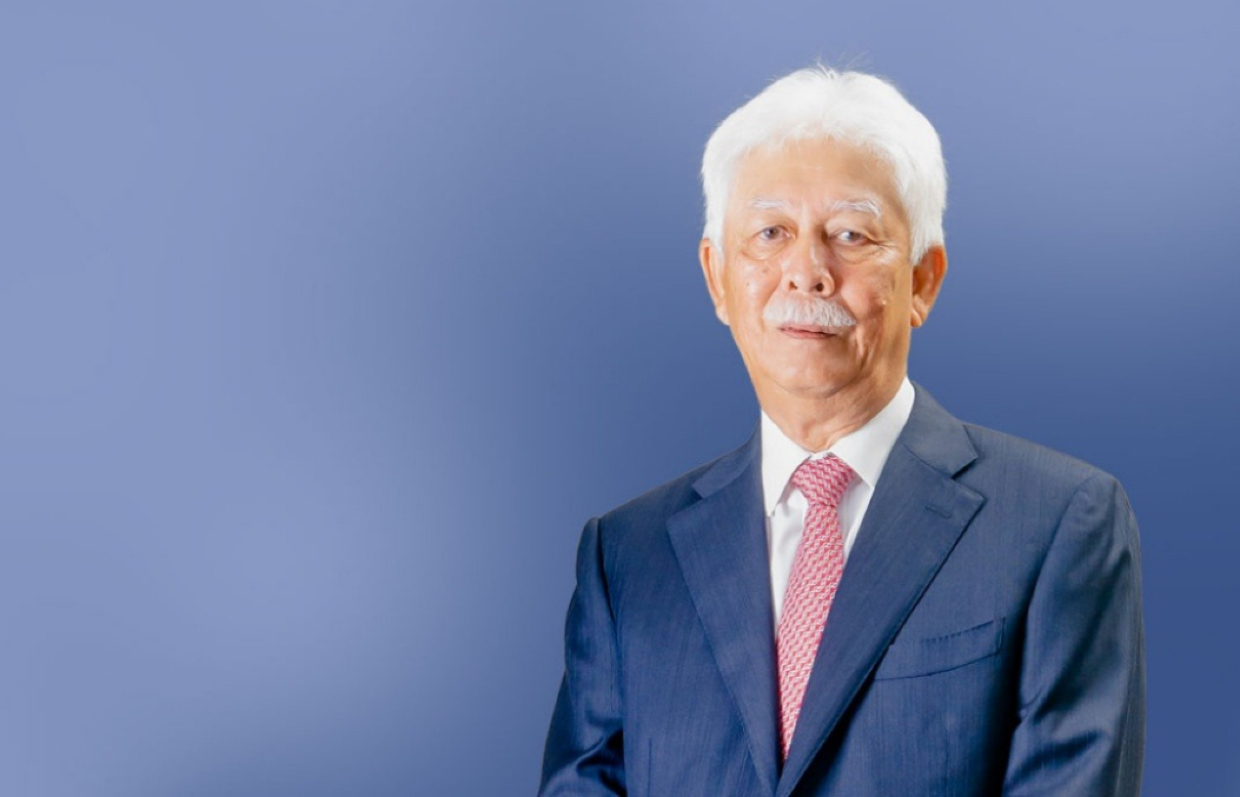
KUALA LUMPUR — Malaysia would be in greater economic difficulty today had the government not begun fuel subsidy reforms since two years ago, Crisis Management Task Force chairman (PPPK) Tan Sri Mohd Hassan Marican said.
“The strategic implementation of the rationalised subsidy framework has played an important role in stabilising the domestic economy against severe external shocks.
“Had the government not proactively pursued fuel subsidy reforms over the past two years, Malaysia would find itself in a far more precarious position today,” Mohd Hassan told Bernama in an interview.
PPPK was formed under the National Economic Action Council (MTEN) and is responsible for coordinating the government’s response to the current global energy crisis caused by the US-Israeli war on Iran.
Mohd Hassan said evolving global conditions require continuous reviews of subsidy mechanisms, quotas and distribution systems to ensure they remain effective and aligned with current realities.
“The geopolitical fallout (over Iran) has completely shifted our reality. Our fuel subsidy bill has surged from RM700 million in January to an unprecedented RM5 billion a month within a short time.
“A subsidy bill of this scale is simply not sustainable and puts a massive strain on our national budget,” he said.However, despite Malaysia’s resilient position, people need to be aware that households will gradually be affected through the rising cost of living, Mohd Hassan said.
People must also take the view that the ongoing global supply and energy crisis is not solely an oil price issue, but a broader physical disruption.
The impact would be felt in stages, beginning with fuel and logistics costs before spreading to petrochemical feedstocks, plastics, fertilisers, manufacturing and construction.
“Eventually, it will reach households through broader cost-of-living pressures,” he said in the interview.
He warned that an exclusive focus on fuel prices risks underestimating the scale of the disruption, as its effects will gradually extend across various sectors of the economy if it continues.
“Treating it purely as an oil price issue is a very common misconception.
“It is fundamentally a physical supply crisis,” he said, adding that in such a situation, financial resources alone cannot resolve the issue if the supply is disrupted.
With the government focused on ensuring its subsidy policy aids those who need it most, the challenge is balancing immediate relief for households with the need to preserve national resources for the future, Mohd Hassan added.
The government is also strengthening measures to protect the broader supply chain that supports the economy and daily livelihoods.
“We are actively coordinating national logistics, intensifying anti-smuggling enforcement, and stabilising food supply lines,” he said.
The future challenge is not just about securing fuel but also about managing broader supply chain bottlenecks, logistical disruptions and intensifying international competition for resources.
“What the government and industry are trying to do now is strengthen buffers and ensure critical sectors continue to function smoothly while longer-term supply conditions evolve.
“We also have to take into consideration that securing supply in a highly volatile global market now comes with significantly higher additional costs,” he added. As an example, disruption-related premiums of USD30 to USD40 per barrel are added to the high price of crude oil.
Mohd Hassan said Petronas has played a vital role for the country in ensuring domestic fuel security by helping to address supply shortfalls by other oil companies operating here, despite significantly higher procurement and operational costs.
Currently, Petronas is absorbing these additional commitments that can run into hundreds of millions of ringgit, on top of the existing subsidy burden borne by the Government, he said. – June 8, 2026