

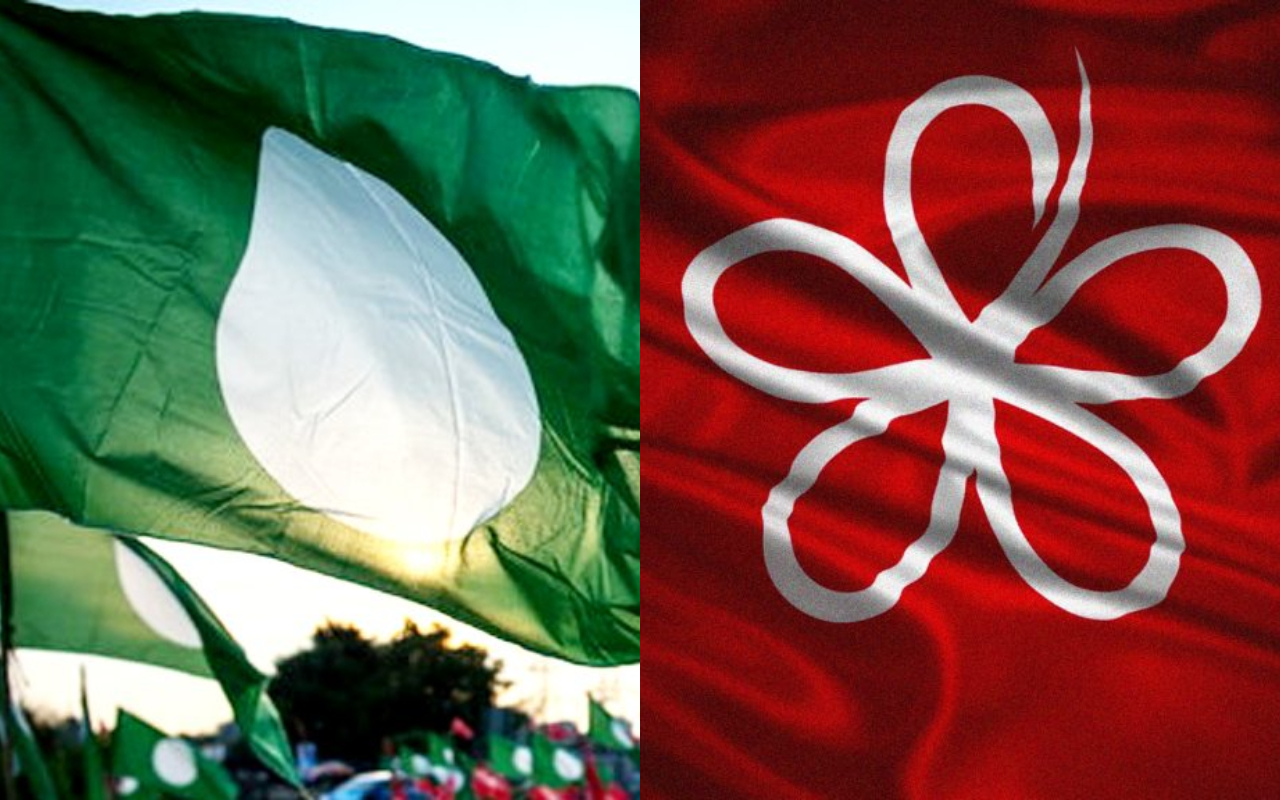
KUALA LUMPUR – The decision by PAS to end its political cooperation with Bersatu has ignited debate over the future cohesion of the opposition and whether the Malay-Muslim unity narrative that underpinned the rise of Perikatan Nasional still holds political weight.
Associate Professor Dr Mazlan Ali said the immediate impact of the split would be a fragmentation of opposition support, particularly among Malay voters who previously rallied behind a unified Perikatan Nasional.
“Voters on the fence will also switch their support to Madani because the national image built on the personality of Muhyiddin Yassin of the Perikatan Nasional has ended. PAS will finally be seen as more of a Malay Islamic narrative,” he told Scoop.

Mazlan added that the breakup could lead to the emergence of competing opposition blocs targeting the same voter base.
“This is because the opposition vote will be split into PAS who will make a new alignment with RESET and also a separate vote for Muhyiddin who will rebrand Perikatan Nasional with Gerakan and MIPP,” he said.
A key point of debate among analysts is which party stands to be more affected. Both Mazlan and Professor Datuk Dr Awang Azman Awang Pawi share the view that PAS retains stronger organisational resilience.
Awang Azman said PAS has deep-rooted structures that allow it to remain politically competitive even without Bersatu.
“PAS has a long-established machinery, grassroots mosque-surau networks, ulama leadership, women’s and youth wings, and a strong ideological structure.”
“Bersatu relies more on personalities, anti-UMNO/anti-PH sentiment, and PAS’s ground machinery. Without PAS, Bersatu loses its ‘engine of conservative Malay votes’,” he said.
Mazlan similarly argued that PAS is better positioned to absorb the fallout, warning that Bersatu risks greater losses in support and parliamentary influence if the split persists.
Analysts also warned that the impact could be most visible in marginal and mixed constituencies, where opposition coordination previously played a decisive role.
Awang Azman said the greatest effect would likely be seen in semi-urban and mixed seats, where divided Malay votes could advantage the Unity Government, referring to Pakatan Harapan and Barisan Nasional.
“If PAS and Bersatu contest against each other, opposition Malay votes will be split. This opens the door for PH-BN to win with small majorities, especially in areas where PN previously won due to a unified anti-government vote.” he added.

He identified Selangor as one of the states likely to see gains for the ruling coalition.
Mazlan echoed this view, highlighting Negeri Sembilan as a potential flashpoint.
“The split between PAS and Bersatu could result in both parties suffering heavy defeats in Negeri Sembilan because in the previous general election and the 6 state elections, PN came in last place in the 3-cornered fight.”
Beyond electoral arithmetic, analysts say the development could reshape future political alignments.
Political analyst Dr Azmi Hassan said the direction of alliances will depend heavily on the outcomes of the upcoming state elections in Negeri Sembilan and Johor.
He argued that the current fragmented arrangement involving BN, PAS, Bersatu and PH is unlikely to remain sustainable.
“There won’t be a separate BN-Umno versus PAS, versus Bersatu and versus PH. I don’t think so. It’s too dilute in terms of the political scenario,” he said, adding that a strong PAS performance could open the door to renewed cooperation with Umno.
“I believe that PAS and Umno will work together, especially after the Negeri Sembilan and Johor elections,” he said while speaking to Scoop.
Azmi also suggested that Bersatu could eventually explore cooperation with Pakatan Harapan if electoral dynamics shift.
“If PH does a dismal job, especially among the Malays, it gives a chance for Bersatu, whether within PN or not, to work with PH.”
The split has also cast renewed scrutiny on the Malay-Muslim unity narrative long promoted by both PAS and Bersatu.
Mazlan said the fallout exposes contradictions in that narrative.
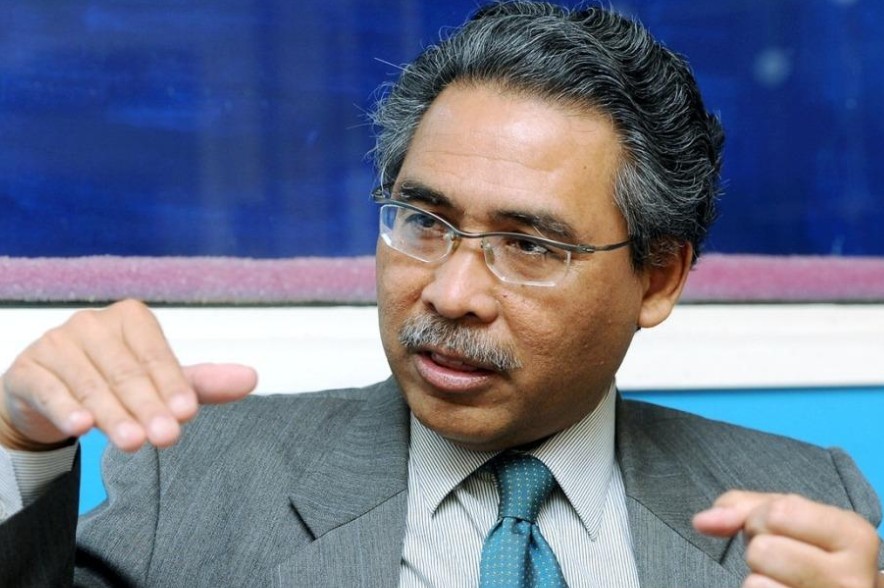
“This PAS-Bersatu conflict will reveal that the concept of ummah consensus that is being fought for is simply not true and this will make it difficult for PAS to convince Umno to cooperate in MN 2.0.” Mazlan said
Awang Azman similarly questioned whether unity was a principle or a political strategy.
“PAS has long promoted the idea of Malay-Muslim unity, but splitting from Bersatu raises questions: is unity a fixed principle, or just a strategy when convenient?” he added.
As the opposition navigates an uncertain landscape, analysts agree the implications of the split extend far beyond seat negotiations and coalition mathematics. – June 10, 2026