

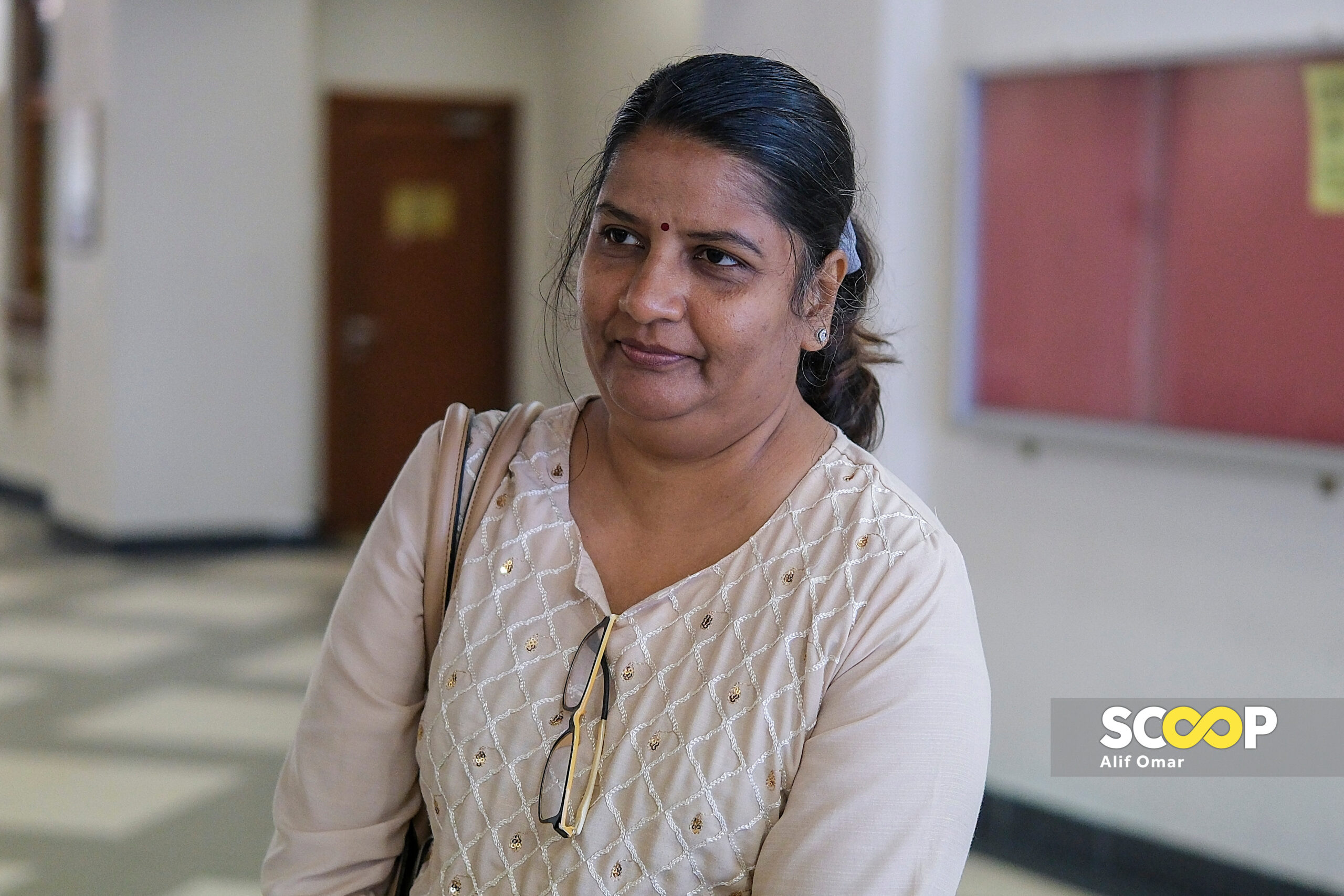
KUALA LUMPUR — The High Court has dismissed an originating summons filed by M. Indira Gandhi and 13 others seeking to invalidate laws in seven states that permit the unilateral religious conversion of minors.
In a decision delivered via Zoom proceedings, Judge Datuk Aliza Sulaiman, who has since been elevated to the Court of Appeal, ruled that the plaintiffs had failed to establish locus standi, or legal standing, to bring the action, Bernama reported.
The plaintiffs comprised Indira Gandhi, a religious association and 12 individuals.
“The first plaintiff (Indira Gandhi) did not file any affidavit showing how her interests would be affected if the reliefs sought were not granted. As for the second to the 12th plaintiffs, there is no evidence in the supporting affidavit or any other affidavits filed to show how their interests are affected.
“There was also no evidence that the fifth to the 14th plaintiffs have minor children who may be affected by the provisions being challenged. Their interest in this matter is purely hypothetical or academic. Therefore, the plaintiffs’ application is dismissed,” the judge said.
The court made no order as to costs, noting that the matter involved issues of public interest.
The plaintiffs filed the originating summons in March 2023, challenging provisions in state laws that allow the unilateral conversion of minors in Johor, Perlis, Melaka, Kedah, Negeri Sembilan, Perak and the Federal Territories.
Pahang was initially named as a defendant but was later removed from the suit after amending its laws to prohibit unilateral conversions.
The Federal Territory Islamic Religious Council (MAIWP) and the Johor Islamic Religious Council were granted leave to intervene in the proceedings.
The plaintiffs contended that the state enactments were inconsistent with Article 12(4) of the Federal Constitution, relying on the Federal Court’s interpretation in Indira Gandhi’s landmark unilateral conversion case in 2018.
Article 12(4) states that the religion of a person under the age of 18 shall be determined by his or her “parent or guardian”.
In its 2018 ruling, the Federal Court held that the term “parent” should be interpreted as “parents” where both are alive, meaning the consent of both parents is required before a child can be converted to another religion.
The plaintiffs also argued that Article 75 of the Federal Constitution establishes the supremacy of federal law over any conflicting state legislation and that provisions permitting unilateral conversion should therefore be declared invalid.
The legal challenge arose from a long-running custody and religious conversion dispute involving Indira Gandhi and her former husband, Muhammad Riduan Abdullah, who converted their three children to Islam in 2009 without her consent before seeking custody through the Syariah Court.
On January 29, 2018, the Federal Court declared the conversions null and void. Muhammad Riduan and the children have remained missing since then. – June 12, 2026