

PUTRAJAYA — The government will bear the full cost of delivering medication to about 80,000 patients a month under the “Ubat Melalui Pos” (UMP) programme set to kick off in July, said Communications Minister Datuk Fahmi Fadzil.
He said the initiative, a collaboration between the Ministry of Health (MOH) and the Malaysian Communications and Multimedia Commission (MCMC), involves an estimated cost of RM5.69 million per year, which will be fully borne by the Communications Ministry and MCMC.
He added that the move would that ensure patients, who are eligible under the UMP programme, no longer need to bear the cost of medication delivery.
“We hope that by this July, we can start this initiative in every state. So, the cost will no longer be borne by any party, especially the patients themselves. It will be fully borne by the government,” he said.
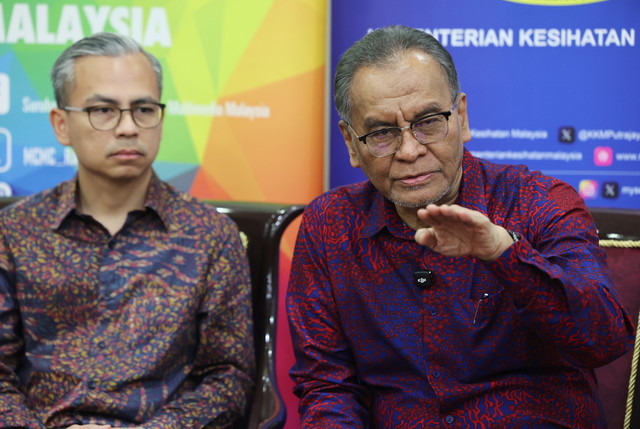
He said this at media conference after the signing of the memorandum of understanding (MoU) between the MOH and MCMC for the National Digital Health Ecosystem and Connectivity Catalyst (PERSADA) initiative here today.
Fahmi said the selection of patients eligible for the UMP programme will be determined entirely by the MOH, while delivery services will be managed Pos Malaysia, as a licensee under MCMC.
He said that PERSADA, with the overall cost of the initiative between the MOH and MCMC estimated at RM650 million, is aimed at strengthening the digitalisation of the country’s healthcare system.
He added that the programme would be implemented in two phases, with phase one involving and estimated cost of RM74 million.
He said that funding for PERSADA wil be managed by the MCMC through the Universal Services Provision Fund (USP).
In another development, Fahmi said the National Information Dissemination Centre (NADI) will be strengthened as an early health and telehealth screening centre, particularly in rural and remote areas that have limited access to healthcare facilities.
He said approach, implemented since 2023, will be expanded to enable residents to undergo early screening, such as blood sugar and blood pressure checks without having to travel far to hospitals or clinics.
For example, he said, the NADI in Pulau Bum Bum, Semporna, Sabah, is used to support telehealth services and connect residents with doctors and specialists from other locations.
According to Fahmi, artificial intelligence (AI) technology is also being used in some NADI centres, including for basic health assessments through retinal screening.
“If internet access at clinics is limited, we will continue to use NADI as a base for screening and telehealth services,” he added. – June 15, 2026