


KUALA LUMPUR – The Rohingya refugee situation in Malaysia remains in a prolonged state of uncertainty, with limited prospects for both repatriation and third-country resettlement, according to the Myanmar Ethnic Human Rights Organisation in Malaysia (MERHROM).
Its president Zafar Ahmad Abdul Ghani told Scoop when contacted that returning to their homeland is not currently possible under existing conditions, while relocation to third countries is also highly constrained.
“As a result, many continue to live under difficult and uncertain circumstances wherever they are currently based,” he said.
He added that despite these challenges, a significant number of Rohingya refugees in Malaysia continue to express a desire to return to their homeland, provided there are guarantees of safety, stability and basic security.
Zafar said an estimated 126,144 Rohingya refugees in Malaysia are currently facing severe limitations in terms of long-term solutions, with both repatriation and resettlement pathways remaining highly constrained.
“The reality is that the community is left with very limited options. There is no clear or sustainable pathway at the moment, either to go back or to be resettled elsewhere,” he said.
He added that the situation has effectively placed many refugees in a prolonged state of limbo.
“We are in a situation where people are just waiting, but there is no certainty about what the future holds for them,” he said.
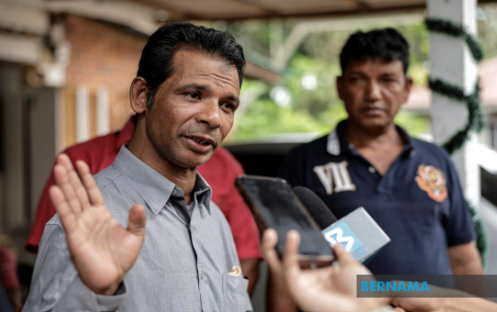
Zafar said return to Myanmar is not currently possible under prevailing conditions, while resettlement opportunities in third countries remain extremely restricted, with only small numbers of Rohingya refugees accepted globally.
“In many cases, even countries that do accept refugees are only taking very small numbers. That is the reality we are facing,” he said.
He said that despite these constraints, many refugees continue to hold hope for eventual return if conditions in their homeland improve and safety can be guaranteed.
“Most of the community still hopes that one day they can go back, but only if there is safety, stability and dignity for them in Myanmar,” he said.
Zafar also said global attention is often focused on other humanitarian crises, such as Palestine, while the Rohingya situation receives comparatively less sustained international focus.
“We are not saying other causes are not important, but the Rohingya issue also needs consistent attention because the suffering is ongoing,” he said.
At the same time, he said the Rohingya community is frequently misunderstood and unfairly portrayed, despite what he described as their general respect for local communities and lack of demands for special privileges.
“We have always lived peacefully with the local community. We are not asking for anything beyond humanitarian consideration,” he said.
Zafar clarified that the community has never sought equal rights or citizenship in Malaysia, nor made territorial claims such as Selayang, adding that such allegations are untrue.
“We have never claimed citizenship, and we have never made any territorial claims. These are false narratives,” he said.
He urged authorities to investigate the origin of such claims circulating on social media, calling for action against those responsible for spreading misinformation about the Rohingya community.
“We ask for these claims to be investigated properly so that the truth is clear and those spreading false information can be identified,” he said.
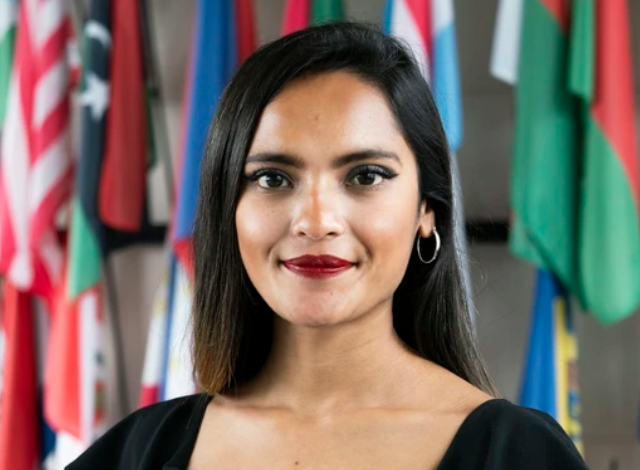
In a separate development, Rohingya activist Noor Azizah has come under public scrutiny following a resurfaced video of her acceptance speech at the ‘Marie Claire Women of the Year’ awards in Australia, where she highlighted the plight of Rohingya refugees across Malaysia and the region.
In the speech, she claimed that more than 2,000 Rohingya children in Malaysia are being held in immigration detention centres and raised concerns over alleged mistreatment of Rohingya communities in Malaysia, Indonesia and Thailand, including trafficking and forced labour risks.
The remarks have drawn criticism from social media users, with many accusing her of being ungrateful towards Malaysia’s assistance and protection of Rohingya refugees.
The 1 minute 18 second clip, originally from a University of Sydney-related event last year, resurfaced recently on Threads amid renewed discussion on Rohingya issues in Malaysia, and gained further attention after Noor reshared it on Instagram with comments disabled.
The incident has since sparked mixed reactions online over her decision to raise such criticisms on an international platform. – June 17, 2026