

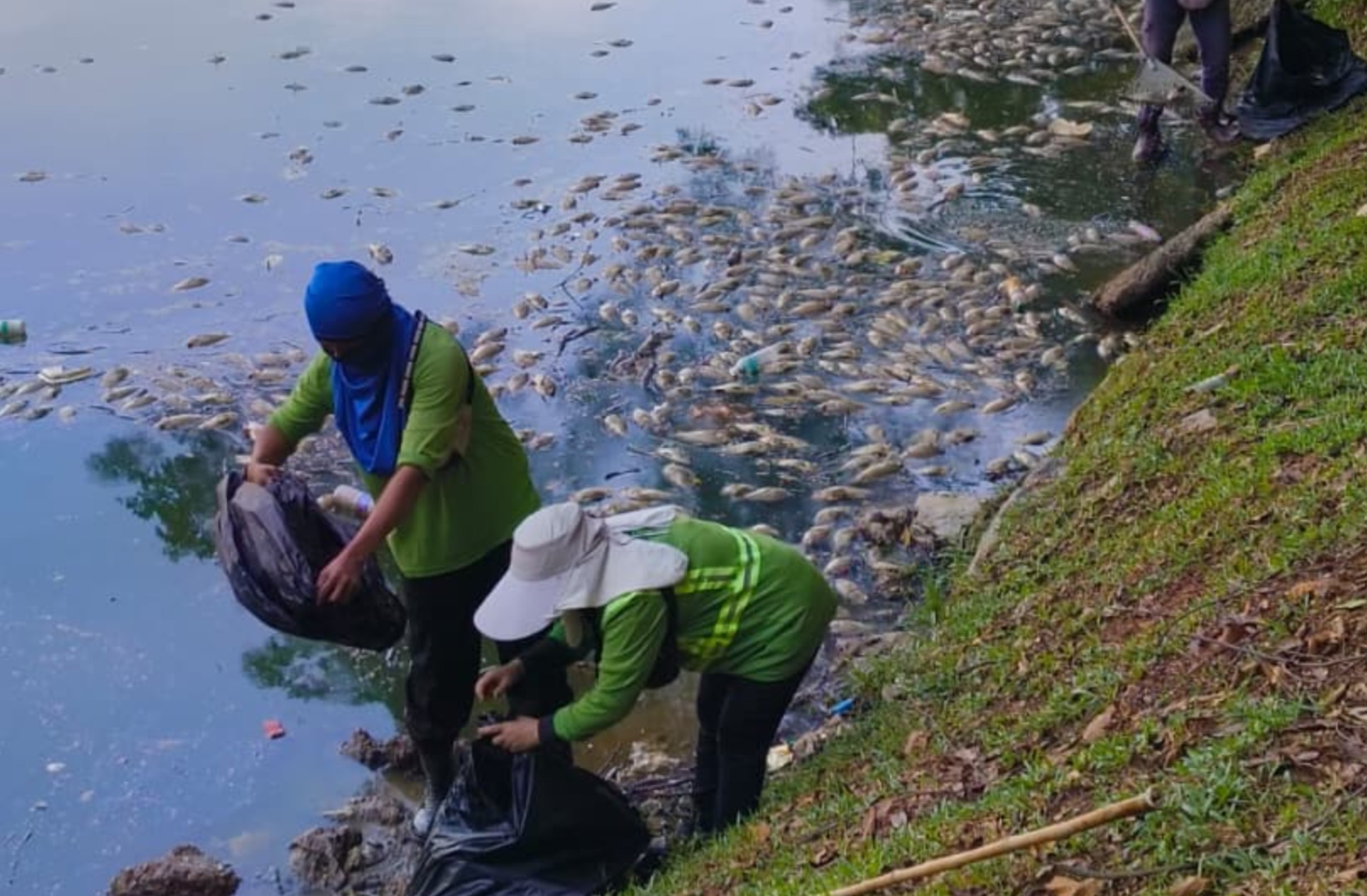

KUALA LUMPUR – The mass fish deaths at Danau Kota Lake may have coincided with heavy rainfall, but environmental experts say the incident likely reflects longer-term issues involving pollution, drainage design and the ecological condition of Kuala Lumpur’s urban waterways.
Their remarks follow an explanation from Kuala Lumpur City Hall, which attributed the fish kill to prolonged rainfall that allegedly caused a sharp drop in dissolved oxygen levels, while also flushing sediments, organic matter and pollutants into the lake.
The incident drew public concern after images and videos showing large numbers of dead fish spread across social media, with residents also reporting a strong odour and deteriorating water conditions around the lake.
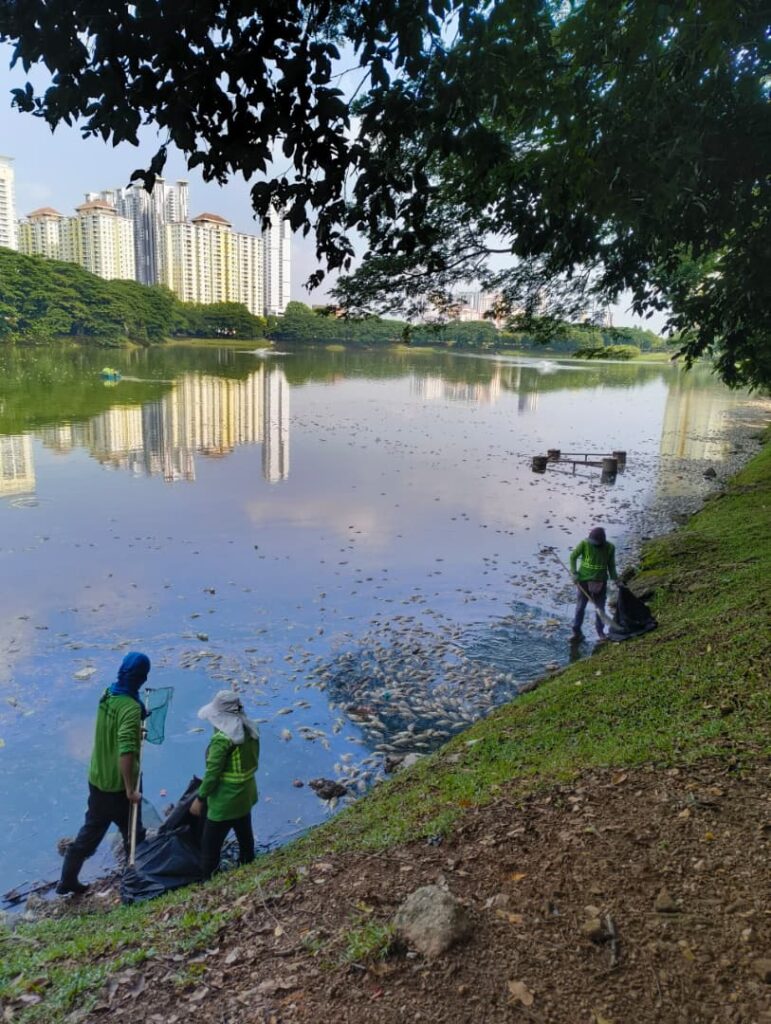
However, environmental specialist Mohd Fadhil Mohd Din of Universiti Teknologi Malaysia said rainfall should be seen as a catalyst rather than the root cause.
Speaking to Scoop, he noted that fish kills in urban lakes are rarely driven by a single factor and usually point to cumulative environmental stress.
“For Danau Kota Lake, my professional view is that heavy rainfall is more likely to be the immediate trigger rather than the sole root cause.
“Stormwater runoff brings organic matter, sediments, nutrients, oil, grease and other contaminants into the lake. Microbial decomposition then increases oxygen demand and, if the lake is already stagnant, nutrient-enriched or poorly flushed, dissolved oxygen can collapse rapidly.”

He stressed that the broader condition of the lake and its catchment area prior to the rainfall event must also be considered.
“Heavy rainfall alone would normally dilute pollutants. But in urban catchments, it can also create a ‘first flush’ effect where accumulated pollutants are suddenly washed into the lake.
“Rainfall may be the triggering event, but the more important question is what was already present in the catchment and lake system before the rain.”
He added that authorities should avoid premature conclusions and instead rely on comprehensive water quality analysis, including dissolved oxygen, biological oxygen demand (BOD), chemical oxygen demand (COD), ammonia, nutrient levels, turbidity, oil and grease, E. coli and chlorophyll-a readings.
Fadhil also pointed to possible weaknesses in urban drainage design.
“This may indicate that the drainage system is still functioning primarily as a flood-conveyance system rather than a water-quality protection system.
“Urban drains move stormwater quickly, but if there are insufficient pollutant traps, wetlands, oil interceptors and treatment systems, those same drains become pollutant highways into lakes.”
He said urban runoff remains one of the most significant threats to waterways in densely developed cities such as Kuala Lumpur, carrying pollutants including nutrients, organic waste, hydrocarbons, heavy metals, microplastics and bacteria during heavy rain events.
He also questioned whether current monitoring systems are sufficiently proactive.
“Most public lake monitoring programmes remain more reactive than preventive.
“A preventive system should incorporate real-time sensors and continuous monitoring so pollution pulses can be identified before fish kills occur.”
Similarly, Professor Datuk Dr Aileen Tan Shau Hwai, director of the Centre for Marine and Coastal Studies (Cemacs) at Universiti Sains Malaysia, said fish kills are often the visible outcome of prolonged environmental stress.
She explained that multiple pressures tend to accumulate over time, weakening aquatic ecosystems before a visible collapse occurs.

“While heavy rainfall can trigger a sudden drop in dissolved oxygen, the severity of such incidents is often linked to multiple stressors that have been building up over time.
“These may include nutrient enrichment, organic pollution, sediment accumulation, poor water circulation and polluted urban runoff. In most cases, rainfall acts as the trigger, but the underlying vulnerability of the ecosystem determines the scale of the impact.”
She added that the scale of the fish kill suggests the lake’s ecological resilience may already have been compromised.
“It does not necessarily mean that the lake is beyond recovery, but it does suggest that ecological resilience may have been compromised.
“Healthy ecosystems are generally better able to cope with environmental disturbances.”
Aileen further noted that sudden oxygen depletion often reflects longer-term ecological imbalance, including excessive organic matter and disrupted water circulation.
“The oxygen depletion itself may be sudden, but the conditions that lead to it often develop over a much longer period.”
She also highlighted the impact of urban runoff from roads, construction sites and residential and commercial areas, particularly during intense rainfall events.
For her, the incident should prompt a wider review of how urban lakes are managed and safeguarded.
“The real question is not why the fish died on that particular day.
“The real question is why the ecosystem was unable to withstand a rainfall event without experiencing a collapse in water quality.”
While Kuala Lumpur City Hall has pointed to heavy rain as the immediate cause, both experts argue that rainfall likely acted only as a trigger.
They maintain that the more pressing concern is whether years of pollution, environmental pressure and limited preventive monitoring had already weakened the lake before the storm occurred. – June 19, 2026