

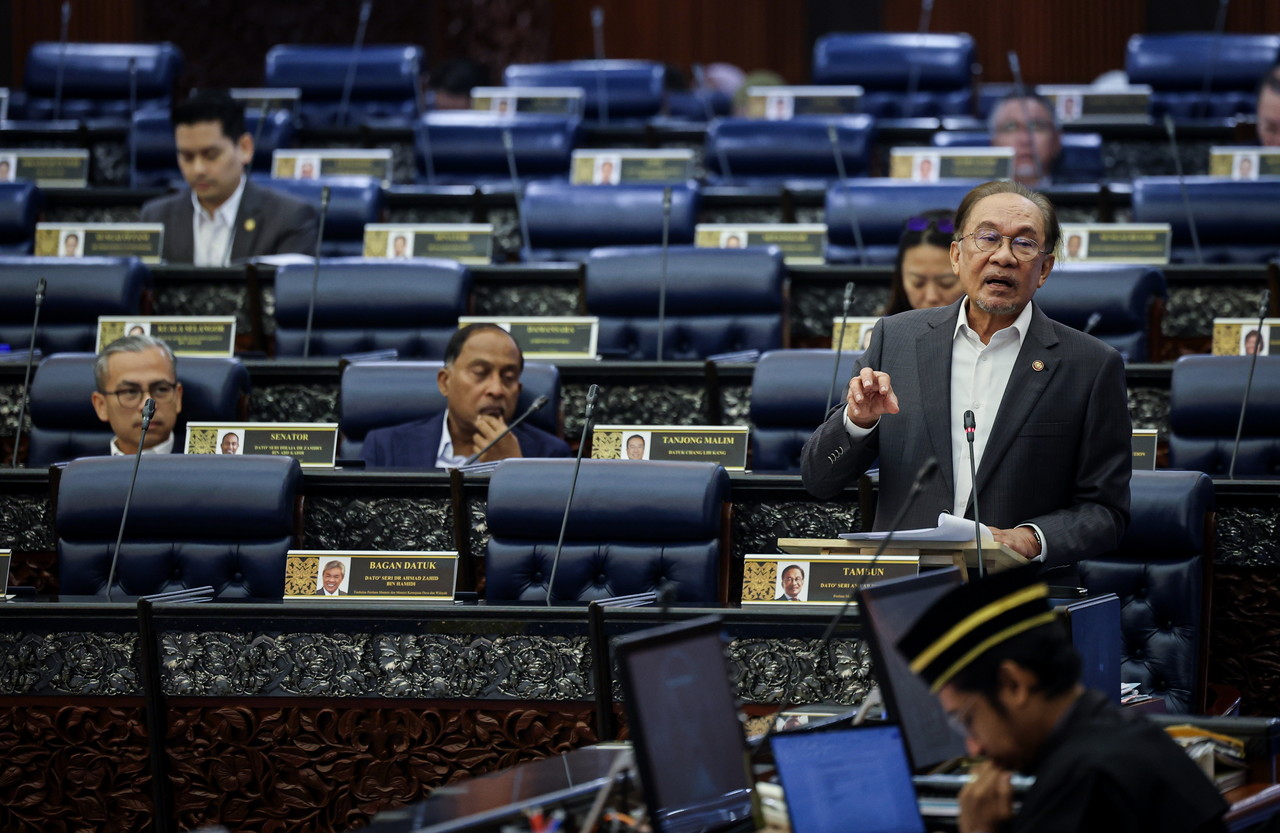
KUALA LUMPUR – Malaysia’s retail fuel prices remain lower than those in major oil-producing nations such as Saudi Arabia and Qatar, Prime Minister Datuk Seri Anwar Ibrahim said today.
He said subsidised RON95 petrol under the BUDI MADANI initiative was currently priced at RM1.99 per litre, compared with Saudi Arabia, where prices have risen above RM2.40 per litre, Bernama reported.
Anwar said the comparison showed that the government remained committed to keeping fuel prices affordable despite claims that Malaysia was no longer competitive against other oil-producing countries.
“Fuel prices in Malaysia are lower than those in Qatar and Saudi Arabia, that is a fact that must be remembered. When we called for fuel prices to be reduced to RM1.50, the price in Saudi Arabia at that time was around 50 sen.
“Now, the price of RON95 petrol in Malaysia is RM1.99 per litre, while in Saudi Arabia it is over RM2.40 per litre. Qatar and the United Arab Emirates (UAE) also recorded higher prices, and the UAE even raised fuel prices two months ago despite being a major oil producer,” he said during Question Time in the Dewan Rakyat today.
He was responding to a supplementary question from Datuk Rosol Wahid (PN-Hulu Terengganu), who asked about the difference in fuel prices during the administration of former prime minister Datuk Seri Najib Razak, as well as Anwar’s previous pledge, when he was in the Opposition, to lower fuel prices.
Anwar said fuel price policies must be assessed based on the prevailing economic environment and the overall assistance provided by the government to the people.
He cited several aid programmes, including the Sumbangan Tunai Rahmah (STR), Sumbangan Asas Rahmah (SARA), RON95 petrol subsidies and the BUDI Diesel programme.
“Overall, the assistance provided is much greater than before, but I do not want to compare, sometimes it may be different and the country’s revenue was also much lower than it is now,” he said.
The prime minister also welcomed constructive proposals to improve fuel-related policies, saying the government would continue to consider views from various stakeholders before making decisions to safeguard economic stability and public welfare.
Earlier, Rosol had asked Anwar to explain the government’s assessment of the impact of the prolonged crisis in the Strait of Hormuz and measures taken to minimise its effects.
Anwar said the government was focused on ensuring adequate fuel supplies, stabilising the prices of essential goods, supporting micro, small and medium enterprises (MSMEs), and strengthening economic resilience.
He added that allocations for STR and SARA had been increased to RM15 billion this year, benefiting more than nine million recipients, while Kuala Lumpur City Hall (DBKL) and Majlis Amanah Rakyat (MARA) had also introduced rental reductions for business premises.
Anwar said geopolitical tensions in West Asia and disruptions to major trade routes, including the Strait of Hormuz, continued to place pressure on both global and domestic economies. – July 14, 2026