

KUALA LUMPUR – The frustration of seeing full signal bars on your phone but having zero internet access is finally being addressed.
The Malaysian Communications and Multimedia Commission (MCMC) and major telecommunications service providers are actively rolling out a series of aggressive mitigation measures to tackle this persistent digital headache.
Deputy Communications Minister Teo Nie Ching revealed that the government is upgrading transmission networks using high-capacity optical fibres to combat core line failures.
To keep the country’s digital highway running smoothly, she said key measures also include setting up link redundancies and establishing alternative transmission routing to eliminate single points of failure.
“The issue of lack of internet access even though users receive strong telephone signals or full bars can occur due to several factors that affect the quality of service,” Teo explained.
She was responding to a question in the Dewan Rakyat today from Datuk Anyi Ngau (GPS-Baram), who pressed the Communications Ministry for a comprehensive action plan to resolve core line disruptions.
Why does your signal lie?
According to Teo, “phantom” full signals often occur when networks are congested by heavy data traffic or when physical transmission lines are disrupted.
Beyond network bottlenecks, a laundry list of physical vulnerabilities is frequently to blame. These range from accidental fibre optic cable cuts during construction to vandalism, cable theft, natural disasters, and even interference from wild animals.
“Apart from network factors, user experience is also influenced by the condition of the device, phone settings, type of subscription plan and remaining data quota available,” she added.
Fortifying the towers
To ensure the internet doesn’t just cut out during an emergency, Teo noted that MCMC has upgraded backup power generation systems across communication sites. These locations are now being monitored 24/7 by telcos through their Network Monitoring Centres (NMCs).
Furthermore, the government is taking active physical security measures to protect critical infrastructure built under the National Digital Network Plan (Jendela).
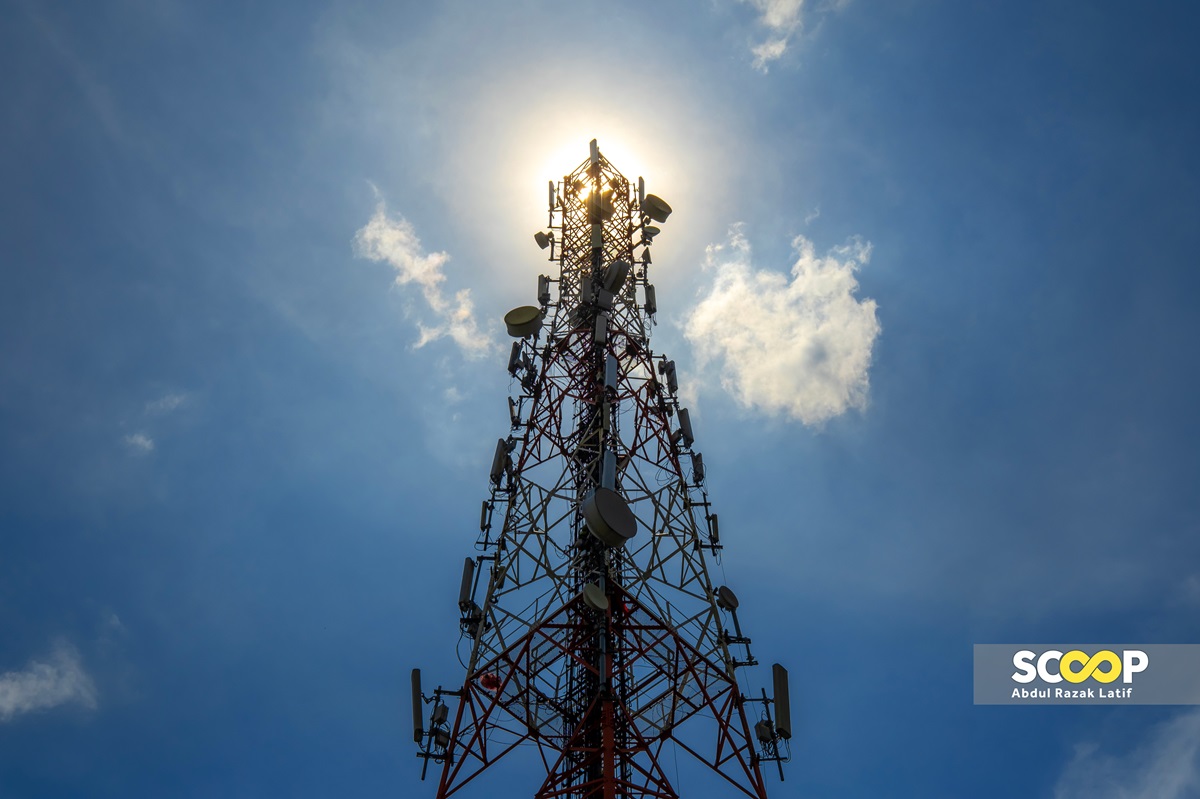
“To improve the security of towers under the Jendela Plan initiative, service providers have taken steps to strengthen communication tower sites at risk by installing anti-theft and vandalism equipment such as installing iron conduit to prevent copper cables from being cut and stolen,” Teo said.
Launched in 2020, Jendela is Malaysia’s national blueprint to upgrade internet connectivity across the country. Led by MCMC, its first phase successfully shut down old 3G networks and boosted 4G coverage to nearly 97% in populated areas to give users faster, more stable mobile speeds.
The plan is now focused on expanding high-speed fiber internet to nine million premises and achieving 100% internet coverage nationwide.
By installing fiber lines and using satellites to reach remote rural areas, Jendela builds the essential foundation needed to transition Malaysia to ultra-fast 5G technology. – July 15, 2026