

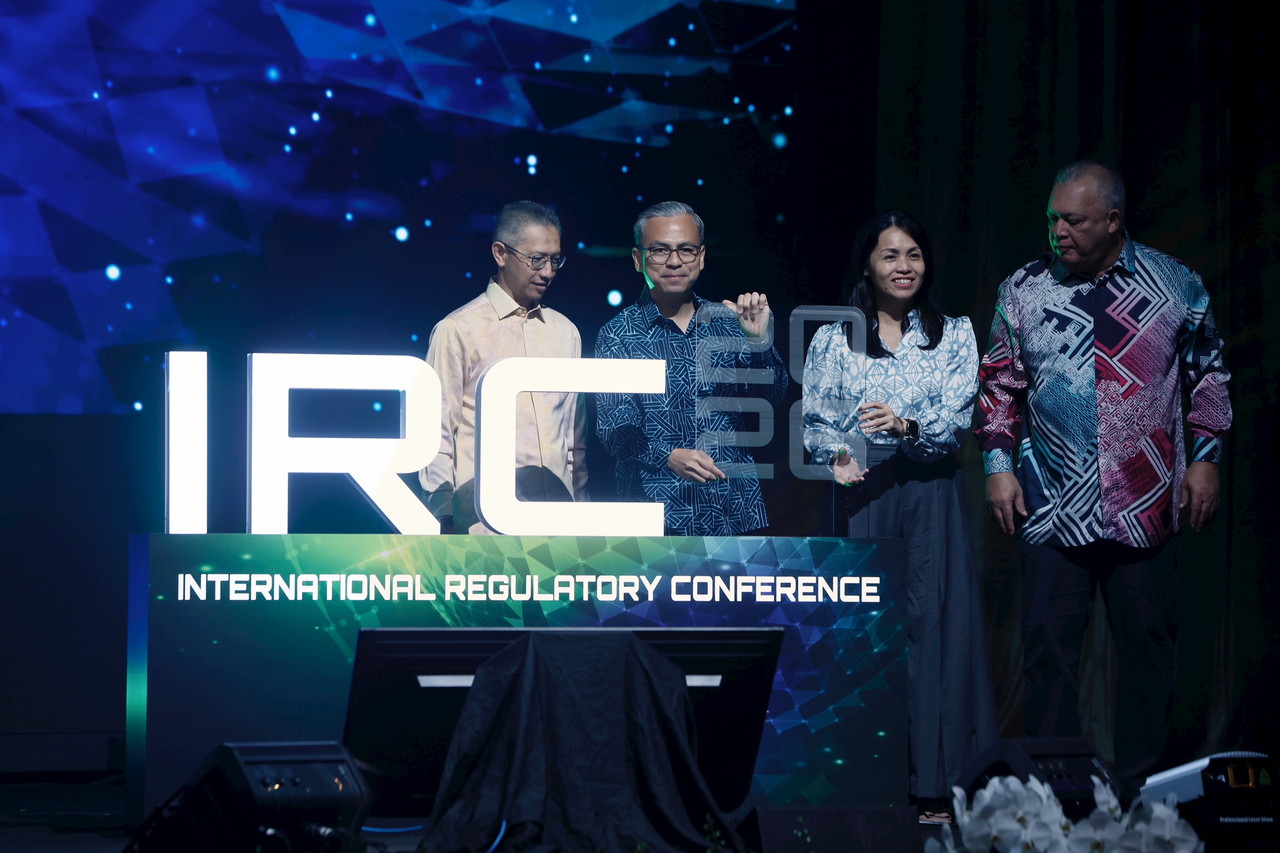
KUALA LUMPUR – Digital trust and digital literacy will be central to Malaysia’s efforts to navigate an increasingly artificial intelligence (AI)-driven future, Communications Minister Datuk Seri Fahmi Fadzil said.
Speaking at the opening of the International Regulators Conference (IRC) 2026 in Kuala Lumpur, Fahmi said the rapid pace of technological advancement has heightened public expectations for digital services that are secure, responsible and transparent.
“Users expect digital services to be secure, platforms to be accountable, and innovation to improve lives without creating new vulnerabilities. Above all, people expect trust,” he said.
Fahmi said digital development should not be judged merely by factors such as internet speed, network reach or investment levels, but by whether technology creates opportunities, improves lives and gains public confidence.
“Digital progress must therefore be measured not only by speed, coverage or investment, but also by whether it creates opportunity, earns public confidence and ultimately improves people’s lives.”
Also present at the conference were Deputy Communications Minister Teo Nie Ching, Communications Ministry Secretary-General Datuk Abdul Halim Hamzah, and Malaysian Communications and Multimedia Commission (MCMC) Chairman Tan Sri Mohamad Salim Fateh Din (right).
He said trust, accountability and resilience have become key principles in shaping digital regulation, particularly as emerging technologies such as AI, quantum communications and autonomous systems continue to evolve.
However, Fahmi noted that technological progress has often outpaced existing regulatory frameworks, creating new challenges for policymakers.
“When harm occurs, the public rarely distinguishes between platforms, service providers or regulators. Instead, they ask one simple question, ‘Could more have been done to prevent it?'”
He said Malaysia’s introduction of the Online Safety Act 2025 marked a shift towards preventing online harm by enhancing platform responsibility and safeguarding children and vulnerable communities.
Speaking to reporters after the conference, Fahmi identified digital literacy as one of the country’s biggest challenges as technology becomes more deeply embedded in daily life.
“I see the biggest hurdle is in digital literacy,” he said.
Fahmi said AI and digital platforms could help bridge economic and social gaps by enabling communities with internet access to benefit from new opportunities regardless of their level of development.
“We see the digital economy, including e-commerce, actually is able to close the gap in the economy through digital applications.”
Nevertheless, he stressed that technological adoption must be supported by both confidence in digital systems and users’ ability to engage with them responsibly.
“In the future, the two most important issues are trust in the digital system, digital trust, and digital literacy. These are the two most important issues for me.”
On AI governance, Fahmi said Malaysia is adopting an interim approach while the Ministry of Digital works towards establishing dedicated legislation to regulate artificial intelligence.
He said government agencies are continuing to assess AI-related risks and take action where necessary, including the Malaysian Communications and Multimedia Commission’s (MCMC) engagement with X to introduce safeguards following concerns over AI-generated harmful images.
“We also do not want to signal that we do not want technology or investment, but we want technology and investment that not only brings benefits, but also avoids risks.”
Fahmi urged members of the public to report cases involving the misuse of AI-generated images or personal data to the relevant platforms and MCMC, saying such reports would enable regulators to act under existing laws while a broader AI governance framework is being developed.
He said discussions at IRC 2026 would help shape not only Malaysia’s digital policies but also international cooperation on emerging technologies.
“Our priority must be to translate dialogue into action.”
Fahmi added that Malaysia, as a member of the International Telecommunication Union (ITU) Council, is prepared to contribute to global conversations on digital governance and help develop international standards for emerging technologies. – July 21, 2026