

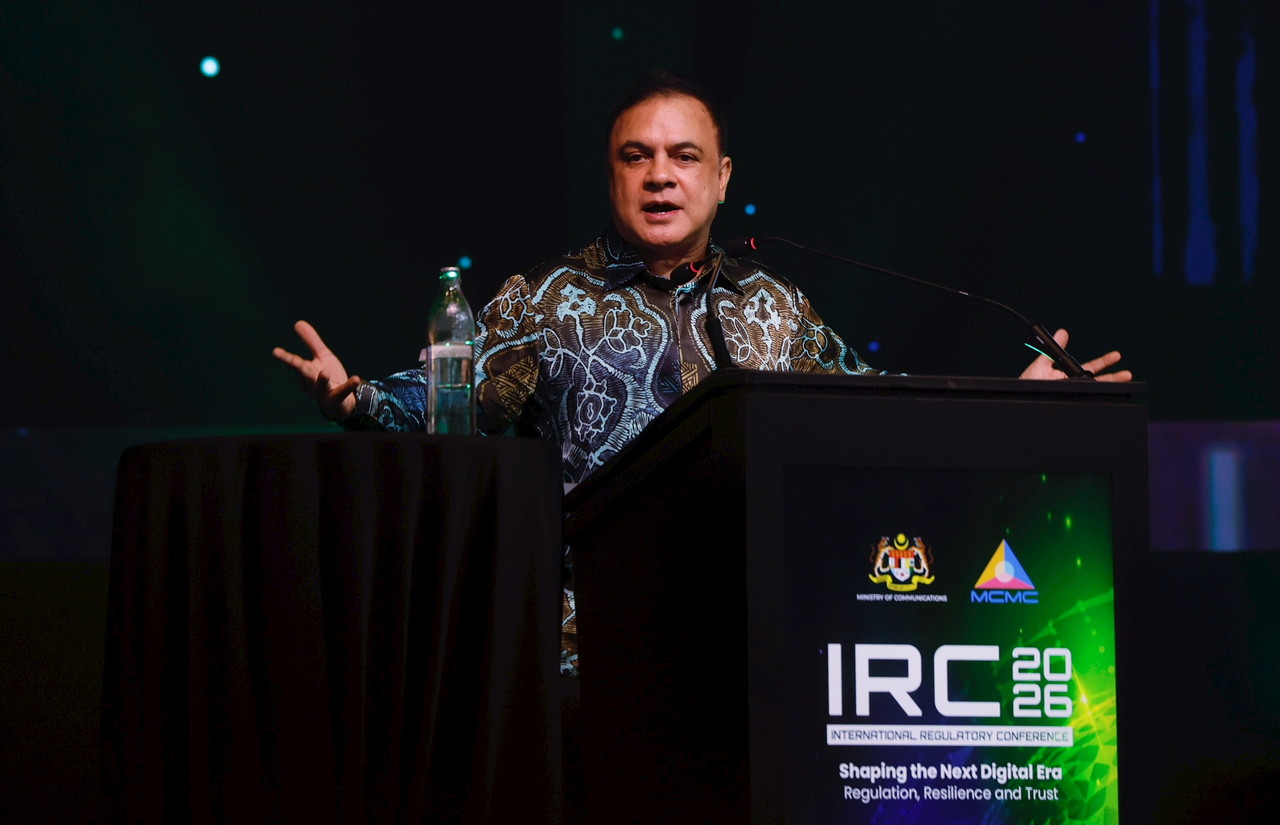
KUALA LUMPUR – Digital literacy should be introduced from kindergarten as children are increasingly exposed to social media and online threats at an early age, Malaysian Communications and Multimedia Commission (MCMC) Commissioner Derek Fernandez said.
Speaking to Scoop on the sidelines of the International Regulators Conference (IRC) 2026, Fernandez said digital literacy goes beyond knowing how to operate devices or navigate online platforms.
He said true digital awareness involves the ability to think critically, assess information and understand potential risks in the online environment.
“Being able to press buttons on a device and enter a room does not mean smart,” he said.
“Smart must be being able to reason why you’re going in, what you’re going in for, what are you seeing there, is what you see is true or false. That’s the maturity that requires. That is the digital literacy,” said Fernandez, who is also chairman of MCMC’s Online Harms and Information Security Committee.
He said children should be taught from an early age how to use technology responsibly, recognise online dangers and evaluate the credibility of information and interactions they encounter.
“It should be part of the curriculum of all schools for digital training and being able to reason and logically evaluate things to understand risks,” he said.
Fernandez also stressed that online safety and digital freedom should not be viewed as conflicting priorities, saying safeguards should be integrated into digital platforms from the outset.
“We do not have to look at safety and freedom as incompatible with each other. They don’t have to compete with each other,” he said.
Using vehicle safety systems as an analogy, Fernandez said digital platforms should be designed with built-in protections that safeguard users without restricting access.
“Safety is part of design. Safety should be incorporated, especially to protect the vulnerable groups,” he said.
On Malaysia’s Online Safety Act (ONSA) and the introduction of age verification requirements, Fernandez said social media platforms, rather than the government, should be responsible for verifying users’ ages while ensuring privacy protections are maintained.
“We are not going to go and look at that individual or what they are accessing to determine whether they are an adult or not. The platform must ensure that,” he said.
He said the regulations are intended to protect children from risks such as online manipulation, scams and harmful content, while allowing them to continue benefiting from digital platforms for education and communication.
Fernandez also urged technology companies to improve their response mechanisms for reports of online abuse, particularly cases involving children.
He said platforms must establish efficient complaint channels instead of allowing reports to be delayed through lengthy internal procedures.
“When somebody suspects that their child is viewing improper material or is being contacted by an unknown person, there must be a very efficient method for them to report a complaint,” he said.
He added that platforms should face financial and legal consequences if they fail to act after receiving credible reports.
“Having brought your attention, having got reports, if you fail to act on them, you have to be financially and legally liable,” he said.
Fernandez further called on platforms to permanently remove accounts linked to serious online offences, especially those involving child sexual abuse.
“They must start banning all those guys who are caught doing this and not allowing them to open new accounts and come back,” he said.
He clarified that regulators do not have unrestricted access to users’ personal devices and only intervene when complaints are lodged or when broader monitoring identifies concerns.
“We do not have the technology to go in and look at what you are seeing. We don’t do that. It’s only when complaints are raised that action is taken.”
Fernandez said building a safer digital environment requires cooperation between regulators, technology companies, educators and parents, with digital literacy serving as the foundation for long-term online safety.
The ONSA’s age verification requirements for social media platforms came into effect on June 1, 2026.
Under the measures, MCMC advised users below 16 years old to download or transfer their data before social media platforms take action on their accounts to comply with the new requirements. – July 21, 2026