

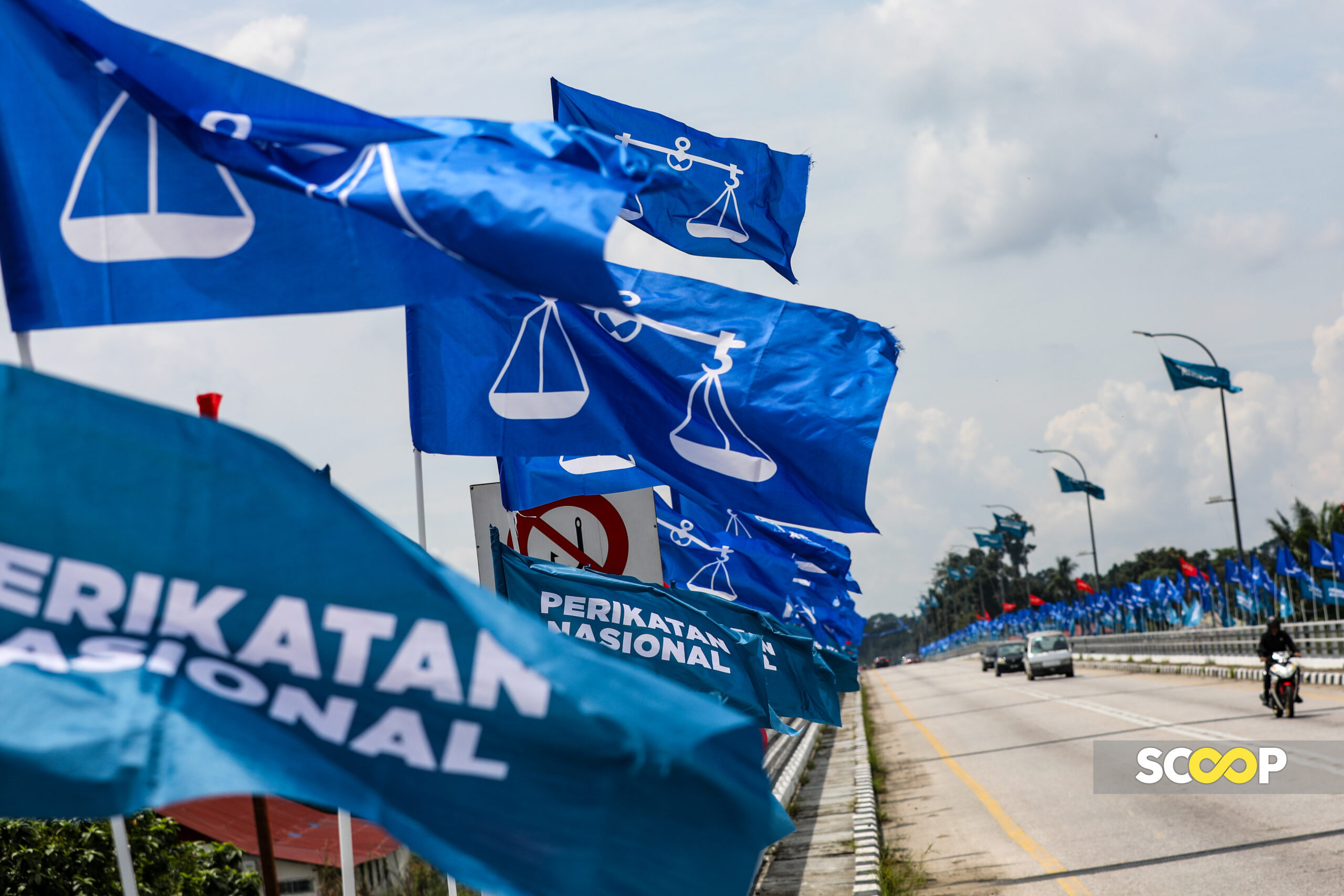
KUALA LUMPUR – The political arrangement that enabled Barisan Nasional (BN) and Perikatan Nasional (PN) to cooperate effectively in Negeri Sembilan cannot be directly applied to Melaka, said Universiti Malaya political analyst Datuk Professor Dr Awang Azman Awang Pawi.
He said Melaka’s political dynamics were far more complex, with BN maintaining a strong grip at the state level while PN had demonstrated significant influence through its parliamentary victories.
“Melaka is not simply Negeri Sembilan 2.0. The formula needs to be significantly modified,” he told Scoop.
Awang Azman said the differing electoral strengths of both coalitions provided room for negotiations, but also created challenges that did not exist in Negeri Sembilan.
“BN has the advantage as the incumbent, with its state machinery and established local candidates, while PN can point to its parliamentary performance as evidence that it has substantial support in Melaka,” he said.
He said any potential cooperation would likely not involve an equal distribution of seats, with BN expected to retain most, if not all, of the constituencies it won in the 2021 state election, while PN would seek seats where it has stronger grassroots backing.
The main objective, he said, would be to avoid three-cornered contests that could divide Malay votes and potentially benefit Pakatan Harapan (PH).
However, BN’s decision to defend all 21 seats it currently holds has reduced the room for broader seat-sharing negotiations.
“Cooperation may take the form of tactical non-contestation, mutual support or campaign coordination, rather than a broader seat-sharing arrangement like in Negeri Sembilan,” he said.
Awang Azman said PN was unlikely to accept a position as merely a supporting partner, given its performance in the 15th General Election (GE15).
“PN will demand meaningful representation and not simply be asked to support BN candidates,” he said, adding that the coalition’s control of three parliamentary seats in Melaka would strengthen its bargaining position.
He said PN would face a strategic dilemma: contesting too many BN-held seats could result in a split Malay vote that benefits PH, while accepting too few seats could undermine its position as a major political force.
Several Malay-majority and marginal constituencies could become key battlegrounds if BN and PN fail to reach an understanding, he said.
Awang Azman cited Tanjung Bidara, where BN defeated PN by just 364 votes in 2021, as well as Ayer Limau, Pantai Kundor and Serkam, where BN also secured relatively narrow victories.
“BN and PN are increasingly competing in the same political space, particularly for Malay voters who are concerned about stability, identity, economic security and effective governance,” he said.
However, he cautioned that the election outcome would not depend solely on Malay-majority constituencies.
Urban and mixed seats, where PH has traditionally performed strongly, could also determine the final result. DAP retained Ayer Keroh, Kesidang, Kota Laksamana and Bandar Hilir in 2021, while Amanah won Bukit Katil.
“Malay vote consolidation alone may not be sufficient to defeat PH in urban areas that remain its strongholds,” he said.
He identified seats such as Duyong, Pengkalan Batu, Paya Rumput, Kelebang, Gadek and Bemban as constituencies where turnout, candidate appeal and tactical voting could significantly influence the outcome.
Awang Azman said BN-PN would also need to present voters with more than a Malay unity narrative, as public concerns increasingly centre on economic and governance issues.
“Malay political cooperation can provide an emotional and strategic reason to support BN-PN, but it cannot be the only offer to voters,” he said.
He added that voters would also assess the coalition based on issues including the rising cost of living, employment opportunities, infrastructure, housing, flood management and the performance of local authorities.
Melaka, he said, could become an important indicator of whether the cooperation between BN and PN represented a broader political realignment or merely an electoral strategy aimed at preventing vote fragmentation.
“The most important scenario is not simply PN winning seats from PH, but PN taking seats directly from BN.”
“If that happens, it would show that BN no longer has an automatic monopoly over Malay representation, even in a state traditionally regarded as one of its strongholds,” he said.
Awang Azman said such an outcome would have implications for GE16, as PN would enter future negotiations with stronger demands for both parliamentary and state seats.
“Melaka could become a test of whether Malaysia is moving towards a competitive Malay political duopoly, with BN and PN each capable of mobilising substantial Malay support,” he said.
In the 2021 Melaka state election, BN won 21 of the 28 seats and has remained in control of the state government.
However, in GE15, PN won three of Melaka’s six parliamentary seats, while BN failed to secure any parliamentary constituency in the state. – August 10, 2026