



KUALA LUMPUR – The passage of Malaysia’s Gig Workers Act shows that major reforms can be achieved despite the lengthy and complex process involved, Entrepreneurial Development and Cooperatives Minister Steven Sim Chee Keong said.
Sim, who was Human Resources Minister when the legislation was passed in August last year, said the law was the result of years of work involving various stakeholders, Cabinet committees and Parliament.
He said the legislation demonstrated that meaningful reform was possible with sufficient determination and a commitment to see it through.
“The Malaysian Gig Workers Act was passed almost a year ago, in August last year. This is my chronicle of the whole event, and also my short analysis of the legislation,” he said in the latest episode of Trick Lama, a podcast co-hosted by Big Boom Media Group chief executive officer Datuk Zainul Arifin, Group Editor-in-Chief Terence Fernandez and Group Executive Director Datuk “Rocky” Ahiruddin Attan.
“This is a new, defining, landmark legislation. In the book, I talk about the different players within the unity government and the different characters who played their roles to ensure the success of this reform legislation.”
Sim said the reform process had taken years, with discussions dating back to 2018 and 2019 before the legislation was eventually passed in 2025.
“I trace it back to 2018, 2019. How many years it took until finally, in 2025 last year, the law was finally done,” he said.
He said the experience demonstrated that reform was rarely straightforward and often required sustained effort across different levels of government.
“So imagine, sometimes, for better or worse, it could have been faster. It took me slightly more than a year. When I was given the mandate, it took me over a year to get the law passed through various stakeholders, Cabinet committees, Cabinet meetings, and then finally Parliament,” he said.
“Reform takes time. It’s not easy,” he added.
Sim also urged future ministers and lawmakers to build on the legislation rather than regard its passage as the end of the reform process.
“The law that we make, the reform that we have done, it may not be enough,” he said.
“And new ministers will probably need to come and improve upon what we have done.
“But we have drawn the line and said, and we have announced and declared to the world, it is possible. Doing better is possible.”
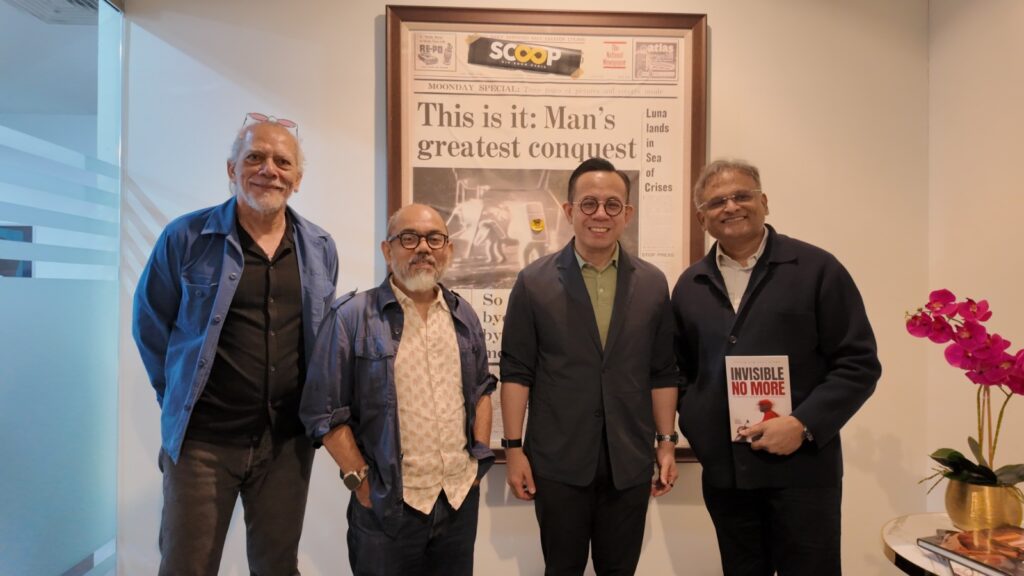
Sim said his latest book, Invisible No More: The Making of the Malaysian Gig Workers Act, was intended to document how the legislation came about and provide a reference for future policymakers.
The book, his sixth, chronicles his experience, views and analysis of the legislation, as well as its historical background and key components.
“This book is much easier to write because I was on it for a year. So I started writing fresh off Parliament,” he said.
“I quickly put it down to thoughts because I thought it’s important to chronicle it.”
Sim said he hoped the book would serve as a record for future lawmakers, ministers and leaders seeking to strengthen protections for gig workers.
“I hope that, as I said, this will be a record for future lawmakers, for future leaders, future ministers who are going to come after us as a reference point, why this debate happened in this generation, and also as a motivation for them to come and improve upon the law that we have made,” he said.
Sim said the legislation was ultimately part of his broader political mission to give greater protection and visibility to workers who had previously lacked adequate safeguards.
“I’m in politics to give voice, to give protection for those who are voiceless, invisible no more, to give visibility to millions of workers out there who have not, who are not protected in the past,” he said. – August 19, 2026