

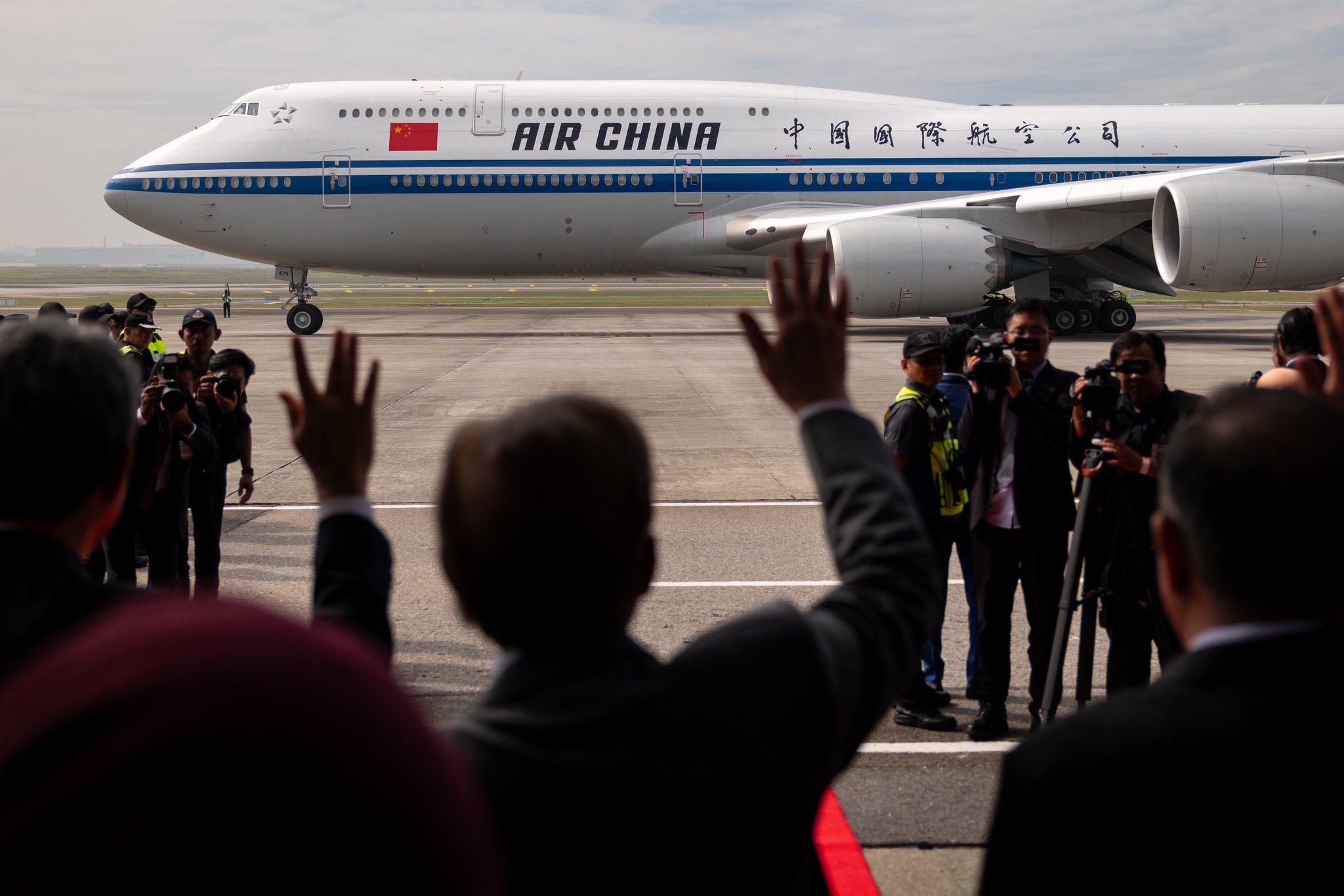
KUALA LUMPUR – Prime Minister Datuk Seri Anwar Ibrahim’s recent remarks on Taiwan have reaffirmed Malaysia’s long-standing One China policy, but they have also underscored the delicate economic balancing act Putrajaya faces between Beijing and Taipei.
Economist Dr Samirul Ariff Othman said Malaysia had little to gain from allowing its economic relationship with Taiwan to weaken, particularly as Taiwanese firms continue to play a significant role in supporting the country’s semiconductor ambitions.
“Malaysia does not have to choose economically between China and Taiwan. Our competitive advantage is precisely our ability to work with both,” he told Scoop.
Anwar recently said he regarded Taiwan as part of China while defending Beijing’s position that force could be used if peaceful reunification efforts failed.
While China welcomed the remarks, Taiwan expressed concern that such statements could affect business confidence among Taiwanese investors.
Samirul said the comments were unlikely to trigger immediate economic consequences, as companies already operating in Malaysia were not expected to abruptly withdraw their investments.
However, he warned that Malaysia could face longer-term risks if it was perceived as taking sides in the China-Taiwan dispute.
“Malaysia should be careful not to convert diplomatic positioning into geopolitical investment risk,” he said.
Taiwan has become an increasingly important partner in Malaysia’s semiconductor sector. In February, Taiwanese semiconductor packaging and testing firm Chipbond Technology opened a new facility in Penang following an investment of nearly US$200 million, or about RM800 million.
The facility is expected to strengthen Malaysia’s advanced semiconductor capabilities, particularly in the outsourced semiconductor assembly and test (OSAT) segment.
Samirul said Malaysia’s economic strength had historically come from its ability to engage with multiple global powers, including China, Taiwan, the United States, Japan, South Korea, Europe and ASEAN.
He said this advantage had become even more valuable as international companies sought to diversify their supply chains amid growing geopolitical uncertainty.
“Malaysia has benefited enormously from being perceived as a country that can work simultaneously with China, the United States, Taiwan, Japan, South Korea, Europe and ASEAN,” he explained.
According to him, the challenge was not merely about preserving Malaysia-Taiwan trade ties, but also maintaining confidence in the country as a predictable and commercially neutral investment hub.
Malaysia’s One China policy dates back to 1974, when Kuala Lumpur established diplomatic relations with Beijing. Anwar has maintained that his position remains consistent with the country’s established foreign policy.
However, Samirul said the more sensitive issue was the reference to the possible use of force, as Malaysia’s economic interests depended heavily on stability in the Taiwan Strait.
“Malaysia’s competitive advantage is precisely our ability to work with both,” he added.
As Malaysia seeks to attract more high-value semiconductor investments while maintaining close economic ties with China, Samirul said preserving investor confidence must remain the priority.
“The central concern should be neither Beijing’s approval nor Taipei’s displeasure. It should be whether Malaysia continues to be regarded by all sides as a predictable, commercially neutral and geopolitically safe place in which to invest billions of ringgit for the next 20 or 30 years,” he said. – August 23, 2026