

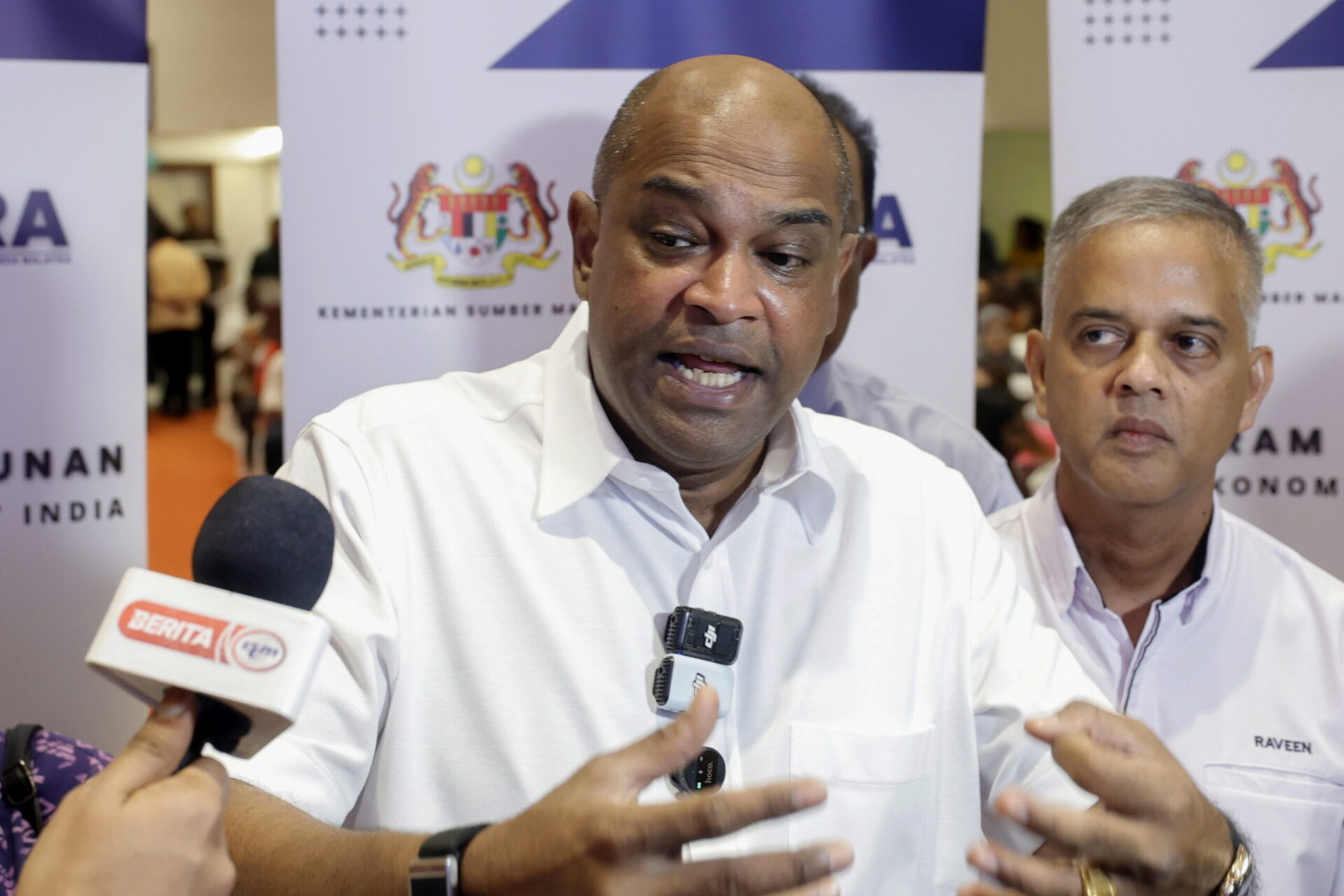
KUALA LUMPUR – More than four million workers across Malaysia are set to benefit from an increase in the national minimum wage from RM1,700 to RM2,000 a month starting June 2027, Human Resources Minister Datuk Seri R. Ramanan announced today.
However, micro, small, and medium enterprises (MSMEs) with annual sales below RM50 million will be exempted from the hike to provide them with sufficient time to adjust their business models.
Ramanan said the government will also introduce a minimum monthly wage framework of RM2,500 for semi-skilled workers and fresh graduates.
The Ministry of Human Resources (Kesuma) is expected to unveil the implementation mechanism in the near future. For the gig economy, the government and Grab will jointly inject RM160 million starting in 2027 to boost the earnings, safety, and welfare of e-hailing drivers and p-hailing delivery riders.
“Median net earnings for e-hailing drivers are expected to increase by up to RM227 per month, while p-hailing delivery riders’ earnings are expected to rise by up to RM100 per month.
“The Gig Consultative Council is negotiating minimum income rates, an income formula, and minimum social protection standards for gig workers, with details expected to be finalised in early 2027,” Ramanan said in a statement.
The initiatives follow Prime Minister Datuk Seri Anwar Ibrahim’s tabling of Budget 2027 yesterday, which outlined major structural updates to wage policy, social protection, and industry-aligned technical training.On skills development, Ramanan highlighted an RM8 billion cross-ministerial allocation for Technical and Vocational Education and Training (TVET) programmes.
Meanwhile, the Human Resources Development Corporation (HRD Corp) will deploy RM3 billion in levy funds to support three million training placements, alongside over RM40 million specifically allocated to train 8,000 Malaysians in the elderly care sector.
Additionally, the Skills Development Fund Corporation (PTPK) has set aside RM500 million to fund trainees at registered public and private training institutions.
Ramanan reaffirmed that Kesuma will ensure income growth is backed by relevant upskilling and expanded social safety nets to keep pace with evolving industry demands and technological shifts. – October 10, 2026